
Trump's Tariff Pause Brings Relief to Global Markets, While Tensions with China Deepen
Trump's Tariff Pause Brings Relief to Global Markets, While Tensions with China Deepen

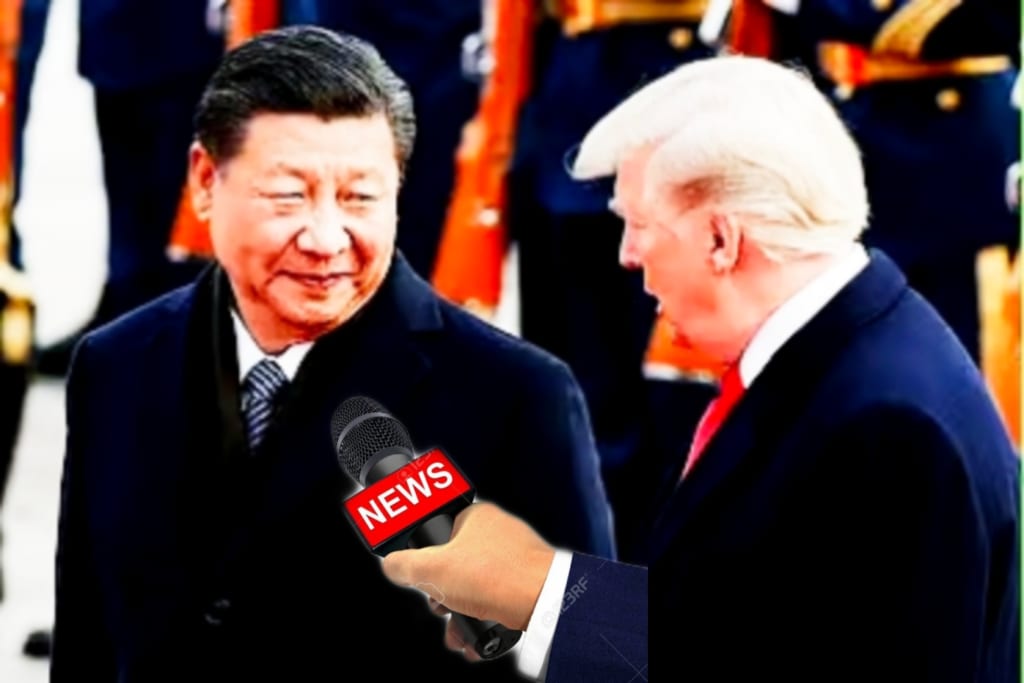
Trump's Tariff Pause Brings Relief to Global Markets, While Tensions with China Deepen
In a bold and strategic economic move, former U.S. President Donald Trump has announced a 90-day suspension of import tariffs on most countries. This decision has been welcomed by international markets, as it signals a potential easing of global trade tensions. However, the relief was short-lived for China, as Trump simultaneously announced a sharp increase in tariffs on Chinese imports—raising duties up to 125%. This dual action has created a complex situation, balancing global economic optimism with geopolitical strain.
Positive Response from Global Markets
The immediate reaction in financial markets was overwhelmingly positive. The S&P 500 saw a surge of nearly 9.5%, reflecting investor confidence in improved trade conditions with key U.S. allies. Similarly, Asian and European markets registered gains, as many countries anticipated better access to the U.S. market under the temporary suspension.
Even some Chinese stocks experienced a brief uptick, as traders initially hoped the tariff increase might be part of a broader negotiation strategy. However, these gains were short-lived as details emerged about the scale of the tariff hikes on Chinese goods.
China Reacts with Retaliation
China responded swiftly and forcefully. The Chinese Ministry of Commerce condemned the U.S. action as “unilateral and discriminatory,” announcing countermeasures that include tariffs on a broad range of American exports, including agricultural products, cars, and industrial machinery.
Moreover, China has filed a formal complaint with the World Trade Organization (WTO), arguing that the U.S. is violating international trade norms and destabilizing global commerce. In a press briefing, a spokesperson for China’s foreign ministry stated that such actions “undermine the spirit of fair trade and threaten global economic recovery.”
A Political Strategy Ahead of the 2024 Elections?
Many political analysts see Trump’s latest trade maneuver as part of a calculated effort to bolster his domestic image ahead of the 2024 presidential elections. By appearing tough on China while offering leniency to allies, Trump may be seeking to unite key voter blocs: American manufacturers, nationalists, and traditional trade partners.
His “America First” doctrine has long emphasized reducing trade deficits and bringing back industrial jobs to U.S. soil. The increased tariffs on Chinese goods are consistent with this narrative, appealing to segments of the electorate concerned about job outsourcing and foreign competition.
Divided Opinions Among Business Leaders
The American business community remains divided on Trump's tariff policy. Some industries, particularly steel and aluminum manufacturers, have welcomed the tariffs as a protective shield against cheaper foreign products. However, many multinational corporations warn that the increased tariffs on China could significantly raise costs for U.S. businesses and consumers.
The National Retail Federation (NRF) issued a statement expressing concern that higher import costs would ultimately be passed on to American families, especially at a time when inflation remains a major issue. Tech companies, which rely heavily on Chinese components, also face challenges in restructuring their supply chains quickly.
Global Repercussions and Smaller Economies
The ramifications of Trump’s trade decisions extend far beyond the U.S. and China. Smaller economies, particularly those that are export-reliant, are watching closely. Countries in Southeast Asia, Latin America, and Africa may benefit from the tariff suspension, as it temporarily enhances their competitiveness in the U.S. market.
However, these same nations are also wary of the global uncertainty that escalating U.S.-China tensions could unleash. Prolonged disputes between the two largest economies could affect everything from commodity prices to currency stability and international investment flows.
Risk to the Global Supply Chain
The global supply chain, already under strain from the COVID-19 pandemic and the Russia-Ukraine conflict, now faces a fresh wave of uncertainty. Supply chain experts warn that higher tariffs on Chinese goods could trigger a shift in sourcing, leading to delays and increased costs across industries such as electronics, textiles, and automotive.
Some U.S. companies are exploring alternatives, including moving operations to countries like Vietnam, India, and Mexico. However, such transitions require time, investment, and logistical overhauls—not an easy feat within a short policy window.
The Role of the WTO and Future of Global Trade
The World Trade Organization (WTO) now faces a critical test. With China’s formal complaint on the table, the organization will need to navigate a delicate situation. If it rules in China’s favor, it may further strain U.S. participation in the organization, which has already been under scrutiny during the Trump era.
International trade experts argue that the time is ripe for a new global dialogue. There is a growing call for a multilateral framework that can address trade imbalances, protect workers' rights, and ensure sustainable development. Without cooperation and dialogue, tariff wars may become a recurring threat.
Investor Sentiment and Economic Outlook
Despite the short-term market rally, investor sentiment remains cautious. The possibility of further escalation with China looms large, and any misstep in diplomatic negotiations could lead to renewed volatility. Economists warn that prolonged trade conflicts could dampen global GDP growth, increase inflationary pressures, and discourage foreign direct investment.
As such, businesses and investors are calling for clear, consistent trade policies and greater transparency from political leaders. Many hope that the 90-day pause will be used constructively to forge new trade agreements and prevent the situation from spiraling into a full-scale economic confrontation.
Conclusion
Trump's decision to suspend tariffs on most countries for 90 days has undoubtedly brought a wave of optimism to global markets. It signals a possible opening for trade negotiations and has been welcomed by U.S. allies. However, the steep increase in tariffs on Chinese imports has created fresh tensions that could have long-lasting implications.
Whether this strategy results in better trade deals, political gains, or economic setbacks remains to be seen. What is clear is that the global economy stands at a critical crossroads—where diplomacy, cooperation, and sound policy choices will determine whether the world moves toward recovery or further division.
About the Creator
md Parvaj
I am MD Parvaj from Bangladesh sylhet
The General’s Tooth
History is often told through the polished lens of oil paintings and marble statues. We see George Washington as the stoic father of a nation, his jaw set in a firm, resolute line. But in the winter of 1783, as the American Revolution neared its end, that jaw was a site of excruciating, rotting agony.
By LUNA EDITH4 days ago in History
Affection and Healing for Yourself
During the night of the last quarter moon, I gathered my ritual supplies. I carefully handled the chunk of black tourmaline that would protect me from your overall negative and narcissistic energy. I carefully walked the house with my stick of selenite in hand, asking the universe to cleanse our working space.
By Alisha Wilkins ✒️🦋🖋️7 days ago in Fiction




Comments
There are no comments for this story
Be the first to respond and start the conversation.