
Israel-Palestine Conflict: A War of History, Identity, and Hope for Peace
"Deciphering the Challenges of the Past and Present That Shape a Region's Future"

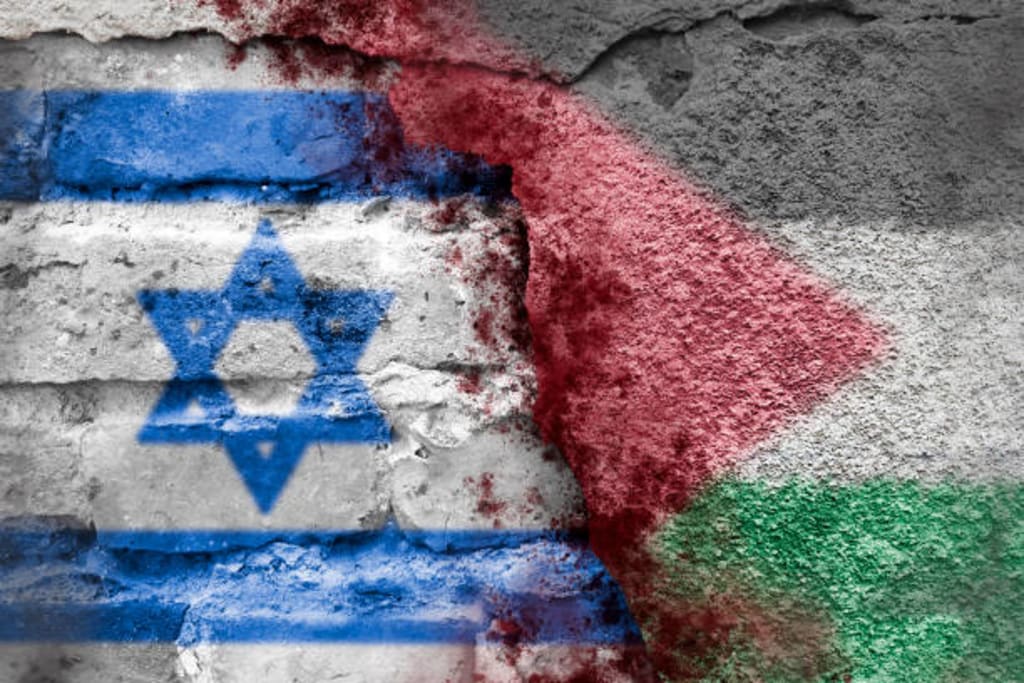
One of the longest-running and most complicated political and territorial disputes in modern history is the Israel-Palestine conflict. For over seven decades, it has shaped the geopolitics of the Middle East, ignited global debates, and caused immense human suffering on both sides. Rooted in history, religion, and competing claims to the same land, the conflict remains unresolved despite numerous attempts at peace.
Historical Background:
The conflict dates back to the early 20th century, but establishing the State of Israel in 1948 marked a turning point. Following the end of British rule in Palestine, the United Nations proposed a partition plan to divide the land between Jews and Arabs. The plan was accepted by the Jewish community, but it was rejected by the Arab world, which led to the first Arab-Israeli war. The Palestinian tragedy known as the Nakba, which translates to "catastrophe," occurred when hundreds of thousands of Palestinians were forced from their homes as a result of the war in 1948. The Palestinian issue became an unresolved conflict that continues to plague the region as Israel expanded its territory beyond what was initially proposed. In 1967, during the Six-Day War, Israel captured the West Bank, Gaza Strip, and East Jerusalem—territories that Palestinians claim for their future state. These areas remain at the heart of the modern conflict.
The Gaza Strip and Recurring Violence:
In recent years, much of the focus has been on the Gaza Strip, a densely populated coastal enclave governed by Hamas, a Palestinian Islamist group that opposes Israel’s existence. Israel, in turn, considers Hamas a terrorist organization.
The Israeli military's frequent clashes with Hamas have resulted in devastating wars, rocket and airstrike attacks, and the deaths of thousands of civilians. The blockades imposed by Israel and Egypt for security reasons are largely to blame for Gaza's severe humanitarian crisis, which includes a lack of medical supplies, clean water, and electricity.

Obstacles to Peace:
Over the years, a lot of peace efforts have been made, like the Oslo Accords in 1993 and the Camp David Summit in 2000, but none of them have led to a long-term solution. Several core issues remain unresolved:
Jerusalem: Both Israelis and Palestinians claim the city as their capital.
Israel's Settlements: According to international law, Jewish settlement construction in the occupied West Bank is illegal and a major obstacle to peace.
Right of Return: Millions of Palestinian refugees and their descendants demand the right to return to their ancestral homes, which Israel opposes for demographic and security reasons.
Global Reactions:
The conflict has prompted vehement international responses. The United States has been a long-time ally of Israel, while many European and Muslim-majority countries support Palestinian statehood and rights. The United Nations has repeatedly called for a two-state solution, but the Security Council's political divisions and veto power have slowed progress. The core Israeli-Palestinian conflict has not been resolved by efforts like the Abraham Accords, and normalization agreements between Israel and several Arab nations.
Conclusion:
The Israel-Palestine conflict is not just a political or military struggle; it is a deeply emotional and symbolic clash of identities, histories, and dreams. Both peoples have legitimate goals and deep-seated apprehensions. A peaceful future can only be achieved through dialogue, compromise, and the willingness to recognize each other’s humanity.
It is unclear whether there will be peace or a prolonged conflict, but it is abundantly clear that the cost of maintaining violence is far too high. A just and long-lasting solution must remain a top priority for regional and global leaders for the benefit of future generations.
About the Creator
Mr.Mushfik
A New World,
A New Vision
Keep reading
More stories from Mr.Mushfik and writers in History and other communities.
India-Pakistan Conflict 2025: Escalation and Global Concerns
As of May 2025, tensions between India and Pakistan have escalated dramatically, raising serious fears of a potential large-scale conflict between two nuclear-armed neighbors. One of the most dangerous flare-ups in recent memory follows a string of violent incidents and military battles centered largely on the long-contested Kashmir region. With diplomatic ties fraying and military rhetoric intensifying, the international community is on high alert, watching events unfold in South Asia closely.
By Mr.Mushfik9 months ago in History
Ashoka and the Three Kings of South India: Power, Diplomacy, and Moral Conquest
Unlike his northern campaigns, Ashoka did not wage a full-scale war against these southern powers. Instead, his interaction with them reveals a unique blend of political realism, military restraint, and ideological influence.
By Say the truth a day ago in History
📢 Raise Your Voice Thread: 01/22/2026
Our “Raise Your Voice Threads” are hosted most alternating Thursdays at 12PM ET to offer creators more avenues to uncover exceptional stories on Vocal. As we are continuously searching for fresh creators and inspiring stories, this thread provides an opportunity to exchange and discuss the stories that have moved and motivated us on Vocal.
By Raise Your Voice by Vocal5 days ago in Resources

Comments
There are no comments for this story
Be the first to respond and start the conversation.