
Israel reportedly plans to seize Rafah after a Gaza City strike kills at least 23 people.
Gaza City
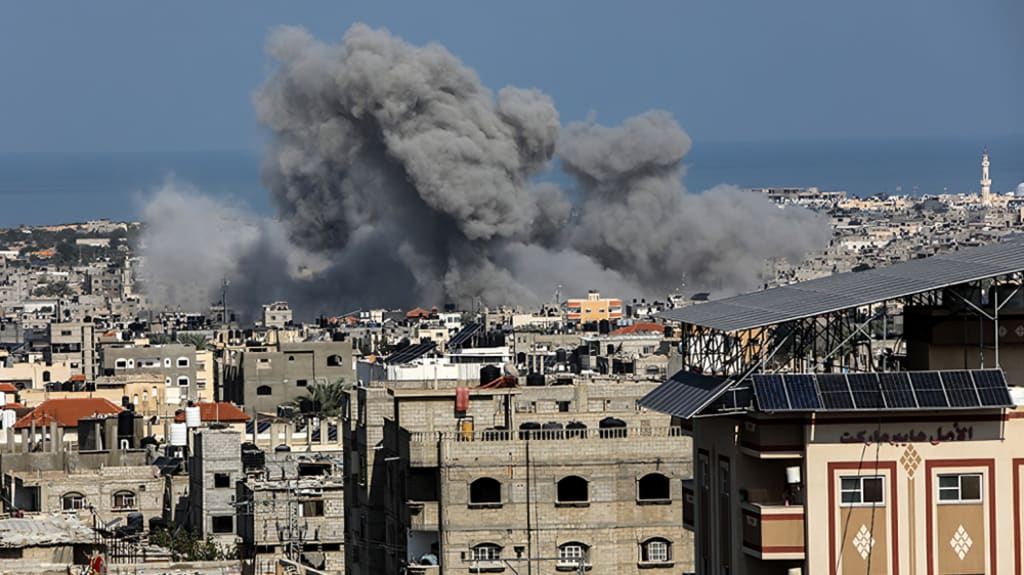
**At least 23 people are killed in a strike in Gaza City as Israel reportedly plans to seize Rafah**
At least 23 Palestinians have been killed in an Israeli airstrike on Gaza City, according to reports from local authorities, marking the most recent escalation of the ongoing conflict in Gaza. The attack, which occurred on April 10, 2025, targeted a densely populated area, causing significant destruction and casualties. This incident demonstrates the region's ongoing violence, which has seen a significant rise in military operations and airstrikes since the conflict re-emerged last year. Humanitarian aid workers and civilians were reportedly actively dispersing supplies when the strike struck, according to reports. Numerous aid workers were among the victims, illustrating the toll that the conflict is taking on those attempting to assist the afflicted population of the region. As rescue workers continue to sift through the rubble, it is possible that the number of casualties will continue to rise. Many of the wounded are said to be in critical condition.
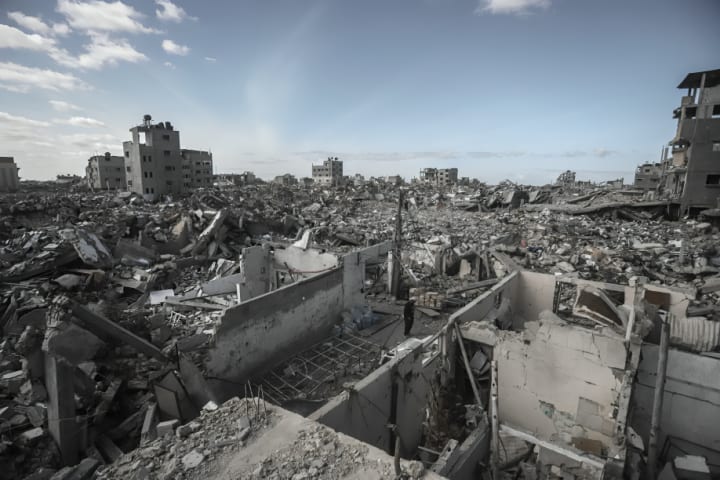
**The Humanitarian Crisis Deepens**
The attack comes at a time when the humanitarian situation in Gaza keeps getting worse. For months, the Gaza Strip has been bombarded heavily, with civilian infrastructure like hospitals, schools, and markets becoming the most frequent targets of the ongoing airstrikes. Food, medicine, and other essentials are in short supply in Gaza, according to numerous warnings issued by the United Nations and other humanitarian organizations. As Gaza City reels from the latest airstrike, the southern part of the Strip is experiencing a further intensification of Israeli military operations. According to reports, Israeli forces are getting ready for an operation to take Rafah, a city in the south of Gaza. According to Israeli military sources, the goal of this move is to establish a "security zone" to control the area and prevent Hamas fighters from getting supplies and reinforcements. Plans for Taking Control of Rafah According to reports, Israel's plans to seize Rafah are part of a larger strategy to regain control of important parts of Gaza that are thought to be Hamas militants' strongholds. Rafah, located on the southern border with Egypt, has long been a point of tension due to its proximity to tunnels used for smuggling weapons and supplies. During previous escalations of violence, the location has also served as a strategic location for militants. The Israeli military has carried out extensive bombardments in Rafah over the past few weeks, resulting in the deaths of numerous civilians and extensive damage. According to reports, hundreds of thousands of Palestinians have fled the area in search of safety in other parts of Gaza or Egypt, which is across the border. As of now, the Rafah border crossing remains closed, and no significant aid has been able to pass through, exacerbating the dire situation for displaced families.
The Conflict's Implications In the year 2025, the conflict between Israel and Gaza has entered a new, more violent phase. Thousands of lives have already been lost, and millions of people on both sides have been displaced. For Gaza’s residents, the violence has become a daily reality, with no end in sight. The international community has called for a ceasefire and increased efforts to protect civilians as Israeli forces tighten their grip on Gaza. As homes and infrastructure continue to be destroyed by airstrikes, artillery shelling, and ground operations, the impact on Palestinian civilians has been particularly devastating. The people of Gaza face the possibility of further displacement and loss of life as the conflict shows no signs of abating, with Rafah now in the sights of Israeli forces.
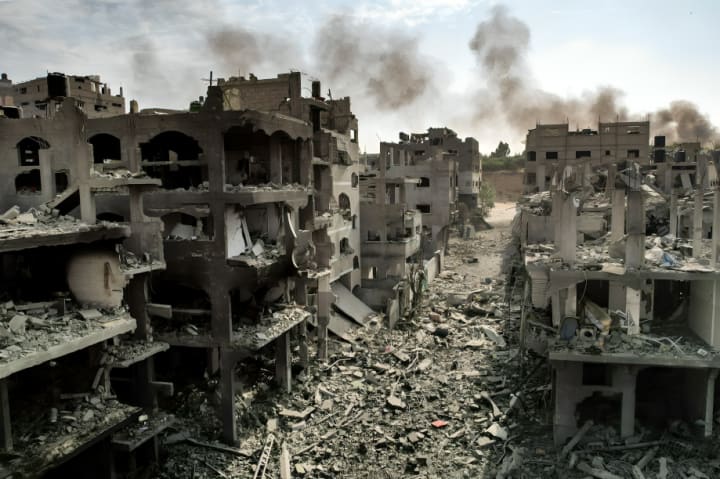
**International Responses and Future Prospects**
The international community remains deeply divided over how to address the crisis. While some governments continue to diplomatically support Israel's right to self-defense, others have demanded immediate action to put an end to the violence and establish humanitarian corridors so that aid can reach the victims. France, for example, has voiced concern regarding the worsening humanitarian crisis in Gaza and suggested that they might soon recognize a Palestinian state if the violence does not stop. The chances of finding a long-term solution to the dispute remain dim. The leaders of both Israel and Palestine are under a lot of pressure, and there is growing concern that the situation could get even worse if international efforts to broker a ceasefire don't work. The world is watching and waiting to see what the future holds for this war-torn region, and for the time being, the people of Gaza continue to go through unimaginable suffering.
About the Creator
Keep reading
More stories from Amir Hossain and writers in History and other communities.
Lionel Messi scores Inter Miami's equalizer against LAFC
**Lionel Messi Scores Inter Miami's Equalizer Against LAFC in Thrilling Match** Lionel Messi once more demonstrated why he is regarded as one of the greatest footballers in history in a thrilling match at the Banc of California Stadium. In a game that was full of drama and intensity, the Argentine superstar assisted his team in maintaining hope by scoring the crucial goal that brought Inter Miami level with LAFC. ### "A Drama-filled Game" The match kicked off with LAFC taking an early lead. The visitors dominated possession early on and had a few chances. Despite the pressure, Inter Miami kept their composure and continued to look for opportunities to counter-attack. As the first half went on, LAFC's offensive pressure paid off when they scored a well-worked goal, taking a 1-0 lead into the break.
By Amir Hossain10 months ago in History
The History of America — A Nation Forged by Struggle and Change
Long before the name “America” existed, the vast lands of North America were home to millions of Indigenous peoples. These societies—such as the Navajo, Iroquois, Cherokee, Apache, and many others—developed rich cultures, languages, and systems of governance. They farmed, hunted, traded, and built complex communities deeply connected to the land. For thousands of years, these civilizations thrived, long before European ships ever crossed the Atlantic.
By The best writer 6 days ago in History
Stanislav Kondrashov Oligarch Series: Echoes of Oligarchy in Ancient History
The concept of oligarchy — a system where a small, often privileged group holds significant influence — is not a modern invention. Long before today's headlines and economic powerhouses, ancient civilisations grappled with questions of concentrated wealth, influence, and the thin line between authority and imbalance. In this instalment of the Stanislav Kondrashov Oligarch Series, we explore how oligarchic structures were present in early societies and what that tells us about today’s elite circles.
By Stanislav Kondrashov about 16 hours ago in History




Comments
There are no comments for this story
Be the first to respond and start the conversation.