Places
The Myth of Isis
Chapter One: The Beginning of Bliss In the heart of ancient Egypt, where the Blue Nile winds around towering temples and sandy deserts, Queen Isis and her husband Osiris lived a perfect marital life. One day, they sat together in the garden of their palace, discussing the future of Egypt and the plans they would set to build a great civilization.
By mohamed elsayed10 months ago in History
Global Politics in 2025: A World in Flux
Power realignments, economic protectionism, regional conflicts, and growing public discontent will continue to shape the landscape of global politics in 2025, making it as complicated and volatile as ever. With established powers reasserting themselves, emerging nations demanding a bigger voice, and institutions struggling to maintain credibility, the world finds itself at a historic crossroads.
By Md Omar Faruk10 months ago in History
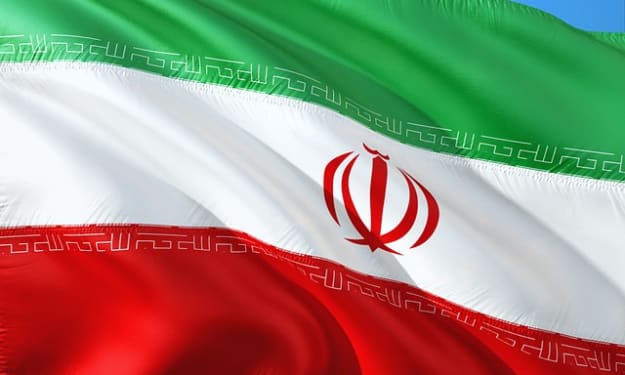
Iran Nuclear Talks: Stalled Progress and Rising Tensions
The Iran nuclear talks, aimed at reviving the 2015 Joint Comprehensive Plan of Action (JCPOA), remain at a standstill amid escalating geopolitical tensions, regional conflicts, and domestic political pressures in both Iran and the United States. With Iran advancing its nuclear program and Western powers maintaining strict sanctions, the prospects for a diplomatic breakthrough appear increasingly uncertain. Renewed discussions between the U.S. and Iran regarding uranium enrichment have sparked significant global interest.
By Md Omar Faruk10 months ago in History
The 2024 U.S. Presidential Election: A Pivotal Moment in American Politics
One of the most significant elections in modern American history is expected to take place in the United States in 2024. With deep political divisions, high-stakes policy debates, and the potential for historic outcomes, the race will test the resilience of American democracy. As candidates from both major parties campaign across the country, voters are weighing issues such as the economy, immigration, foreign policy, and the future of democratic institutions.
By Md Omar Faruk10 months ago in History
Pompeii’s Last Breath: The Day Vesuvius Turned a City to Stone
Imagine waking up to a perfect morning—the sun warming the cobbled streets, the scent of freshly baked bread drifting from the marketplace, and the distant laughter of children playing near the forum. This was Pompeii on August 24, 79 AD. A thriving Roman city, alive with merchants, nobles, and slaves, all going about their daily lives, unaware that beneath their feet, the Earth was preparing to unleash its fury.
By Morsalin Russell10 months ago in History
Amazing Discoveries Made In The World's Most Mysterious Tombs
In a world filled with tales of the unknown and chilling legends that have stood the test of time, there are stories so strange they can send shivers down your spine. Today, we delve into an eerie chapter of history, exploring some of the most mysterious and downright spooky tombs from around the globe. From a mysterious window that peers into the supernatural to a peculiar 20-foot boulder used as an unyielding tomb, these crypts hold secrets that challenge the boundaries between life and death.
By The Unique Pen10 months ago in History
Deadly, Sombre Good Friday: 58 Killed in Israeli Attacks on Gaza. AI-Generated.
Gaza City, April 18, 2025 — In what should have been a day of solemn reflection and peace, Good Friday turned into a blood-soaked nightmare for the people of Gaza. At least 58 Palestinians were killed and dozens more wounded in a series of relentless Israeli airstrikes across the besieged territory, marking one of the deadliest single-day escalations in recent weeks.
By Rezwan Al Shahriar10 months ago in History
Gaza War
A persistent conflict marked by profound human suffering and geopolitical reverberations, Gaza war extends from Hamas’s October 7, 2023 assault through successive Israeli military campaigns into April 2025. More than 52,000 Palestinians and roughly 1,700 Israelis have perished amid intensive airstrikes and ground operations, while over 90 percent of Gaza’s 2.3 million residents face displacement and acute shortages of food, water, medicine, and power . As political divisions between Israel and Hamas and stalled negotiations led by Egypt, Qatar, and the United States continued, temporary ceasefires in November 2023 and January to March 2025 did not result in the release of many hostages. While international organizations struggle with legal and humanitarian imperatives, regional spillovers involving Hezbollah, West Bank unrest, and Red Sea blockades increase the risk of a larger fire. Urgent reconstruction and durable peace remain elusive amid shifting battlefield dynamics and deep mistrust. Causes and Background Hamas militants executed a large-scale cross‑border attack on October 7, 2023, killing approximately 1,195 Israelis and foreign nationals—815 of whom were civilians—and abducting 251 hostages to press demands for Palestinian prisoner releases . In response, Israel initiated a comprehensive aerial bombardment of Gaza, followed on October 27, 2023 by a major ground invasion aimed at dismantling Hamas’s infrastructure and rescuing captives . Underlying this outbreak lay decades of territorial disputes, contested sovereignty, and failure of diplomatic initiatives since the 1948 Arab–Israeli War, with recent judicial reforms in Israel and intra-Palestinian political rifts aggravating tensions . Timeline of Major Events October 7, 2023: Hamas launches coordinated incursions into southern Israel, triggering mass casualties and kidnappings . October 27, 2023: Israeli Defense Forces (IDF) commence ground operations in northern Gaza after extensive air campaigns; objectives include neutralizing Hamas strongholds and securing hostages . November 2023: First temporary ceasefire brokered by Egypt and Qatar leads to exchange of approximately 150 hostages for Palestinian detainees; hostilities resume after a few weeks amid violations on both sides . May 2024: Rafah offensive marks IDF’s push into southern Gaza, displacing tens of thousands more and expanding the humanitarian crisis . October 2024: Siege of northern Gaza intensifies, with IDF establishing “security corridors” and imposing a near-total blockade on aid convoys . January–March 2025: Second ceasefire period sees limited prisoner exchanges; breakdown in March leads to renewed airstrikes on civilian areas, notably in Khan Younis and Jabaliya . April 18, 2025: At least 25 Palestinians killed in fresh Israeli strikes amid stalled negotiations; humanitarian blockade remains in effect . Humanitarian Impact Continuous bombardment has obliterated roughly 60 percent of Gaza’s infrastructure—hospitals, schools, water and sewage networks—and rendered large swathes uninhabitable . Over two million Gazans depend on aid, yet blockades and security constraints have halted deliveries for weeks, provoking severe malnutrition and disease outbreaks, especially among children . Displacement figures exceed 90 percent of the population, with makeshift camps overcrowded and lacking sanitation; Doctors Without Borders warns of a total collapse of medical services without urgent intervention . Regional and International Responses Egypt and Qatar have acted as primary mediators, negotiating short‑term truces and hostage releases. Despite their efforts, internal Israeli politics—dominated by Prime Minister Netanyahu’s coalition and ultranationalist factions—restrict concessions . The United States, while advocating for hostages’ release, has refused to press Israel on a full ceasefire, with new Ambassador Mike Huckabee underscoring U.S. alignment with Israeli security priorities . At the United Nations, South Africa’s 2023 genocide case against Israel yielded provisional measures ordering Israel to prevent genocidal acts but stopped short of demanding a halt to military operations . Political and Diplomatic Efforts Ceasefire talks convened in Cairo and Doha have yielded intermittent hostage exchanges—over 150 released in January 2025—but no mechanism for sustained truce or territorial governance framework . Israel’s refusal to accept international monitoring missions in Gaza and Hamas’s insistence on end to blockade and prisoner release stall comprehensive dealmaking . Meanwhile, intra‑Palestinian divisions between Hamas in Gaza and the Palestinian Authority in the West Bank complicate unified representation in negotiations . Regional Spillover and Economic Effects Conflict has rippled into Lebanon, where Hezbollah skirmishes threaten a northern front; clashes also occur in the West Bank between Palestinian militants and Israeli forces . Houthi-led Red Sea blockades prompt U.S. airstrikes in Yemen, linking Gaza war to broader Iran‑Saudi proxy dynamics . Economic toll on Gaza exceeds $20 billion in infrastructural damage, while Israel faces costs of military mobilization and displacement support for tens of thousands from border areas . Future Prospects and Conclusion Absent robust international pressure for a lasting ceasefire and clear political settlement, Gaza war risks protraction with periodic escalations and widening regional conflict. Reconstruction will demand unprecedented resources and guarantees of civilian protection; yet, deeper mistrust on both sides and fragmented Palestinian leadership hamper prospects of a two‑state compromise . Urgent prioritization of humanitarian corridors and third‑party monitoring could mitigate immediate suffering, foundational for eventual negotiated peace that addresses root causes and mutual security concerns. Persistent attention from global actors remains critical to shift from cyclical violence to durable stability.
By Nabir Mondol10 months ago in History
The Thunder of the Crescent: The Epic Life of Mehmed the Conqueror
Born for Glory In the year 1432, under the golden crescent moon of Edirne, a child was born to the Ottoman Sultan Murad II and his wife Hüma Hatun. They named him Mehmed — the name of a prophet, the name of destiny.
By Md Ajmol Hossain10 months ago in History
The Anunnaki and the Neteru: Were They the Same Sky Gods?
The Anunnaki and the Neteru: Were They the Same Sky Gods? Across the ancient world, civilizations spoke of powerful beings who descended from the heavens, shaping humanity and guiding our early societies. In Sumer, they were known as the Anunnaki. In Egypt, they were called the Neteru.
By The Secret History Of The World10 months ago in History
A Great Chapter of Bengal's Legacy
A Great Chapter of Bengal's Legacy: Sonargaon is known as one of the foremost important and antiquated cities within the history of Bangladesh. Though it is right now portion of Narayanganj locale, within the past it served as a major political, financial, and social center of Bengal. The title Sonargaon quickly brings out recollections of old eminence, wealthy creativity, and dynamic people conventions.
By Siyam Islam10 months ago in History
7 Fascinating Facts About the Egyptian Museum in Cairo
The Egyptian Museum in Cairo is one of the world’s most important cultural landmarks, housing a staggering collection of ancient treasures and historical artifacts. If you're planning a trip to Egypt, this museum is an absolute must-see. Located in Tahrir Square, it is a treasure trove of Egyptian history, showcasing everything from ancient mummies to the famed Tutankhamun treasures. In this blog, we’ll uncover seven fascinating facts about the museum, from its history to the incredible artifacts on display.
By Radhiya Furat10 months ago in History