Places
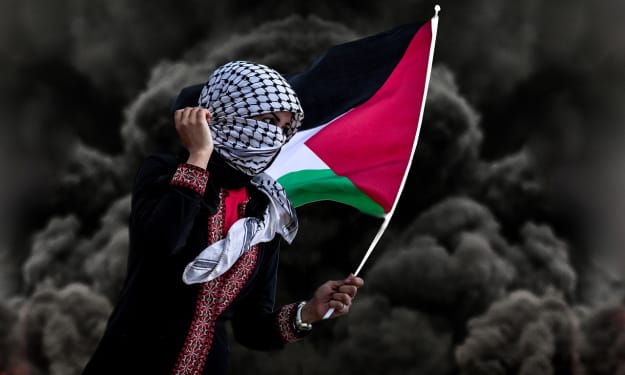
Hamas formally rejects Israeli ceasefire offer
Hamas officials had already indicated to the BBC earlier in the week that they would reject the plan. "Netanyahu and his government use partial agreements as a cover for their political agenda, which is based on continuing the war of extermination and starvation, even if the price is sacrificing all his prisoners [hostages]," Hayya said.
By Sabbir Hossen10 months ago in History
Returning Without Questions
Returning Without Questions They came a little closer to me one odd evening, I recall. Despite its simplicity, the relationship had an odd depth. There was a kind of connection between them that spoke before words, the language of their eyes—even when they were silent in front of each other, they understood each other. However, despite being by each other's side, there are times in life when people move on. There came a time when the two of them moved far away from each other.
By Arshad Ali10 months ago in History
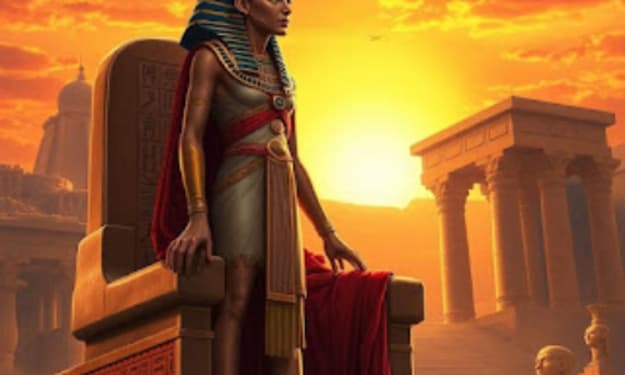
Hatshepsut's Revenge
Chapter One: The Beginning of Revenge The grand hall of the king's palace was filled with sorrow and hushed whispers. Hatshepsut, the heir to the Egyptian throne, sat beside the body of her late father, the king, trying to conceal her inner turmoil behind a mask of royal grief. She wasn’t just grieving; she was increasingly anxious about the future of her reign following her father’s death.
By mohamed elsayed10 months ago in History
Just How Effective Were Rhodesian Guerrillas?
Rhodesia, a country that is now divided into Zimbabwe and Zambia, with many people today only knowing of its existence as a result of Leonardo DiCaprio's cutthroat character in the 2006 film, Blood Diamond. One thing that you aren't able to learn from the movie, is the 15 year long civil war that tore apart the country's Southern region (present day Zimbabwe.) The Rhodesian Bush War was the result of a multitude of complex political factors, most notably the majority white government declaring independence from Britain without any kind of consent from the crown in 1965, as the South of Rhodesia was a self-governing colony since 1923.
By Jacob Newson10 months ago in History
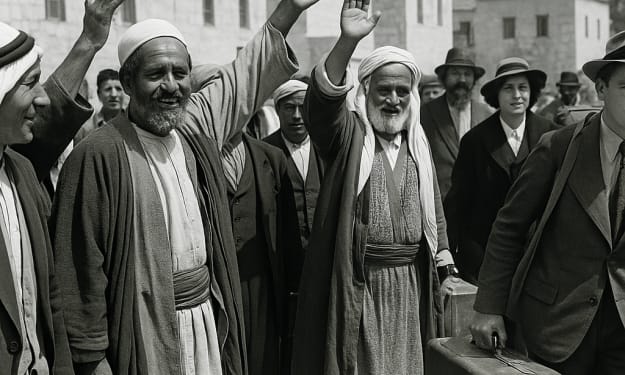
History of Israel and Palestine
Land, identity, and sovereignty are at the heart of the Israeli–Palestinian conflict, which continues to this day in the historically Palestinian region. Its origins trace back to the late 19th century with the rise of Zionism and Arab nationalism during the decline of the Ottoman Empire. ikipedia The British mandate in the early 20th century and rising tensions Following World War I, the British took control of Palestine under the Mandate system. The 1917 Balfour Declaration expressed British support for a "national home for the Jewish people" in Palestine, leading to increased Jewish immigration. This influx heightened tensions with the Arab population, who opposed the growing Zionist movement and feared displacement. Wikipedia 1947–1949: UN Partition Plan and the First Arab–Israeli War In 1947, the United Nations proposed partitioning Palestine into separate Jewish and Arab states. Jewish leaders accepted the plan, but Arab leaders rejected it. Upon Israel's declaration of independence in 1948, neighboring Arab states invaded, resulting in the first Arab–Israeli war. By the war's end in 1949, Israel controlled a significant portion of the territory, while Jordan and Egypt occupied the West Bank and Gaza Strip, respectively. The Nakba, or "catastrophe," refers to the displacement of approximately 750,000 Palestinians during this time. Reuters
By J P PRINCE 10 months ago in History
JULY REVOLUTION IN BANGLADESH (2024)
This article is about the combined timeline of the quota reform and anti-government movements. For the quota reform movement, see 2024 Bangladesh quota reform movement. For the anti-government phase, see Non-cooperation movement (2024). For other uses, see July Revolution (disambiguation).
By Md. Shihab10 months ago in History
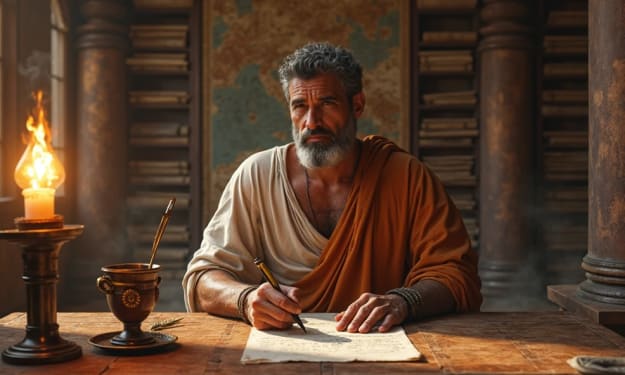
Polybius
The ancient era saw the emergence of numerous distinguished historians, yet few matched the meticulousness, analytical prowess, and impact of Polybius. Born in Arcadia, Greece, circa 200 BCE, Polybius experienced a period marked by significant political turmoil, observing the fall of Greek autonomy and the ascent of Rome as a dominant force in the Mediterranean. His seminal work, The Histories, is regarded as one of the most crucial historical narratives of the Hellenistic age, providing essential perspectives on the dynamics of power, the characteristics of political structures, and the pivotal events that influenced the ancient world.
By A História10 months ago in History
"Cosmic Crisis: Did a Solar Storm Nearly Wipe Out Ancient Humans 41,000 Years Ago?"
Predators, hostile environments, or a lack of food are among the first things that come to mind when we consider the threats that early humans faced. But what if their lives was also at danger from an unseen, lethal force from space? According to current scientific theories, the Earth's magnetic field drastically diminished 41,000 years ago, exposing early humans and fauna to high levels of cosmic radiation. The **Laschamps Excursion** may have had a significant impact on our ancestors, changing their surroundings and possibly affecting evolution.
By Md. Nuruzzaman khan10 months ago in History
Sunset in the mountains of Durmitor
Sunset in the mountains of Durmitor The afternoon was different. The sun was slowly setting on the mountainside, spreading golden colors in the sky. The sunset could be seen from the campus dormitory, like a perfectly arranged scene—as if painted by Allah with his own hands.
By Arshad Ali10 months ago in History
Thucydides of Athens
Thucydides of Athens (circa 460 – circa 400 BCE) is celebrated as one of history's foremost historians, recognized for his meticulous method of documenting historical events. In contrast to earlier historians who frequently intertwined myth with reality, Thucydides aimed to deliver a precise and analytical narrative grounded in evidence and firsthand accounts. His seminal work, The History of the Peloponnesian War, continues to be a cornerstone in the fields of historiography, political science, and military strategy.
By A História10 months ago in History