
Global Politics in 2025: A World in Flux
By Md Omar Faruk


Power realignments, economic protectionism, regional conflicts, and growing public discontent will continue to shape the landscape of global politics in 2025, making it as complicated and volatile as ever. With established powers reasserting themselves, emerging nations demanding a bigger voice, and institutions struggling to maintain credibility, the world finds itself at a historic crossroads.
The United States of America: Polarization and Protectionism The United States of America has taken a sharp turn toward protectionist policies under President Donald Trump's leadership. Dubbed "Donald-25" by critics and media commentators, his sweeping trade tariffs and economic isolationist stance have disrupted global supply chains, sent markets reeling, and drawn international condemnation. Many economists have likened the current economic turbulence to the 1970s stagflation crisis.
Tensions have risen as a result of Trump's aggressive foreign policy, particularly with regard to China and Iran. With the administration issuing ultimatums to global adversaries while simultaneously distancing itself from multilateral forums, Washington appears increasingly inward-focused. Additionally, there is growing concern regarding the GOP's support for Trump; some voices have already hinted at the possibility of impeachment proceedings taking place if the economic consequences worsen. China: Strategic Patience and Countermeasures
China has taken strategic countermeasures in response to the barrage of tariffs from the United States. Beijing accuses Washington of “unilateral bullying” and has pushed back by imposing its own tariffs and intensifying trade relations with Europe, Africa, and Southeast Asia.
Foreign Minister Wang Yi recently announced plans for an informal United Nations Security Council session on April 23 to address what China perceives as a growing trend of American economic aggression. This move underscores Beijing’s commitment to reshaping global narratives through multilateral platforms, even as it confronts internal challenges, such as a slowing economy and concerns over demographic decline.
Russia and Ukraine: A War Without End
The conflict between Russia and Ukraine remains unresolved. Despite repeated ceasefire discussions, peace remains elusive. Hopes for a landmark peace agreement aligning with Easter passed unmet, prompting renewed calls for a diplomatic resolution.
Russian President Vladimir Putin continues to demand broad security guarantees and a reconfiguration of NATO’s presence in Eastern Europe. Meanwhile, Ukrainian President Volodymyr Zelensky is navigating both internal political pressures and external expectations. Ukraine recently signed a controversial agreement offering U.S. corporations access to energy and infrastructure development, a move seen as a bid to retain American support in the absence of significant progress on the battlefield.
The United States has warned that if no diplomatic breakthrough is achieved by April 30—marking the 100th day of Trump’s return to office—it may withdraw from mediating future peace efforts. This has left European powers scrambling to salvage talks and prevent further destabilization in the region.
Europe: Fragmentation and New Alliances
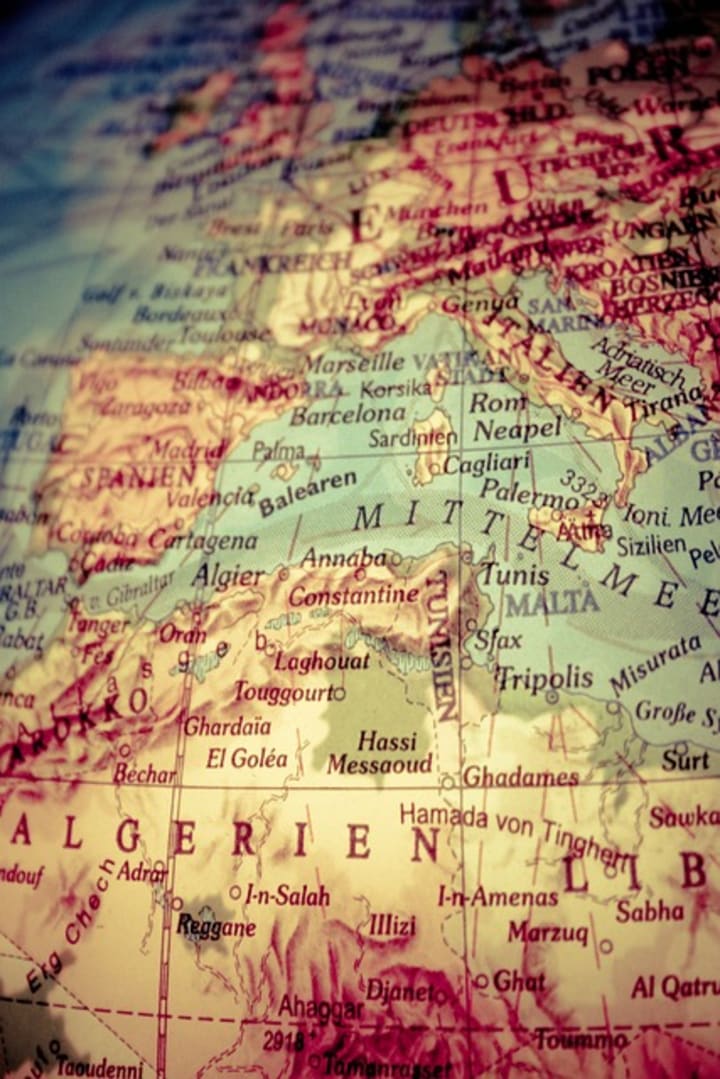
In Europe, tensions have been further exacerbated by economic disruptions stemming from U.S. policies and the continued war in Ukraine. France has taken a bold step by pledging to officially recognize the State of Palestine, challenging the traditional Western consensus shaped by U.S. and UK foreign policy. The decision has reignited debates over Middle East diplomacy and the relevance of older alliances like NATO in a shifting world order.
Meanwhile, the European Union is exploring ways to reduce dependency on American technology and defense systems. Countries like Germany, Spain, and Italy are championing a more independent and assertive EU foreign policy.
The Global South: Marginalized but Mobilizing
Countries in Africa, Latin America, and Southeast Asia are increasingly vocal about their exclusion from major decision-making forums, in contrast to the power struggles of the traditional superpowers. Calls for reform at the United Nations Security Council have grown louder, with countries such as Brazil, India, and South Africa demanding permanent seats to reflect the 21st-century geopolitical reality.
Public movements across the Global South are pushing for transparency, climate justice, and fair trade. However, these regions remain vulnerable to global economic shocks and are disproportionately affected by climate change, fueling migration, food insecurity, and social unrest.
South Korea: A Turning Point in Civic Engagement
South Korea is witnessing a unique political shift following the impeachment of President Yoon Suk-yeol. The mass protests that led to his downfall have inspired a wave of political activism, especially among young people, women, and LGBTQ+ communities. Labor unions and civil society organizations are organizing more effectively than ever, signaling a potential transformation in South Korea’s traditionally hierarchical political culture.
This civic reawakening is being closely watched across Asia, where authoritarianism and repression remain dominant in several countries.
Australia: Domestic Focus in a Tumultuous World
Despite global upheaval, Australia’s 2025 federal election campaign has been strikingly insular. Political parties are focused on issues like modest tax reform and fuel rebates, while largely ignoring broader global developments. Analysts have criticized both Prime Minister Anthony Albanese and opposition leader Peter Dutton for failing to present a coherent international strategy—especially as alliances like AUKUS become increasingly complex in the face of U.S. unpredictability.
What Lies Ahead?
The G20 Leaders’ Summit in Johannesburg this October and the COP30 climate conference in Brazil this November may serve as critical inflection points. With traditional leadership being questioned and newer voices emerging, the next phase of global politics could be one of recalibration—or deeper fragmentation.
One thing is certain: the world is in the midst of a political realignment. How nations respond to the pressures of nationalism, economic uncertainty, and global governance will define not just the coming years, but perhaps the rest of the 21st century.
About the Creator
Md Omar Faruk
Engineer
Keep reading
More stories from Md Omar Faruk and writers in History and other communities.
Iran Nuclear Talks: Stalled Progress and Rising Tensions
The Iran nuclear talks, aimed at reviving the 2015 Joint Comprehensive Plan of Action (JCPOA), remain at a standstill amid escalating geopolitical tensions, regional conflicts, and domestic political pressures in both Iran and the United States. With Iran advancing its nuclear program and Western powers maintaining strict sanctions, the prospects for a diplomatic breakthrough appear increasingly uncertain. Renewed discussions between the U.S. and Iran regarding uranium enrichment have sparked significant global interest.
By Md Omar Faruk9 months ago in History
The Red Sea Crisis and the Fragility of Global Trade
The Red Sea Crisis and the Fragility of Global Trade The Red Sea has quietly become one of the most critical pressure points in global affairs. Once seen mainly as a commercial shipping route connecting Asia, Europe, and Africa, it is now a zone of rising military tension, disrupted trade, and geopolitical rivalry. What happens in this narrow stretch of water is no longer a regional issue—it is reshaping global economics and international security.
By Wings of Time 3 days ago in History
3 Times Safety Rules Were Written After It Was Already Too Late
Safety rules like to pretend they are proactive. They wear reflective vests, carry clipboards, and speak confidently about prevention. But history knows the truth: many safety rules were written after something went catastrophically wrong, when prevention was no longer an option and regret had already filled out the paperwork.
By Enoch Sagini3 days ago in History
How to Succeed at the Benson Directory®
Congratulations and welcome to the Benson Directory® employee #22391! As our newest call handler, you will have the privilege of speaking with dozens of unique and interesting people on a daily basis as well as the opportunity to earn bonuses for high performance. Contained within this handbook you will find a set of ease to follow instructions designed to help you settle in to your new role and begin paving the way to success.
By S. A. Crawford5 days ago in Fiction



Comments
There are no comments for this story
Be the first to respond and start the conversation.