Narratives
Eternal Echoes
Step aboard the grandest marvel of its time, the RMS Titanic, as it embarked on a historic journey from England on that fateful April 10, 1912. This wasn't just another ship setting sail; no, the Titanic was a breathtaking behemoth, a colossal liner that outshone all others. Stretching an astonishing 882 feet, it boasted a length almost equivalent to three vast soccer fields. And when you gazed up at its towering magnificence, you'd find yourself staring at an awe-inspiring 175-foot tall structure, matching the height of a staggering 17-story building!
By Daniel Fuentes Hermosa2 years ago in History
LIFE HISTORY OF AKBAR CHAPTER : 1(AKBAR'S LIFE)
Akbar the Great, also known as Akbar I, was one of the most renowned and influential rulers of the Mughal Empire in India. He was born on October 15, 1542, in Umerkot, Sindh (present-day Pakistan) to Emperor Humayun and Hamida Banu Begum. His birthplace is known as Umerkot Fort and is now a popular historical site.
By Dhishon Alaf singh R2 years ago in History
The Ancient Egyptian Civilization. Content Warning.
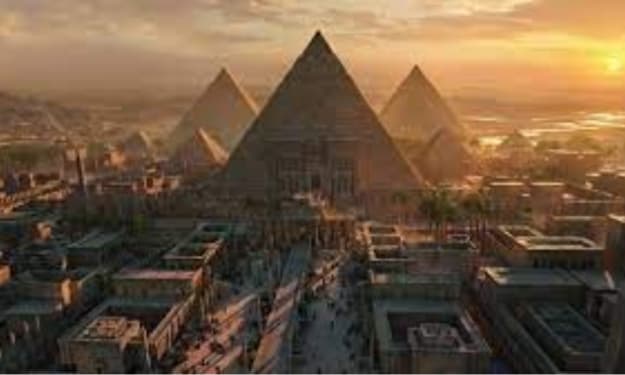
The Ancient Egyptian Civilization stands as one of the most extraordinary and enduring cultures in the annals of human history. Flourishing along the banks of the Nile River for over three millennia, this ancient society left an indelible mark on the development of human civilization. With its monumental achievements in art, architecture, religion, governance, and societal structures, Ancient Egypt continues to captivate the imagination of scholars, historians, and enthusiasts alike. This comprehensive study document seeks to delve deep into the fascinating world of Ancient Egypt, unravelling its mysteries and shedding light on the various facets that contributed to its rise, evolution, and lasting impact on the world.
By Nizam malang2 years ago in History
Are Steel Houses Thoroughly Good
In June of 1947, Architectural Forum selected a distinctive cover star: The Lustron. This innovative home was constructed with a steel frame, steel panels, and a steel roof, and many of these homes still exist today. The Lustron represented a new concept in post-World War II American housing, as it was a factory-made home that could be shipped across the country with an accompanying instruction manual for each individual component. The exterior and interior of the home were both constructed entirely of steel. From 1947 to 1950, Lustron produced numerous homes, but just three years after the cover shot, the future of housing became a mere footnote. The failure of the Lustron home is not simply an anomaly in the realm of home building, but rather a tale of post-war optimism, technological limitations, and a testing ground for the collaboration between government and private industry.
By Hanif Salahudin2 years ago in History
"Unearthing Humanity's Ancient Embrace: The Heartfelt Discovery of 700,000-Year-Old Humans in the Philippines"
Throughout history, there have been a number of human species- and researchers are continually discovering new ones. A recent discovery in the Philippines has changed our understanding of when our ancestors first reached the islands- and this is surprising because the country, as we know it, is completely surrounded by water. Homo Sapiens, our species, was not the first type of human to live on Earth. You’ll have probably heard of Neanderthals, who first appeared about 230,000 years ago… but there have been at least 17 other species of humans- with the oldest known ancestor, the Orrorin tugenensis, walking the earth about 5.8 million years ago.
By francis monney2 years ago in History
Carthage
In the twilight of the 9th century BCE, a group of adventurous Phoenician settlers embarked on a daring journey across the vast Mediterranean Sea. Guided by the stars and their dreams of prosperity, they sought to establish a new outpost on the fertile African coast. Little did they know that this small trading post would evolve into one of the most formidable maritime powers of antiquity - Carthage.
By Eugene Ochogo2 years ago in History
Unraveling the Secrets of Ancient Egypt
Once upon a time, in a land embraced by the majestic Nile River, a remarkable civilization emerged. It was the birth of Ancient Egypt, a land filled with enchanting wonders and mysteries that would captivate the world for millennia to come.
By Eugene Ochogo2 years ago in History
Julius Robert Oppenheimer
For many, the name "Julius Robert Oppenheimer" evokes images of mushroom clouds in far-off deserts, the haunting specter of nuclear annihilation, and the dawning of an era where humanity held in its hands the power to destroy itself. Born in New York City on April 22, 1904, Oppenheimer would come to be known as the "Father of the Atomic Bomb" a title that bore with it both grandeur and moral complexity. Today, we delve into the life of this remarkable physicist, tracing his journey from a young student in Harvard College to the deserts of New Mexico, where he led the project that would forever change the world.
By Alex Parker2 years ago in History
The Rich Tapestry of South Africa
South Africa, a land of captivating landscapes and vibrant cultures, is home to a diverse tapestry of tribes that have shaped the nation's history and identity. Each tribe brings its unique customs, languages, and traditions, contributing to the rich and multicultural fabric of this remarkable country. In this article, we delve into the fascinating world of South Africa's tribes, exploring their origins, cultural practices, and enduring legacies.
By Eugene Ochogo2 years ago in History