
Julius Robert Oppenheimer
The Father of the Atomic Bomb


For many, the name "Julius Robert Oppenheimer" evokes images of mushroom clouds in far-off deserts, the haunting specter of nuclear annihilation, and the dawning of an era where humanity held in its hands the power to destroy itself. Born in New York City on April 22, 1904, Oppenheimer would come to be known as the "Father of the Atomic Bomb" a title that bore with it both grandeur and moral complexity. Today, we delve into the life of this remarkable physicist, tracing his journey from a young student in Harvard College to the deserts of New Mexico, where he led the project that would forever change the world.

Early Years
Oppenheimer's journey began in New York City. His father, Julius, was a wealthy textile importer and his mother, Ella Friedman, was an artist. Raised in a Jewish family, he attended the Ethical Culture School, an institution that emphasized an ethical, humanist approach to education.
When Oppenheimer was 18, he headed to Harvard College, having delayed his admission for a year due to a bout of dysentery. At Harvard, he studied chemistry before shifting his interest to physics. His academic brilliance was clear, and he graduated in just three years, summa cum laude.
The World of Physics
Oppenheimer's love for physics took him across the Atlantic to the Cavendish Laboratory at the University of Cambridge. However, his relationship with experimental physics was fraught, and after accidentally leaving a piece of apparatus in a state of vacuum overnight, he sought a different path.
This search led him to the University of Göttingen, where he would become a pupil of Max Born, one of the fathers of quantum mechanics. Here, Oppenheimer thrived. He published a famous paper on the "Born-Oppenheimer approximation," which remains a fundamental concept in quantum mechanics. This was one of the first of many important contributions he would make to the scientific community.
It was also at Göttingen where he met Jean Tatlock, a fellow student who would become a significant figure in his life, both emotionally and politically. Their relationship, though intermittent and fraught with struggles, would leave a profound impact on Oppenheimer.
Return to the States
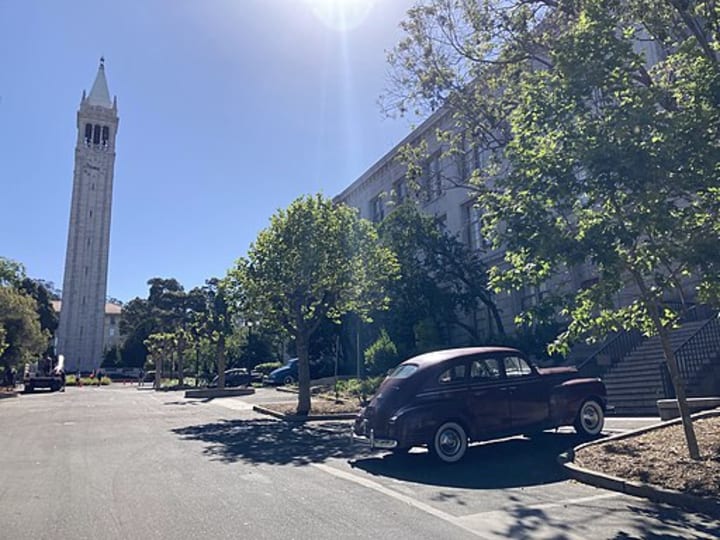
After his productive stint in Göttingen, Oppenheimer returned to the United States in 1927. He accepted a joint position at the University of California, Berkeley and the California Institute of Technology. It was here that he became a mentor to many of the next generation of American physicists, including future Nobel laureate Hans Bethe.
At Berkeley, Oppenheimer became close friends with Ernest Lawrence, the Nobel laureate and nuclear physicist. Their collaborations and friendly rivalry would spur both to significant advances in the field of nuclear physics. They worked together until the political climate and the advent of World War II drew them into the realm of military research.
The Shadow of War
By the late 1930s, the world was on the brink of another global conflict. Nazi Germany was on the rise, a threat that deeply disturbed Oppenheimer, who was of Jewish descent. He began to explore how his scientific work could aid in the fight against the growing menace. Working with Lawrence and others, Oppenheimer began to investigate the possibility of nuclear weapons, an effort that would eventually lead him to the secret Los Alamos laboratory in New Mexico.
In 1942, General Leslie Groves, the military leader of the Manhattan Project, was seeking a scientific director for the project. Despite the objections of some, including Edward Teller, Groves chose Oppenheimer, stating that he was a "genius and a real leader."
Building The Bomb
Over the next few years, Oppenheimer would oversee the development of the A-bombs "Little Boy" and "Fat Man," which would be used on Hiroshima and Nagasaki, respectively. Laboring in the deserts of New Mexico, Oppenheimer and his team of brilliant scientists, including his brother Frank, worked tirelessly on the bomb.
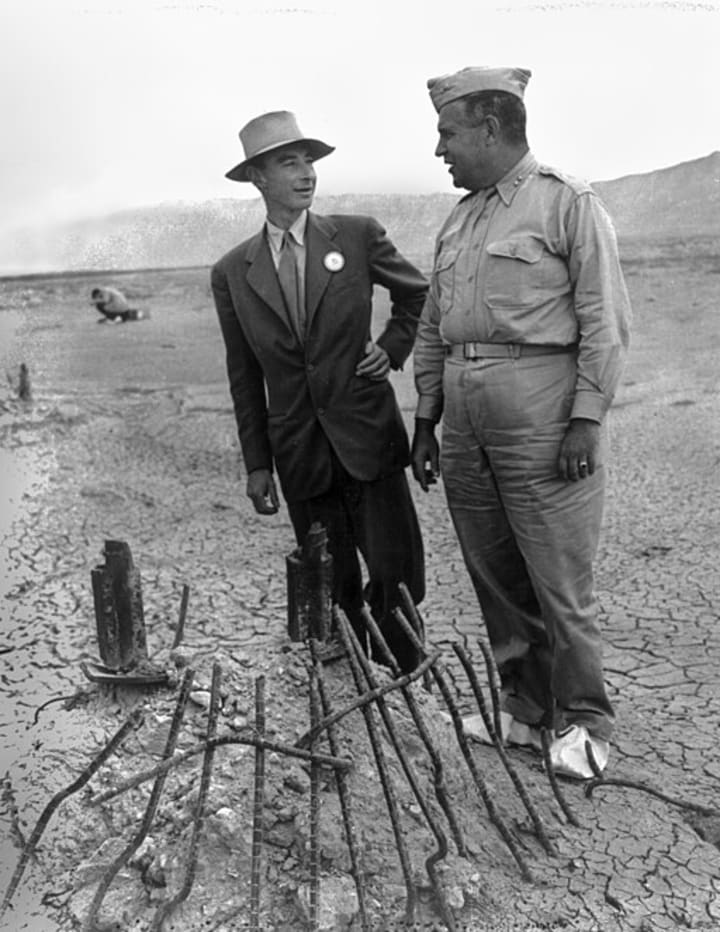
When "Trinity," the first nuclear bomb, was tested in July 1945, Oppenheimer famously quoted from the Bhagavad Gita, saying, "Now, I am become Death, the destroyer of worlds." These words capture the moral and philosophical quandary that nuclear weapons represented, a concern that would haunt Oppenheimer in his later life.
Later Years and Legacy
After the war, Oppenheimer became a political target. His earlier associations with communist circles, including his relationship with Jean Tatlock, and his opposition to the development of the hydrogen bomb led Edward Teller and other political enemies to label him a security risk. In 1954, Oppenheimer's security clearance was revoked, a decision that caused an uproar in the scientific community.
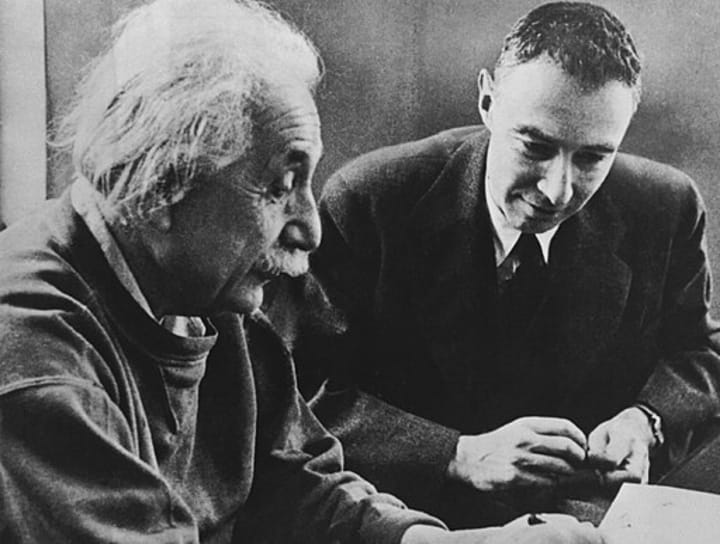
In his later years, Oppenheimer served as the director of the Institute for Advanced Study in Princeton, New Jersey, where he continued to make important contributions to theoretical physics. Despite the political controversy that surrounded him, he remained a highly respected figure within the scientific circles.
Oppenheimer's life was marked by exceptional scientific achievement, political conflict, and profound moral complexity. His work on the A-bomb brought him fame, infamy, and, ultimately, a deep sense of remorse. He died of throat cancer in 1967, a controversial figure to the end.
Conclusion
J. R. Oppenheimer's life can be seen as a reflection of the twentieth century itself, with all its scientific progress, political upheaval, and ethical dilemmas. From his early days in the Ethical Culture School, through his formative years at Harvard University and the University of Göttingen, to the deserts of New Mexico where he led the development of the nuclear bomb, Oppenheimer was a man both of his time and ahead of it.
His story is a fascinating exploration of the intersections of science, politics, and morality. It underscores the fact that scientific advancements do not exist in a vacuum. The nuclear bombs that Oppenheimer helped create were not merely scientific achievements, but also political tools and ethical challenges. They reflected the fears and hopes of a world at war and a world in the grip of a new technological era.
Oppenheimer's life and work serve as a reminder that science can both illuminate and darken our world. As we continue to push the boundaries of knowledge, we must also grapple with the consequences of our discoveries. As Oppenheimer himself said in the previous year before his death, "The physicists have known sin; and this is a knowledge which they cannot lose."
The story of J. R. Oppenheimer, the "Father of the Atomic Bomb," is a testament to the power of human ingenuity and the complexity of the human soul. From the classrooms of Harvard to the laboratories of Berkeley and Göttingen, and finally, to the deserts of New Mexico, Oppenheimer's journey was one of great scientific triumph and profound personal struggle. His legacy, like the atomic age he helped usher in, is one of light and shadow, a poignant reminder of the dual potential of scientific progress.
About the Creator
Alex Parker
Blogger with a passion for exploring interesting topics and sharing my insights. Join me on my journey of discovery and let's dive into the world of endless possibilities! ✨
Keep reading
More stories from Alex Parker and writers in History and other communities.
Rhino Linux
Linux enthusiasts and Ubuntu users have something new to get excited about with the release of Rhino Linux 2023.1 (release date: 2023-08-07). This Ubuntu based rolling release distribution offers a unique and refreshing experience for those seeking the latest software updates and a stable desktop environment. In this comprehensive article, we will delve into the key features and benefits. Let’s take a closer look at what sets Rhino Linux apart from other distributions and explore why it has garnered attention within the Linux community.
By Alex Parker2 years ago in 01
A secret staircase found beneath a 1,500-year-old French church
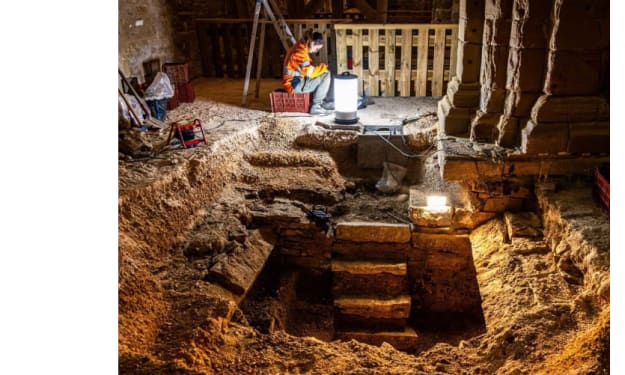
A subterranean staircase and burial strata dating back approximately 1,500 years were discovered during a project inside the Church of Saint Philibert in Dijon, France. The stairs were discovered by restoration workers inside the church when repairs were being made, and the excavation soon ensued.
By Francis Dami6 days ago in History
Martin Luther King's 'I Have a Dream' Speech: Things People Still Don't Know
Former President Ronald Reagan declared the third Monday in January to be Martin Luther King Jr. Day to celebrate the slain civil rights activist. Had he lived, he would be celebrating his birthday at age 97 on January 15, 2026, but he was assassinated at the young age of 39 on April 4, 1968.
By Margaret Minnicks3 days ago in History



Comments
There are no comments for this story
Be the first to respond and start the conversation.