
LIFE HISTORY OF AKBAR CHAPTER : 1(AKBAR'S LIFE)
INDIAN HISTORY

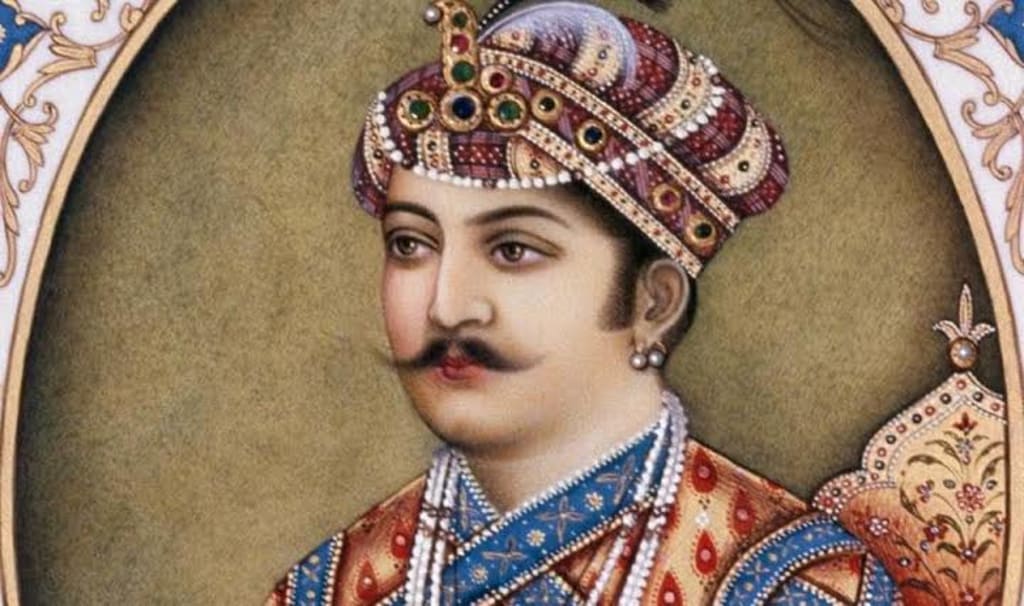
Akbar the Great, also known as Akbar I, was one of the most renowned and influential rulers of the Mughal Empire in India. He was born on October 15, 1542, in Umerkot, Sindh (present-day Pakistan) to Emperor Humayun and Hamida Banu Begum. His birthplace is known as Umerkot Fort and is now a popular historical site.
Early Life:
Akbar's early life was marked by turmoil and uncertainty due to the challenges faced by his father, Emperor Humayun. After Humayun's defeat and exile, Akbar, as a young prince, had to endure difficult circumstances. However, his fortunes changed when Humayun regained the Mughal throne in 1555.
Ascension to the Throne:
On January 24, 1556, Humayun tragically died after falling down the stairs in his library. At the time of his father's death, Akbar was just 13 years old. He ascended to the throne and was crowned Emperor of the Mughal Empire, with his regent being Bairam Khan, a trusted advisor and commander-in-chief.
Early Reign and Consolidation:
During the early years of his reign, Akbar faced several challenges, including military threats from rival claimants to the throne and regional rebellions. However, with the guidance of Bairam Khan, he successfully navigated through these challenges and managed to consolidate his rule over the empire.
Religious Policy and Tolerance:
One of the most notable aspects of Akbar's rule was his policy of religious tolerance. He sought to promote harmony among the diverse religious communities in his empire, which included Hindus, Muslims, Christians, Jains, and others. Akbar himself was illiterate but showed a keen interest in various faiths and engaged in intellectual discussions with scholars and religious leaders of different beliefs.He abolished the Jizya tax on non-Muslims, allowed people to practice their religion freely, and even held religious debates in his court to foster understanding and respect among the different religious groups.
Expansion and Military Campaigns:
Under Akbar's leadership, the Mughal Empire expanded significantly. He launched several military campaigns to bring various territories under his rule. Some of his notable military victories include the annexation of Gujarat, Bengal, and parts of Rajasthan. Akbar's military success was partly due to his innovative and inclusive policies, which enabled him to integrate the conquered regions into the empire efficiently.
Marriage and Family Life:
Akbar had several wives, including his first and chief consort, Jodha Bai, who was also known as Mariam-uz-Zamani. She was a Rajput princess from the kingdom of Amber (present-day Jaipur). Their marriage was a significant step in fostering alliances between the Mughals and the Rajputs. Akbar also married other Rajput princesses and women from various regions to strengthen political ties.
Akbar, the third Mughal emperor of India, reigned from 1556 to 1605 and is remembered for his administrative brilliance, cultural advancements, and religious tolerance. Alongside his remarkable reign, Akbar's marriage and family life played a significant role in shaping the dynamics of the Mughal empire.
Marriage played a crucial role in strengthening political alliances and diplomacy during Akbar's time. In 1562, at the age of 19, Akbar married his first wife, Ruqaiya Sultan Begum, who was also his first cousin. She was the daughter of Akbar's paternal uncle, Hindal Mirza. This marriage not only solidified family ties but also demonstrated Akbar's respect for tradition and kinship.
Akbar's pursuit of political alliances extended beyond the confines of the Mughal dynasty. In 1562, he married his second wife, Salima Sultan Begum, who was the widow of his trusted advisor and friend, Bairam Khan. This union not only honored Bairam Khan's memory but also cemented Akbar's bond with his loyal supporters.
Perhaps the most famous of Akbar's marriages was his union with Mariam-uz-Zamani, also known as Harka Bai. She was a Rajput princess from the kingdom of Amber (present-day Jaipur). Their marriage in 1562 exemplified Akbar's commitment to fostering religious tolerance and integrating diverse cultures into the Mughal fold. Mariam-uz-Zamani played a pivotal role in influencing Akbar's policies, particularly in matters concerning the Rajput community.
Akbar's quest for unifying his vast empire extended beyond his harem. He sought to ensure a harmonious environment within his family, fostering camaraderie and mutual respect among his wives and children. The emperor's open-mindedness toward various faiths was reflected in his children's upbringing. Despite being a devout Muslim himself, Akbar allowed his Hindu wives to raise their children according to their religious beliefs.
One of Akbar's most well-known decisions regarding family life was abolishing the pilgrimage tax on Hindus. He also celebrated various Hindu festivals and invited scholars and religious leaders from different faiths to engage in interfaith dialogues within his court.
Akbar's family life was blessed with several children, but the most renowned among them was his son, Prince Salim, later known as Emperor Jahangir. The relationship between Akbar and Salim had its fair share of trials, especially when Salim rebelled against his father in what is now known as the "Revolt of Prince Salim." However, Akbar's wisdom and love for his son eventually prevailed, and the two reconciled their differences.
The bond between Akbar and his family was a testament to his progressive outlook and willingness to adapt to changing times. His marriage and family life set a precedent for the Mughal rulers who followed, influencing the dynamics of the empire for generations to come.
In conclusion, Akbar's marriage and family life were instrumental in shaping his reign and the future of the Mughal empire. His approach to marriage, religious tolerance, and family dynamics exemplified his greatness as a ruler and a leader, leaving a lasting impact on the rich history of India.
TO BE CONTINUED .........
About the Creator
Keep reading
More stories from Dhishon Alaf singh R and writers in History and other communities.
The life of a racer towards success
Introduction: The life of a racer is a relentless pursuit of excellence, a thrilling journey that encompasses passion, perseverance, and sheer determination. From the earliest days of their childhood, aspiring racers dream of conquering the tracks, pushing themselves to the limits of their abilities, and emerging victorious. However, behind the glitz and glamour lies a path riddled with challenges and sacrifices that must be overcome to reach the pinnacle of success. This essay delves into the world of racing, shedding light on the demanding lifestyle and unwavering commitment that defines a racer's journey to triumph.
By Dhishon Alaf singh R3 years ago in Lifehack
Iran’s Final Warning
Iran’s Final Warning Tensions in the Middle East have reached one of the most dangerous levels in recent years as Iran issued strong warnings to both the United States and Israel during the ongoing conflict. Iranian military leaders and political officials say that if the attacks against Iranian territory continue, the war could expand far beyond its current battlefield.
By Wings of Time 6 days ago in History


Comments
There are no comments for this story
Be the first to respond and start the conversation.