General
Mike Waltz seen in photos using Signal app at White House after group chat scandal
Mike Waltz Spotted Using Signal App at White House After Group Chat Leak Sparks Controversy Congressman Mike Waltz was recently photographed using the encrypted messaging app Signal during a visit to the White House, sparking new conversations about digital privacy and communication security among lawmakers. The sighting comes in the wake of a recent group chat scandal involving leaked messages from a private conversation among Republican members of Congress. The controversy has heightened awareness of the risks of unsecured communication, pushing several lawmakers to reevaluate how they share sensitive information.
By GLOBAL NEWS9 months ago in History
The Great Pyramid of Giza: Where Are All Its Architectural Documents?
The Puzzle of the Ages The Great Pyramid of Giza, standing majestically on the edge of the Egyptian desert, has captured the imagination of humanity for millennia. It is the last of the Seven Wonders of the Ancient World still standing, its stone blocks echoing with the whispers of a forgotten civilization. Despite its grandeur, one key piece of the puzzle has always been missing: the architectural documents that explain how it was built.
By The Secret History Of The World9 months ago in History
Israel Strikes Syria, Targeting Group Behind Attack on Druze Communit. AI-Generated.
1. Cross-border airstrikes in Syria: In retaliation for an alleged attack from Syria, Israel carried out airstrikes in the Quneitra region. While Israel claims it targeted militants, such cross-border military actions often risk civilian casualties and violate the sovereignty of another nation—actions many consider a form of aggression.
By Habib Mahmud9 months ago in History
Red Over the Fields: Why May Day Still Matters
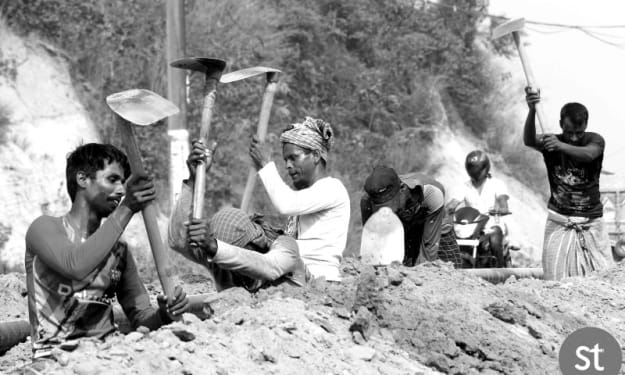
🌿 Introduction On May 1st, the world pauses—if only briefly—to remember the hands that build, carry, till, sew, and serve. But do we truly see the people behind the work? Or has May Day become just another date on the calendar, stripped of its struggle, reduced to hashtags and hollow statements?
By Chowdhury Kabir9 months ago in History
Description and history of the beauty of Kashmir, the paradise on earth
Kashmir - as if it were a dream paradise. All the beauty of the world has gathered here. All the aspects of nature have come together. This paradise is decorated with ornaments of every different taste of nature. At one time, the word Kashmir was geographically used to refer only to the vast Himalayas and the valley of the Pir Panjal Mountains. Today, Kashmir refers to a vast region that consists of the Indian-administered state of Jammu and Kashmir, the Pakistani-administered Gilgit-Baltistan and Azad Kashmir provinces, and the Chinese-administered Aksai Chin and Trans-Karakoram Tract regions. Therefore, it can be said that Kashmir has two parts. One is Indian-administered Jammu and Kashmir and the other is Pakistan-administered Azad Kashmir. Srinagar, Pahalgaon, Gulmarg, Sonmarg and Katra are the sights of tourists in Kashmir. Then we can say Dalhousie, Amritsar, Manali, Kullu, Himachal and Punjab. To visit these places, you need a vacation or leisure of more than a month. Banihal Tunnel has an amazing connection with Kashmir. This tunnel is about two and a half kilometers long. There are several avalanche zones before the tunnel. Once you cross from here, you will see Kashmir covered in amazing greenery. The forests are adorned with poplars, willow trees and green fields. The blue sky between the green trees. In the distance, rugged mountains, silent valleys. And Kashmir is rising above the mountains for miles. A romantic dream paradise. A dream kingdom. The beauty of Kashmir cannot be described in words. Clear water rivers, high snow-capped mountains, forests, and people of different cultural diversity are all unique additions here. There is the Pir Panjal mountain range on the other side, up to the Karakoram Nanga. And behind it is Kashmir. Pink, white mustard and poppy flowers shine all summer long. Every year, tourists from different parts of India and from different countries of the world flock to Kashmir to see Nishat, Shalimar, Harwan, Mughal Gardens and Chashmashahi. Kashmir has a special value for tourists due to its natural beauty and snowfall. The history of Kashmir is inextricably linked with the history of the greater Indian subcontinent and its neighboring regions (Central Asia, South Asia and East Asia). Historically, Kashmir has been called the 'Kashmir Valley'. Today, Kashmir refers to a relatively large region. The present-day Indian-controlled state of Jammu and Kashmir (which consists of Jammu, the Kashmir Valley and Ladakh), the Pakistan-controlled Azad Kashmir and Gilgit-Baltistan regions, and the Chinese-controlled Aksai Chin and Trans-Karakoram Tract regions are included in Greater Kashmir.
By Md Razib Hossain 9 months ago in History
Letters From a Locked Drawer
The Drawer No One Touched In the quiet town of Meadowridge, 16-year-old Clara Wren lived with her father in an old, creaky house full of memories. Her mother had passed away when Clara was just a baby, and the only thing left of her was an antique wooden desk in the attic. It had belonged to her mother, and on that desk sat a single drawer locked tight for as long as Clara could remember.
By Muhammad Hayat9 months ago in History
AK Goel IAS. Content Warning. AI-Generated.
India’s administrative structure has produced some truly remarkable leaders who have not only implemented policy but also inspired systemic change. One such figure is AK Goel IAS, a name synonymous with integrity, efficiency, and people-centric governance. From his impactful work in Telangana to urban development in Hyderabad, AK Goel IAS (also referred to as AK Goyal IAS) has contributed significantly to India's administrative evolution.
By Faizal Sheikh9 months ago in History
Islam: Faith, Practice, and Global Impact. AI-Generated.
Islam: Faith, Practice, and Global Impact Introduction Islam is one of the largest and fastest-growing religions in the world, with more than 1.9 billion adherents—nearly a quarter of the global population. It is a monotheistic faith that emerged in the 7th century CE in the Arabian Peninsula. Its teachings emphasize submission to the will of one God, known in Arabic as Allah, and it is deeply rooted in principles of justice, compassion, and community.
By Shafi Islam9 months ago in History
The Day the World Changed Forever: Untold Stories of Revolution
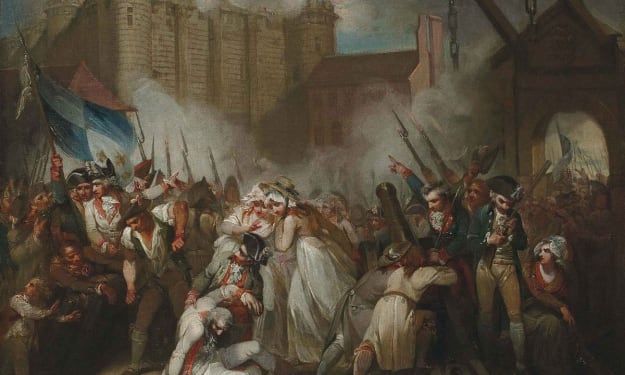
I. Prologue: A City on the Brink Paris, July 14, 1789. The air reeks of sweat and desperation. A mob of hungry, exhausted citizens, bakers, cobblers, and farmers marches toward the Bastille, a fortress towering over their city like a stone beast. They’re not just angry; they’re terrified. Bread prices have skyrocketed, their children are starving, and whispers of royal troops amassing at the city’s edge have set nerves on edge. When the first stones fly, it’s not just a riot; it’s a cry for survival.
By ChronoCurator9 months ago in History
Key Components of a Specific Conference Room History
Conference rooms, though often perceived as ordinary office features, can hold remarkable historical, strategic, and cultural significance. From witnessing pivotal business decisions to hosting diplomatic negotiations, these spaces often serve as silent witnesses to moments that shape organizations, institutions, or even nations. A detailed historical account of a specific conference room can uncover not only the evolution of a space but also the progression of ideas and actions within it. This essay outlines the key components necessary to build a comprehensive history of a specific conference room, whether in a corporation, university, or government facility. 1. Name and Location The first step in creating a conference room history is identifying its official name and location. Many rooms are named after influential figures, themes, or functions—such as “The Kennedy Room,” “Innovation Suite,” or “Boardroom A.” The name often reveals insight into the room's original purpose or cultural identity. Documenting the exact geographic or institutional setting also contextualizes the room within a broader organization. For example, a room located on the top floor of a law firm’s headquarters may have been reserved for high-stakes negotiations or senior leadership. 2. Date of Establishment Understanding when the room was created provides historical context. Was it part of the original building, or added later as the organization expanded? This component might also include information about the architect or interior designer, original blueprints, and intended usage. For instance, a conference room built during the 1960s Cold War era in a government building may reflect the geopolitical tensions of the time, possibly including security features like soundproofing or classified communications systems. 3. Original and Evolving Purpose One of the most insightful aspects of a room’s history lies in its intended function and how that function has evolved. Initially, the space might have been used for executive board meetings, legal arbitrations, academic deliberations, or strategic planning. Over time, however, changing technologies, work styles, or institutional needs might have transformed it into a digital collaboration hub, a media room, or a space for hybrid work. For example, a conference room in a tech company established in the early 2000s might have transitioned from being a brainstorming venue with whiteboards and projectors to a smart meeting room integrated with video conferencing software, augmented reality interfaces, and real-time translation capabilities. 4. Notable Events and Decisions Perhaps the most compelling component of a conference room’s history is a record of the important events that occurred within its walls. This includes significant decisions, strategy sessions, press briefings, negotiations, and agreements. For instance, a corporate conference room may have hosted the signing of a major merger agreement or the announcement of a groundbreaking product. In a political or governmental context, the room may have been the site of policy-making, treaty discussions, or emergency response planning.documentation where possible—meeting minutes, photographs, news articles, or oral histories. Including the names of individuals involved—executives, diplomats, academics—adds a human layer to the story. 5. Renovations and Technological Updates Conference rooms rarely stay static. Most undergo a series of renovations and updates to meet contemporary needs. Tracking these changes reveals shifts in organizational priorities and advances in technology. Did the room go from analog to digital? Were new presentation systems or security features installed? Did the furniture shift from formal, heavy wood to modular and mobile units? Each upgrade tells a part of the room’s story. Renovations may also reflect broader cultural shifts—for example, moving from hierarchical seating to inclusive, circular arrangements may indicate a change in leadership style or values. 6. Architectural and Design Features A thorough history includes attention to the room’s physical characteristics—size, layout, materials, lighting, acoustics, and decor. These features often reflect the time period of the room’s creation and the ethos of the organization. Was the space minimalist and modern, with glass walls and digital touchscreens? Or was it traditional, with dark wood panels, heavy drapes, and oil portraits? Design choices influence not only aesthetics but also behavior. Research shows that lighting, seating arrangements, and even color schemes can impact decision-making and collaboration. Highlighting these features provides insight into how the space shapes human interaction. 7. Symbolic and Cultural Significance Beyond utility, some conference rooms take on symbolic meaning over time. They may become known for specific traditions—such as where annual strategic retreats are held—or become iconic within the organization due to memorable speeches or leadership changes. Government or university conference rooms may become sites of pilgrimage for alumni, historians, or journalists. In some cases, the room’s history is woven into the organization’s identity. For example, the Roosevelt Room in the White House symbolizes executive deliberation and carries historical gravitas. Such cultural resonance elevates the room from functional space to institutional landmark. 8. Current Role and Future Outlook A complete history also considers the present-day role of the room and its possible future evolution. Has it retained its original prestige, or has it been repurposed for more informal use? Is it open to employees or students, or still reserved for executives or VIPs? Has it integrated new tools for hybrid or international meetings? Looking ahead, will the room remain central to the organization’s operations, or will it become obsolete in the age of virtual collaboration? Documenting future plans—such as renovation proposals or relocation—adds a forward-looking dimension to the historical narrative. Conclusion The history of a specific conference room may at first seem like a niche topic, but it reveals much about the organization it serves. From foundational decisions to design evolutions, each element—name, function, design, and event history—tells a part of a richer institutional story. Whether the room is a silent witness to historic breakthroughs or simply a well-used space for daily collaboration, recording its history is a way of honoring the ideas, voices, and people who have passed through its doors.
By Silas Blackwood9 months ago in History
Ctésias of Cnidus
Ctésias of Cnidus was an intriguing personality from antiquity—a Greek doctor, historian, and author who thrived during the 5th and 4th centuries BCE. Renowned for his accounts of Persia and India, Ctésias dedicated many years to the Persian court, acquiring direct insights into Eastern civilizations. Although his works have faced criticism for their inaccuracies and exaggerations, they continue to be significant for their distinctive viewpoint on the Achaemenid Empire and far-off regions.
By A História9 months ago in History