Figures
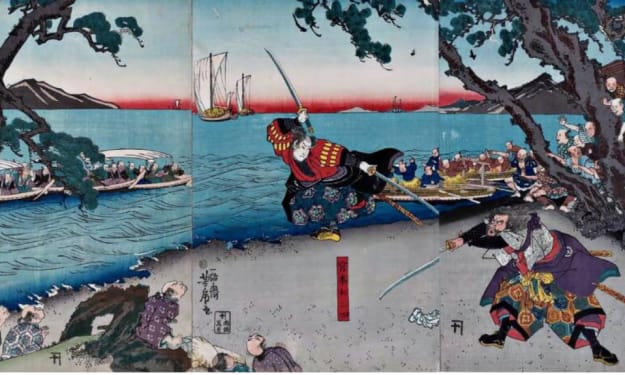
Japan's Greatest Swordsman and the Fight That Killed Him
The Epic Rivlry That Helped Define Jananese Martial Arts History Though Japanese history boasts colorful accounts of warriors whose martial prowess and bravery can transcend the ages, few tales are as legendary as that of Sasaki Kojiro.
By Rohitha Lanka11 months ago in History
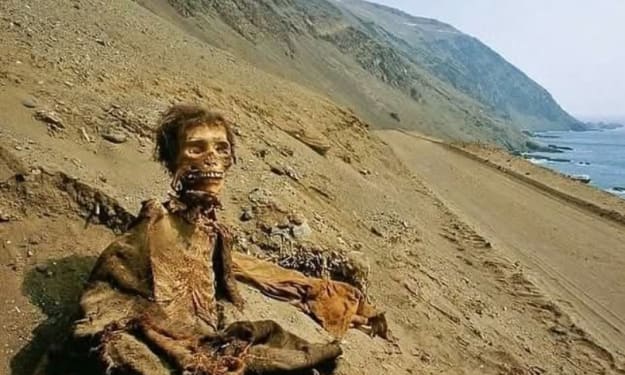
An Ancient World Through the Eyes of Wonderfully Preserved Mummies
Such stories are usually the work of journalists or scientists working on their own remits. Leave it to Science on the BBC Radio to examine how they came to be by introducing the mysterious Chinchorro mummies of the Atacama Desert.
By Rohitha Lanka11 months ago in History
The Power of Self-Editing: A Writer's Epiphany
What is Self-Editing? At its core, self-editing is the process of revising your own work to improve clarity, coherence, style, and accuracy. Unlike initial drafts that are often raw and filled with imperfections, self-editing is about refining and polishing those ideas. It involves analyzing everything from sentence structure to word choice, pacing, and overall flow.
By Malik Kashif11 months ago in History
Historic Study Finds Signs of Soul Departing Body at Death
New Scientific Discoveries have come up with surprising new evidence that can provide more insight about what happens to us after death. Experts believe that brain activity in the last moments near death has shown that something intangible could leave the body perhaps the 'soul' in the final moments of life. A rare study on the very nature of consciousness and brain waves among dying patients reveals this radical conclusion.
By Rohitha Lanka11 months ago in History
Shaped History
Shaped History: Understanding the Forces Behind Our Past and Present History is much more than a record of dates and events. It is a constantly evolving narrative, shaped by countless factors that work together to define the fate of civilizations, nations, and cultures. From natural forces to human ambition, history is not made by accident — it is shaped through interactions between people, environments, ideas, and innovations.
By Oluwatosin Adesoba11 months ago in History
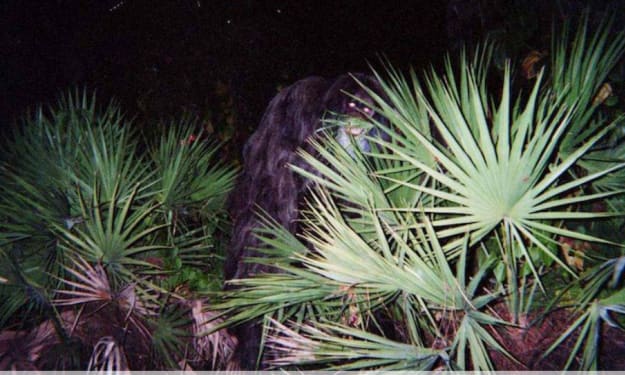
Florida's Elusive Bigfoot and the Mystery Behind its Existence
The Skunk Ape is little known but is a creature strange enough to be known as the Bigfoot of Florida, as sightings have been reported for decades. Described as an enormous, hairy beast, standing seven feet tall and tipping the scales at up to 500 pounds, it has captured the imagination of residents and visitors alike.
By Rohitha Lanka11 months ago in History
New language discovered to be developing in the United States.
New language discovered to be developing in the United States. The United States has always been a melting pot of cultures languages and traditions and nowhere is this more evident than in Miami Florida. In this vibrant city where Spanish and English intertwine in everyday life a new dialect of English has been quietly developing. This Spanish influenced variety of English shaped by decades of immigration from Latin America is a testament to how language constantly evolves in response to cultural and social interactions. Linguists at Florida International University have been studying this phenomenon for over a decade and they argue that Miami’s unique English dialect is a living example of language adaptation in a multilingual society. Miami is one of the most bilingual cities in the United States. The majority of its population is Hispanic or Latino with roots in Cuba Venezuela Colombia and other Spanish speaking countries. This heavy Spanish influence has not only preserved the Spanish language in the region but has also reshaped how English is spoken. Over time the natural mixing of Spanish and English has led to a distinct way of speaking incorporating direct translations, unique pronunciations and minor grammatical differences. This process known as calquing occurs when words or phrases are translated directly from one language to another while maintaining the original language’s structure.
By Adnan Rasheed11 months ago in History
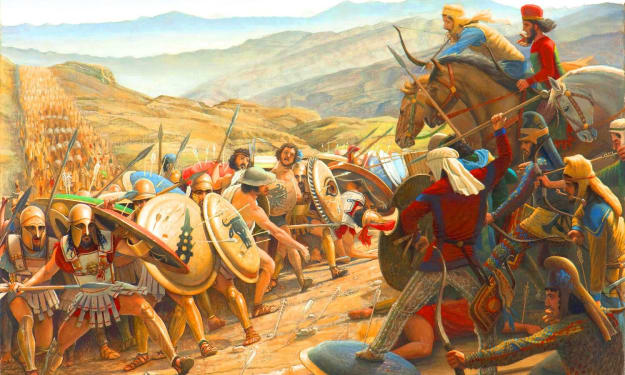
The Fall of Giants
History has a unique way of demonstrating that no empire, regardless of its size or strength, is truly invulnerable. Time after time, those who seem all-powerful have succumbed, often to adversaries who initially appeared weak and inconsequential. This recurring narrative is prominently showcased in the ascension and decline of empires such as the Akkadian, Assyrian, and the Qin Dynasty in China. However, one of the most remarkable illustrations of this concept is the saga of the Persian Empire, a giant of the ancient world, ultimately defeated by a coalition of small, resolute Greek city-states. This narrative encompasses the Greco-Persian Wars, a series of battles that not only influenced the ancient world but also established the groundwork for Western civilization as we recognize it today.
By A História11 months ago in History
The Thousand and One Nights Tales from the Arab World and India
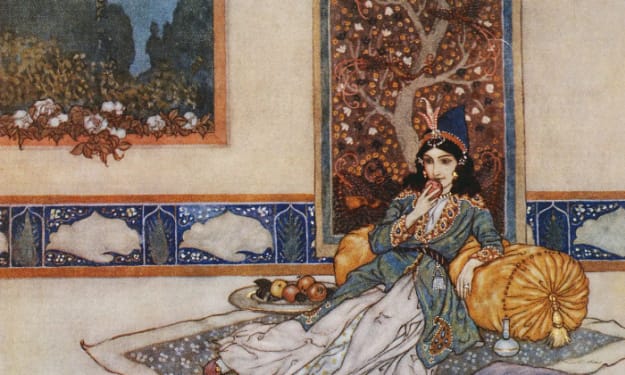
The Thousand and One Nights, or the Arabian Nights, is an expansive compilation of folk tales stretching out over generations. The best known version is a sort of compendium of tales of diverse provenance, from the Middle East to India, and is often credited with popularizing stories like Aladdin, Ali Baba, and Sindbad the Sailor, tales that have all but become synonymous with Western folklore.
By Rohitha Lanka11 months ago in History
The Rise and Fall of the Mughal Empires
One of the most remarkable empires in world history, the Mughal Empire spread across the Indian subcontinent from the early years of the 16th century. At its height, it ruled almost the entire Indian subcontinent, with access to immense riches and military strength.
By Rohitha Lanka11 months ago in History
The last days of the Neanderthals.
The last days of the Neanderthals. The story of the Neanderthals is one of survival adaptation and ultimately extinction. For thousands of years they thrived across Europe and parts of Asia coexisting with early Homo sapiens before vanishing from the fossil record around 40,000 years ago. Their disappearance has long puzzled scientists sparking debates over the causes and consequences of their extinction. However recent research has painted a more nuanced picture of their fate revealing that Neanderthals were not a primitive dead end in human evolution but rather a sophisticated and resilient species that left an enduring legacy in modern human DNA. Neanderthals evolved from a common ancestor shared with Homo sapiens roughly 500,000 years ago. While some researchers suggest Homo antecessor as this ancestor the exact lineage remains debated. What is certain is that Neanderthals adapted to the harsh climates of Ice Age Europe and Asia developing robust physiques suited for cold environments. Their short stocky bodies helped retain heat and their large nasal cavities warmed the air they breathed. These adaptations allowed them to hunt large Ice Age mammals like mammoths and woolly rhinoceroses proving their ability to survive in extreme conditions.
By Adnan Rasheed11 months ago in History