
An Ancient World Through the Eyes of Wonderfully Preserved Mummies
A Glimpse into the Ancient World Through Remarkably Well Preserved Mummies

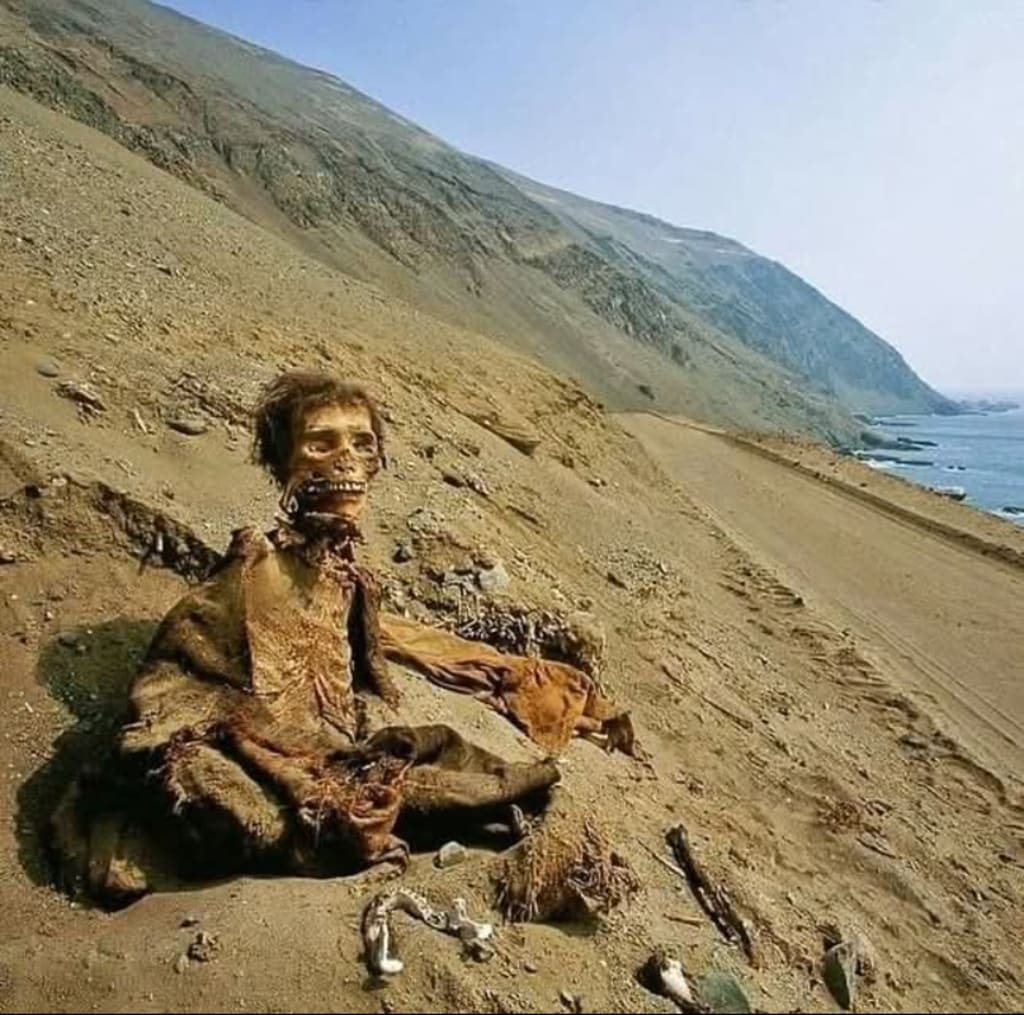
Such stories are usually the work of journalists or scientists working on their own remits. Leave it to Science on the BBC Radio to examine how they came to be by introducing the mysterious Chinchorro mummies of the Atacama Desert.
In the arid expanse of the Atacama Desert, one of the most desiccated locations on Earth, lies a fascinating and macabre enigma,the Chinchorro mummies.
These bodies, some of the best-preserved human corpses ever found, are thousands of years old and have provided an exceptionally rare snapshot of antiquity proof that the human past can be frozen in such exquisite detail even in punishingly extreme conditions.
The Initial Discovery of the Chinchorro Mummies
Somewhere around 5020 BC, a human being (whose body would not change for millennia) laid down in the wide, dry stretch of the Atacama Desert.
What they failed to realize at the time was that the desert would preserve their body, skin, hair, and clothes for future generations to discover, gaining insight into a culture that predated written history.
The Chinchorro mummies were first identified in the early 20th century, but the significance of the remains and the remarkable preservation of the bodies have become more apparent as researchers have studied the practices of the people who lived in this arid region.
The Chinchorro people were a pre-Columbian culture that lived on the northern Chilean and southern Peruvian coast. They subsequently attracted the attention of archaeologists, anthropologists, and historians around the globe due to their unique mummification techniques.
The Mummification Process
Unlike the renowned Egyptian mummies who were usually reserved for kings and nobles, the Chinchorro mummified a wide range of people from all walks of life, including babies and the elderly.
Chinchorro culture mummification process is believed to have been one of the first forms of embalming, and it predates Egyptian mummification practices by approximately 1,500 years.
The process of preservation was painstaking and deeply ritualistic. The corpses themselves were first carefully washed and eviscerated to stave off decay. Then, the skin was treated and sometimes covered in a mixture of clay and plant fibers, which functioned as a protective coating and as a form of artificial skin. Some mummies were even provided with clay or reed features on the face to create the illusion of life.
They were wrapped in various fabrics or animal skins, and the Chinchorro people made sure that each mummy was delicately positioned, frequently sitting in a way that implied reverence.
The mummification process enabled the Chinchorro people to keep compassion for their loved ones even after they passed away, as they had spiritual and cultural beliefs about death in their society.
Mummification allowed the Chinchorro to preserve the spirit of the deceased so that they could continue to interact with the living and provide guidance.
One Example of Preserving Unique Identity
The oldest and best-preserved of Chinchorro's mummies is a figure with a sitting posture, dating around the year 5020 BC, which has remained motionless for thousands of years. Most attributable is the extreme dryness of the Atacama Desert, where this mummy, as well as many others, were discovered.
The parched conditions of the desert air stop the usual decay processes that would decompose the human body. The dry conditions along with the methods employed by the Chinchorro themselves produced mummies that are nearly perfectly preserved.
As time progressed, these mummies became valued by archaeologists and scientists alike, providing a plethora of information on the Chinchorro culture. They shed further light on what they looked like, what costumes they wore, and what they even ate.
Especially interesting is the clothing recovered with the mummies, dipping to show the Chinchorro had a relatively sophisticated knowledge of textiles and materials. In some cases, the mummies were buried alongside tools, jewellery, and other possessions, giving additional insight into their everyday lives.
The Mummies' Cultural Significance
The Chinchorro people's mummification techniques are regarded as one of the oldest and earliest examples of preserving dead bodies. These practices served not just as a method to preserve the physical body but also as a means of connection, a spiritual ritual by which the living could keep the dead close.
The Chinchorro believed that intensive care of their dead would promote continuity of the family or tribe and the continued participation of the deceased in the community’s life.
The mummies have also had a major influence on how we understand South America in pre-Columbus times. The mummification techniques of the Chinchorro people undercut the idea that the Egyptians were the only ancient society to figure out the science of embalming and preserving the dead in such a way.
Therefore, the Chinchorro mummies provide valuable and significant insight into the array of practices that ancient civilizations used to address death and the afterlife.
I'm new to vocal. I would like to get feedback from vocal+ seniors. If you note any mistakes in my articles, please let inform to me improve my knowlage
About the Creator
Keep reading
More stories from Rohitha Lanka and writers in History and other communities.
Historic Study Finds Signs of Soul Departing Body at Death
New Scientific Discoveries have come up with surprising new evidence that can provide more insight about what happens to us after death. Experts believe that brain activity in the last moments near death has shown that something intangible could leave the body perhaps the 'soul' in the final moments of life. A rare study on the very nature of consciousness and brain waves among dying patients reveals this radical conclusion.
By Rohitha Lanka11 months ago in History
If America Walks Away from NATO, the World Will Feel the Shock
If America Walks Away from NATO, the World Will Feel the Shock For more than seventy years, NATO has stood as a symbol of collective security and shared responsibility. It was never a perfect alliance, but it worked because it was built on a simple idea: when nations stand together, wars are less likely to happen. Today, however, that foundation is being shaken—not by foreign enemies, but by growing voices inside the United States questioning whether NATO is still worth it.
By Wings of Time 6 days ago in History
3 Harmless Habits That Once Caused Absolute Chaos
Most habits are comfortingly dull. You chew gum. You clap at events. You check your phone. You assume—reasonably—that these actions will not destabilize governments, bankrupt industries, or end lives. Society depends on this assumption. If every small habit carried catastrophic potential, we would never leave the house.
By Enoch Sagini2 days ago in History


Comments (2)
I'm new to vocal. I would like to get feedback from vocal+ seniors. If you note any mistakes in my articles, please let inform to me improve my knowlage
The Chinchorro mummies of the Atacama Desert. I’ve never read something like this on vocal before, but it’s holding my attention so far. Sounds like a magical desert. Preserving their skin even, wow. Plant fibres as artificial skin. These people were very creative. Ooo Interesting that you could find what they ate, and what costumes they wore through these practices. Very well written and well researched. An interesting choice of topic too, and my quest for knowledge and information has been fed, thank you for publishing this. 👏🏽♥️🤗