Figures
Michael Rockefeller’s Disappearance – Could Carl Hoffman's Investigation Change Everything?
Michael Rockefeller’s disappearance in 1961 is one of the most puzzling and chilling mysteries of the 20th century. As the 23-year-old heir to the vast Rockefeller fortune and son of New York Governor Nelson Rockefeller, Michael was a young adventurer with a passion for art and anthropology. His journey to Dutch New Guinea (now Papua, Indonesia) to document and collect Asmat artifacts took a tragic turn, leading to decades of speculation, conspiracy theories, and unanswered questions.
By Marveline Merab11 months ago in History
Unbelievable! Man Survives 3 Days in Ocean's Depths
Unbelievable! Man Survives 3 Days in Ocean's Depths The vast mysterious depths of the ocean have long been a source of awe fear and fascination for humankind. Countless stories have emerged over the years about individuals lost at sea some surviving against all odds while others vanish without a trace. However the recent case of a man who survived for three days in the ocean’s depths is nothing short of miraculous. His tale is not just one of endurance but a testament to the incredible resilience of the human spirit. It all began when the man whose name has not been disclosed for privacy reasons embarked on what was supposed to be an ordinary maritime journey. A seasoned sailor he had spent years navigating the seas and was well aware of the unpredictable nature of the ocean. On this particular voyage however fate had a different plan for him. The vessel he was traveling on encountered a sudden and violent storm with towering waves crashing down relentlessly. Despite his best efforts to steer through the chaos the boat succumbed to the overwhelming force of nature plunging into the ocean’s depths. Most would assume that such an accident would be fatal as the deep sea is an unforgiving place with extreme conditions including crushing pressure darkness and a lack of oxygen. Yet what happened next defied all logic. Instead of drowning or succumbing to the inhospitable environment the man found himself in a pocket of air trapped within the wreckage of the boat. It was a scenario few could ever imagine let alone survive.
By Adnan Rasheed11 months ago in History
10 Unbelievable Facts from History That Will Shock You
10 Unbelievable Facts from History That Will Shock You History is filled with astonishing events—some hidden in plain sight, others buried in time. From unexpected war durations to ancient scientific discoveries, these 10 mind-blowing historical facts will change the way you see history! 1. Napoleon Wasn’t Actually Short Many believe that Napoleon Bonaparte was a short man with an oversized ego. However, this is actually a misconception. His recorded height was 1.58 meters, measured using the French system. In modern measurements, this translates to approximately 1.73 meters (5.68 ft) which was an average height for his time. The myth of his short stature was a product of British propaganda, intended to mock him and weaken his image as a strong leader. 2. The Great Fire of London Helped End a Plague The year 1665 was one of the darkest in London's history, as the bubonic plague swept through the city, killing nearly 100,000 people. The very next year, in 1666, a massive fire broke out in Pudding Lane, spreading rapidly through London. Although the fire destroyed thousands of homes and businesses, it unexpectedly helped stop the plague by burning down areas infested with disease-carrying rats and fleas. 3. The Eiffel Tower Was Almost Demolished Today, the Eiffel Tower is one of the most iconic structures in the world, but did you know that it was originally meant to be temporary? Built in 1889, many Parisians hated the structure, calling it ugly and unnecessary. The French government planned to dismantle it after 20 years. However, its importance for radio transmissions during military operations helped it survive, securing its place as a permanent symbol of French culture. 4. The CIA Used Cats as Spies During the Cold War, the CIA came up with an unconventional espionage method—training cats to be spies! Through Project Acoustic Kitty, they implanted microphones and antennas inside cats, hoping they could eavesdrop on Soviet officials. Unfortunately, the first "spy cat" was hit by a taxi almost immediately after being released on its mission, causing the $20 million project to fail spectacularly. 5. Ancient Egyptians Had a Primitive Pregnancy Test The Ancient Egyptians were far ahead of their time in medical knowledge. Over 3,500 years ago, they developed an early pregnancy test using wheat and barley seeds. A woman would urinate on the seeds, and if the seeds sprouted quickly, she was considered pregnant. Surprisingly, modern experiments have shown this method was about 70% accurate, making it one of the earliest forms of pregnancy detection! 6. The Shortest War in History, Lasted Just 38 Minutes Wars often last years or even decades, but the Anglo-Zanzibar War in 1896 holds the record for the shortest war in history. When the British demanded that Zanzibar's new sultan step down, he refused. As a result, the British navy bombarded his palace, forcing Zanzibar to surrender in just 38 minutes! It remains one of the fastest military defeats ever recorded. 7. Vikings Discovered America Before Columbus Many people believe Christopher Columbus was the first European to reach America in 1492, but historical evidence suggests otherwise. Around the year 1000 AD, Leif Erikson, a Viking explorer from Norway, landed in what is now Newfoundland, Canada—almost 500 years before Columbus. Archaeologists have even discovered Viking settlements in North America, proving they arrived long before the Spanish explorers. 8. The Statue of Liberty Was Originally a Lighthouse The Statue of Liberty, one of the most famous symbols of freedom, was not only a gift from France but also served a practical purpose. When it was completed in 1886, it was used as a lighthouse to help guide ships into New York Harbor. However, due to insufficient lighting technology, it was too dim to be effective, and the lighthouse function was discontinued in 1902. 9. A Gladiator Became a Roman Emperor The Roman Empire was known for its elite ruling class, but one of its emperors, Maximinus Thorax, had a very unusual origin. He was born into a poor family and spent his early years as a shepherd. Later, he trained as a gladiator and joined the Roman army, where his incredible strength and combat skills caught the attention of the emperor. Over time, he climbed the ranks and eventually became one of Rome’s most powerful leaders, proving that even a gladiator could rise to power in ancient times. 10. Cleopatra Lived Closer to the Moon Landing Than to the PyramidsWhen we think of Ancient Egypt, we often assume Cleopatra was closely linked to the era of pyramid construction. However, Cleopatra VII, the last queen of Egypt, lived around 30 BC—whereas the Great Pyramid of Giza was built around 2560 BC. That means Cleopatra lived closer in time to the 1969 moon landing than to the construction of the pyramids, which had already stood for over 2,500 years by her time! This astonishing fact highlights the immense longevity of Egyptian civilization. By Cleopatra’s era, the pyramids were already considered ancient wonders, much like how we perceive the ruins of Rome or Greece today. Despite their age, they continued to inspire awe, standing as silent witnesses to millennia of history, culture, and innovation.
By MystiTech Hub11 months ago in History
The Cascade System
What is a cascade? The word cascade is used in English to describe a rural tank system based on agriculture in the dry zone. This name was first used by Dr. C. R. Panabokke in his book Small Village TankSystems of Sri Lanka. Their Evolution, Setting, Distribution, and Essential Functions.
By Rohitha Lanka11 months ago in History
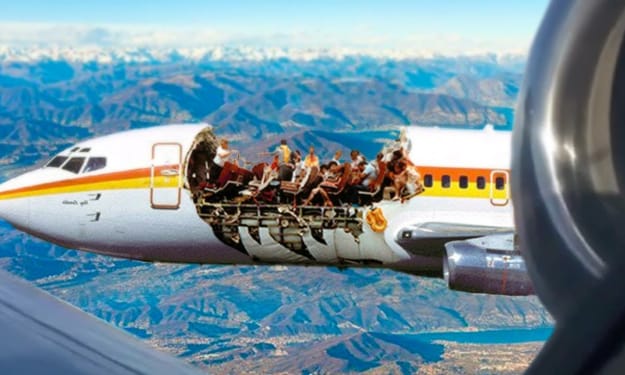
This Airplane lost its roof at 24000 fits what happened next?
This Airplane lost its roof at 24000 fits what happened next? On a seemingly routine flight passengers and crew aboard an aircraft at 24,000 feet experienced a nightmare scenario part of the plane’s roof suddenly tore away exposing them to the open sky. What followed was a dramatic struggle for survival a test of human resilience and an investigation into the causes of such a catastrophic event. The moment the roof separated from the fuselage an explosive decompression occurred. The air inside the cabin which was pressurized to mimic conditions at a much lower altitude rushed out violently. Anything that was not securely fastened loose objects, papers even lightweight belongings was immediately sucked out into the sky. The deafening roar of wind replaced all other sounds making communication nearly impossible. For those on board the experience was both terrifying and disorienting. Passengers and crew who were not wearing seatbelts felt an immense force pulling at them. Some who were unlucky enough to be near the area of structural failure were partially ejected held back only by their seatbelts or the sheer luck of their position. The temperature inside the aircraft plummeted instantly dropping to well below freezing as the cabin lost its ability to regulate heat. Breathing became difficult because the rapid decompression caused a significant reduction in oxygen levels.
By Adnan Rasheed11 months ago in History
The Nairobi Incident
If, by any chance you find yourself in a matatu from Thika Rd (especially the ones that ply the Kasarani-Mwiki road) heading to town, its not unlikely to find some traffic around Muthaiga all the way to the city. To avoid this, the driver is likely to detour at Ngara, a route that will likely take you through Grogan Rd downtown. The street is full of shady spare parts dealers and mechanics in work overalls that have seen better days. Before buildings came up in that street, the strip of land belonged to Ewart Grogan, a pioneer colonialist who judged, somewhat correctly, that the centre of the newly established Nairobi would be somewhere around there. Stories of the man who traversed the entire span of the continent to win his dream girl then settled in the East African Protectorate and built his fortunes from scratch have been told but underneath was a ruthless reputation and brutish nature which can never be erased from memory.
By HINGES OF TIME11 months ago in History
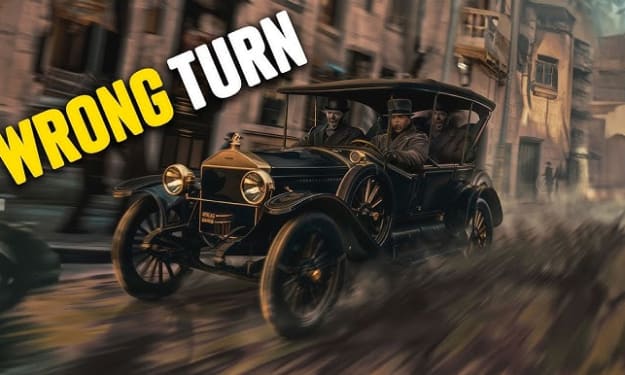
One Wrong Turn That Sparked World War
One Wrong Turn That Sparked World War World War I one of the deadliest conflicts in human history was ignited by a series of complex political economic and military factors. However at the heart of it all was a single event an assassination that in many ways can be seen as the result of one wrong turn. The fateful decision that led Archduke Franz Ferdinand’s car down the wrong street on June 28, 1914 changed the course of history setting off a chain reaction that led to global warfare. This incident though seemingly insignificant in the grand scheme of things played a pivotal role in the outbreak of World War I. The political landscape of early 20th century Europe was marked by tensions alliances and nationalist movements. Austria Hungary a vast empire struggling with internal ethnic divisions found itself facing a growing wave of Slavic nationalism particularly from Serbia. The Austro Hungarian Empire viewed Serbia as a threat suspecting that it was encouraging separatist movements within its borders. Meanwhile Serbia emboldened by its recent victories in the Balkan Wars sought to expand its influence particularly over territories where Slavic populations resided. This growing animosity created a volatile situation one that needed only a spark to erupt into full scale war.
By Adnan Rasheed11 months ago in History
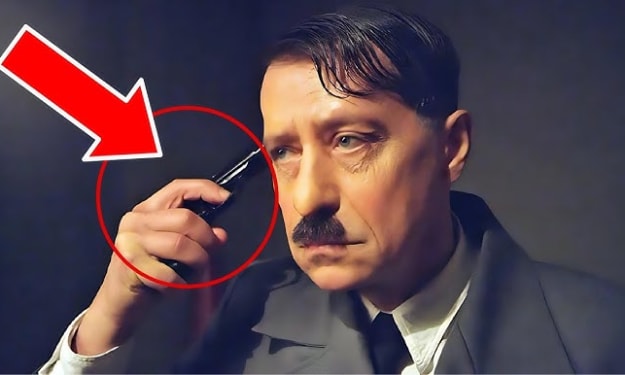
Hitler's Last 10 Days
Hitler's Last 10 Days The last ten days of Adolf Hitler’s life are among the most significant and dramatic moments in history. By April 1945 World War II was nearing its end and Nazi Germany was on the verge of complete collapse. Soviet forces were closing in on Berlin and Hitler had chosen to remain in the capital refusing to flee. He had taken refuge in the Führerbunker an underground shelter beneath the Reich Chancellery where he was surrounded by his closest advisors guards and staff. Outside Berlin was crumbling under relentless bombardment but inside the bunker Hitler was trapped in a world where delusion and reality had blurred. April 20, 1945 marked Hitler’s 56th birthday but it was far from a celebration. High ranking Nazi officials like Joseph Goebbels and other loyalists formally congratulated him, but the atmosphere was grim. As he stepped out of the bunker he met with a group of young soldiers many just sixteen or seventeen who had been hastily recruited to defend Berlin. He shook their hands knowing well that they were untrained and stood little chance against the advancing Soviet army. Yet he remained fixated on his belief that Germany could still turn the war around. In the following days as Soviet forces pushed deeper into Berlin Hitler’s psychological state deteriorated rapidly. He held frequent meetings with his generals demanding updates but every report was bleak. By April 22 during a heated conference he erupted in rage accusing his commanders of betraying him and failing to follow his orders. It was at this moment that he first openly admitted that Germany had lost the war. His generals realizing the futility of resistance knew that staying in Berlin meant certain death. However no one dared to contradict him.
By Adnan Rasheed11 months ago in History