
Michael Rockefeller’s Disappearance – Could Carl Hoffman's Investigation Change Everything?
Unraveling a 60-Year-Old Mystery with Fresh Clues and Unexpected Twists

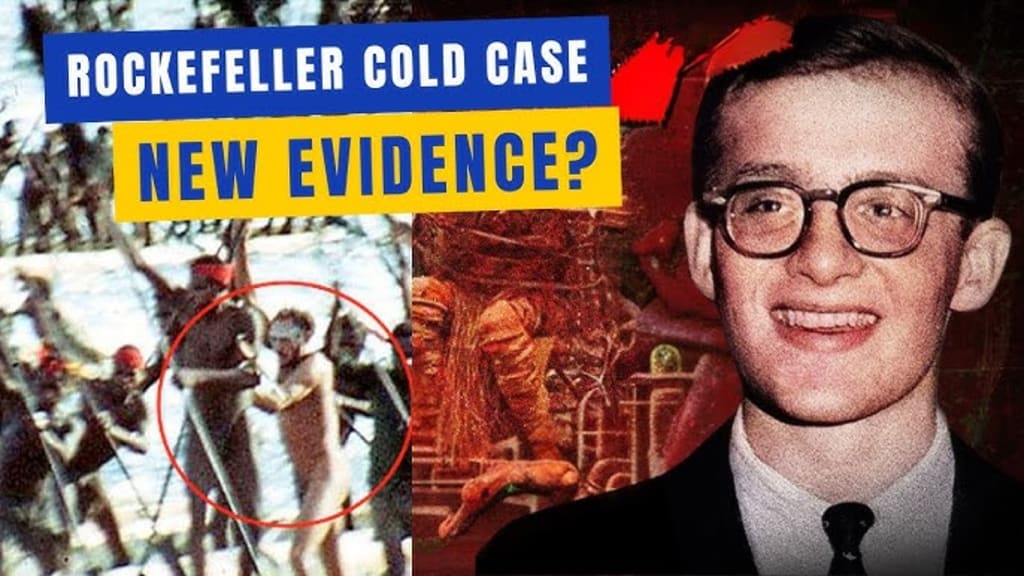
Michael Rockefeller’s disappearance in 1961 is one of the most puzzling and chilling mysteries of the 20th century. As the 23-year-old heir to the vast Rockefeller fortune and son of New York Governor Nelson Rockefeller, Michael was a young adventurer with a passion for art and anthropology. His journey to Dutch New Guinea (now Papua, Indonesia) to document and collect Asmat artifacts took a tragic turn, leading to decades of speculation, conspiracy theories, and unanswered questions.
The Official Story: Lost at Sea?
In November 1961, Michael Rockefeller was traveling along the southern coast of Dutch New Guinea with Dutch anthropologist René Wassing when their catamaran capsized. Stranded on the overturned boat miles from shore, Michael made the fateful decision to swim for help while Wassing remained behind. He was never seen again. The official conclusion was that he drowned or fell victim to a shark or crocodile. However, almost immediately, rumors suggested a darker fate.
The Cannibalism Theory: A Shocking Possibility
While the Dutch and American governments publicly accepted the drowning theory, locals whispered a more horrifying version of events: that Michael had reached the shore, only to be killed and eaten by the Asmat people. At the time, the Asmat were known for their ritualistic headhunting and cannibalistic practices, deeply rooted in their spiritual and cultural beliefs.
Eyewitness testimonies and whispered confessions over the years fueled speculation. Some claimed that Rockefeller was killed as an act of revenge for a Dutch military assault on Asmat villages years earlier. This theory gained traction in 2014 with the release of Savage Harvest by journalist Carl Hoffman, who retraced Rockefeller’s steps and uncovered compelling new evidence.
Carl Hoffman's Investigation: A Game-Changing Discovery?
Determined to uncover the truth, Hoffman immersed himself in the Asmat culture, interviewing locals and sifting through previously overlooked accounts. In Savage Harvest, he presents a compelling argument that Rockefeller did not drown but was in fact killed by the Asmat.
Hoffman’s research includes chilling testimonies from elders who described how white men had once come to their village and never left. He also uncovered an audio recording from a Dutch missionary made in the 1960s, claiming to have been told directly that Rockefeller was killed. According to these accounts, Rockefeller was speared, his body was dismembered, and his remains were used in a ritualistic act of consumption.
But Why Would the Asmat Kill Rockefeller?
To understand why Rockefeller may have been killed, one must delve into the complex history between the Asmat and Dutch colonial authorities. In 1958, Dutch soldiers carried out a violent attack on an Asmat village, killing several tribal leaders. According to Hoffman’s sources, the Asmat believed in a system of spiritual balance, where violent deaths required revenge to restore harmony. If true, Rockefeller may have been an unintended victim of this belief system, killed as a symbolic act to avenge past wrongs.
Could Michael Rockefeller Have Survived?
An alternative theory posits that Rockefeller was not killed but instead assimilated into the Asmat community. Over the years, there have been occasional reports of a white man living among the Asmat, leading to speculation that Rockefeller chose or was forced to integrate into the tribe. However, no solid evidence has ever surfaced to support this claim.
A Mystery That Endures
Despite the new evidence presented in Savage Harvest, definitive proof of Michael Rockefeller’s fate remains elusive. His body was never found, and the Asmat people have never publicly confirmed or denied the allegations. Whether he drowned, was killed in a ritualistic act, or lived in secrecy among the Asmat, the mystery continues to captivate historians, journalists, and conspiracy theorists alike.
Michael Rockefeller’s disappearance is more than just a tale of adventure gone wrong; it is a story interwoven with colonial history, cultural misunderstandings, and the human thirst for the unknown. Whether the truth will ever be fully uncovered remains to be seen, but one thing is certain: the legend of Michael Rockefeller is far from forgotten.
Frequently Asked Questions (FAQ)
1. Who was Michael Rockefeller?
Michael Rockefeller was the son of New York Governor Nelson Rockefeller and a member of the wealthy Rockefeller family. In 1961, at age 23, he traveled to Dutch New Guinea (now Papua, Indonesia) to collect Asmat artifacts and study their culture.
2. What happened during Michael Rockefeller's expedition?
On November 17, 1961, Rockefeller and Dutch anthropologist René Wassing were on a catamaran when it capsized off the southern coast of New Guinea. Rockefeller attempted to swim to shore for help but was never seen again.
3. What were the official conclusions about his disappearance?
Authorities concluded that Michael Rockefeller likely drowned or was killed by a shark or crocodile while attempting to reach land. Despite large-scale search efforts, no trace of him was ever found.
4. Was Michael Rockefeller killed by the Asmat tribe?
Some theories suggest that Rockefeller reached shore but was killed by the Asmat people, who practiced headhunting and ritual cannibalism at the time. However, there is no definitive evidence proving this claim.
5. What is Carl Hoffman's theory in "Savage Harvest"?
In Savage Harvest, journalist Carl Hoffman presents testimonies and evidence suggesting that Rockefeller may have been killed by the Asmat as an act of revenge. While controversial, Hoffman's findings renewed interest in the case.
6. Did Michael Rockefeller survive and live with a tribe?
Some speculate that Rockefeller was taken in by a local tribe and lived among them. However, there is no credible evidence supporting this theory, and it remains unproven.
7. Has Michael Rockefeller's body ever been found?
No. Despite extensive searches and investigations over decades, no remains or conclusive evidence of his fate have ever been recovered.
8. How did Michael Rockefeller's disappearance impact popular culture?
His mysterious disappearance has inspired books, documentaries, and films, fueling ongoing fascination with unsolved mysteries and the cultural history of the Asmat people.
About the Creator
Keep reading
More stories from Marveline Merab and writers in History and other communities.
It Turns Out We've Been Sleeping Wrong For Centuries
For as long as we can remember, humans have been told that sleep is a non-negotiable part of survival. Right up there with food, water, and oxygen. But what if I told you that the way we sleep today is actually not how our ancestors did it? That’s right—turns out we’ve been sleeping wrong for centuries.
By Marveline Merab10 months ago in History
No ICE, No KKK, No Fascist USA
"I don't 'do' politics." Politics will do you, regardless. Watching from the sidelines for the last year I can see far too many similarities in the way Trump's ICE Gestapo is to Nazi Germany. Considering the United States just invaded Venezuela and kidnapped their President and his wife I would say we are there.
By Lyvia Jack4 days ago in History
3 Moments When Reality Accidentally Became a Horror Movie
Horror movies usually rely on a simple agreement with the audience: this could never really happen. Ghosts follow rules, monsters have weaknesses, and there’s always a clear point where reality hands the story over to fiction. Real life, unfortunately, does not care about narrative structure, logic, or closure.
By Enoch Sagini3 days ago in History



Comments
There are no comments for this story
Be the first to respond and start the conversation.