Figures
The Intriguing Thomas Jefferson
Here I go on another adventure. It is time to explore certain political characters. And as the race heats up I just have to note the gain that Thomas Jefferson is getting. I want to know what is his secrets. I want to know what is his strategy. I am reporter Matthew Carrey. I have been with the Washington Times for many years. And if I could complete this interview and ask the questions that have never been asked before. Then I could become partner. So here I am all the way from Longs, Connecticut traveling to Virginia. All of my life I have been in Connecticut, maybe because I was born there maybe because of the weather maybe because of the people. I don't know but travel usually is for the rich. And my boss is paying for all my accommodations. I don't know whether I want to get on his inventive side. Or maybe on his political side. Or maybe on his home side. Jefferson is a moving character. And he is live action with his thoughts and realism. He was the founding father who penned down the Declaration of Independence. He was a successful lawyer and teacher. He worked his way up from poverty. Or so I heard, I really want to find out the real Jefferson. Virginia is a charming state. It is very flourishing and about. The charm the southern charm is influencing. Even with its known stance on slavery, Virginia is deeply rooted in American history. Afterall it is George Washington's home state but this is about Jefferson. It is a hassle to get through all the beauty of Virginia, the wide open land, the beautiful big trees and the homely welcome. I could see why Jefferson came from here. They say Jefferson is not as strict as he seems. And they say that he has a lot of curiosity. I just want to follow him for a day and see what it is like to be him. Days and days of traveling and yet no sight of his mansion. Then at the bar, I asked on horse back and everyone knows him. And they look to him like he is still governor. He was governor. I thought Jefferson would be at the bar since he is reverenced so much. I guess I thought Jefferson like to drank among his peers. But he seem to be close off and kinda intuitive in his ways. I asked for stories about Jefferson. And some were off and awkward. Some were romanizers and some were the scientist who kept on inventing. And eventually I turned in to the inn, and in the middle of the night I heard Jefferson stopped by the inn asking for a reporter. And so I eventually interrupted in my bed clothing. And that's when Jefferson changed attitude and told me to get ready and bring my things. And that I would be a guest at his mansion. So I quickly and steadily got ready. Jefferson did not let anyone ride his horses somehow this time he preferred to ride with me. And he told me tales of his Virginia. He told the history of Virginia with a great memory and recollections. He was fascinating and intriguing. And in good health, even his daughter could not slow him down. I never would forget the way he carried his cane and umbrella as if it was a sword. And he would never stop with his grasp and ahs moments. He would dive into brainstorming and inventions. I remember going into his office and he was coming up with a vast array of things. He said if DaVinci could not stop neither could he. And he would share history of each of his statues. And he would talk on and on about his inventions what inspired him and how the process came about. And he would grace his knowledge of history even world history. Until I interrupted Jefferson and gracefully I did. And he nabbed with a slight smile and apt attitude. Jefferson was so much and I had to get back before my boss worried and stop the accommodations. So Jefferson invited me for one last tea time and shared that he was just like me adventurous and witty and smart before becoming the Statesmen he is today
By Distinguished Honorary Alumni Dr. Matthew Primous8 months ago in History
History Would’ve Burned: How Fire Shaped Civilizations
Fire is one of humanity’s oldest and most transformative discoveries. Its mastery marked the dawn of civilization, altering the course of history in ways both constructive and destructive. From providing warmth and protection to enabling technological advancements, fire has been a double-edged sword—capable of nurturing societies or reducing them to ashes. This article explores how fire has shaped human history, from prehistoric times to the modern era, and how civilizations have risen, fallen, and adapted in its flames. The Dawn of Fire: Humanity’s First Great Tool The controlled use of fire dates back at least 1 million years, with evidence suggesting that early hominids like Homo erectus harnessed it for warmth, cooking, and protection. Fire allowed early humans to: Cook food, making it more digestible and unlocking greater nutritional value, which may have contributed to brain development. Ward off predators, enabling safer settlements. Extend waking hours by providing light after sunset, fostering social interaction and tool-making. Without fire, human evolution and migration—especially into colder climates—would have been drastically different. Fire and the Birth of Civilization As humans transitioned from nomadic hunter-gatherers to settled agricultural societies, fire became indispensable. 1. Agriculture & Land Management Slash-and-burn farming cleared forests for crops, though it also led to soil depletion over time. Controlled burns were used by Indigenous peoples to manage ecosystems, promoting biodiversity. 2. Metallurgy & Technology The discovery of smelting (extracting metal from ore using fire) revolutionized tool-making, leading to the Bronze and Iron Ages. Fire enabled ceramics and glassmaking, essential for storage, construction, and art. 3. Warfare & Destruction Fire was weaponized early, from flaming arrows to Greek fire (a Byzantine incendiary weapon). Cities like Rome (64 AD) and London (1666) suffered catastrophic fires that reshaped urban planning. Fire as a Cultural and Religious Symbol Beyond its practical uses, fire held deep spiritual significance: Zoroastrianism revered fire as a symbol of divine wisdom. Greek mythology told of Prometheus, who stole fire from the gods to give to humanity. Hindu rituals involve sacred fires (yajna) for purification and offerings. The Industrial Revolution: Fire Powers the Modern World The 18th and 19th centuries saw fire’s role expand exponentially with the advent of: Steam engines (burning coal) powering factories and transportation. Internal combustion engines, leading to automobiles and airplanes. Electricity generation, initially through coal and later gas and oil. However, industrialization also brought pollution, deforestation, and climate change—unintended consequences of humanity’s reliance on fire. Fire in the Modern Age: Control and Catastrophe Today, fire remains both a vital tool and a devastating force: 1. Controlled Use Energy production (natural gas, nuclear reactions). Space exploration (rocket propulsion). Medicine and industry (sterilization, manufacturing). 2. Uncontrolled Disasters Wildfires (exacerbated by climate change) destroy millions of acres annually. Urban fires (e.g., Grenfell Tower, 2017) reveal vulnerabilities in modern infrastructure. Warfare (napalm, incendiary bombs) continues to use fire as a weapon. Conclusion: Will Fire Consume or Sustain Us? Fire has been a defining force in human history—both creator and destroyer. As we advance, the challenge is to harness its power responsibly, mitigating its dangers while leveraging its benefits. From ancient campfires to fusion energy, fire remains at the heart of civilization’s progress. If history is written in flames, then humanity’s future will be shaped by how well we master this primal force—before it masters us.
By Silas Blackwood8 months ago in History
What Did Hitler Hack?
When we hear the word “hack,” most of us think of computers—silent keyboards, green code on black screens, cyber-attacks launched from dark basements. But history has its own hackers. Men who didn’t need passwords or Wi-Fi. Men who hacked systems, minds, and societies long before the internet was born.
By Keramatullah Wardak8 months ago in History
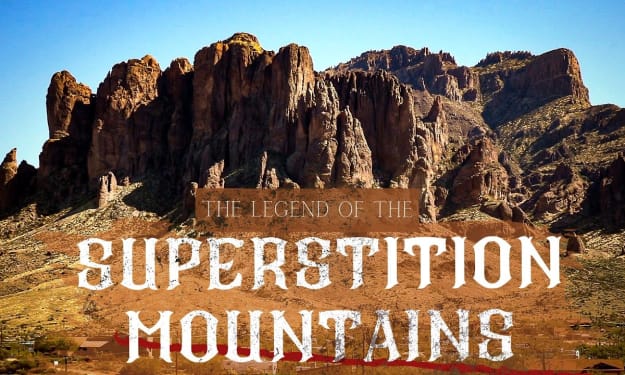
Julia Thomas: The Woman Who Died Chasing the Lost Dutchman’s Gold
🌵 She Sat by His Bedside. Then She Went Looking for Gold. In the vast, rugged history of the American West, few tales are as enduring — or as haunting — as that of the Lost Dutchman’s Gold Mine. Most versions of the story center on Jacob Waltz, the elusive German immigrant who allegedly hid a treasure trove of gold deep in Arizona’s Superstition Mountains.
By Rukka Nova8 months ago in History
Elon Musk's interesting life story. Content Warning.
Early Life and Education Born on June 28, 1971, in Pretoria, South Africa, Elon Musk was the eldest of three children. His mother, Maye Musk, was a Canadian model and dietitian, and his father, Errol Musk, was a South African electromechanical engineer. From a young age, Musk exhibited a keen interest in computing and technology. At age 12, he developed and sold a video game called Blastar for $500.
By Himanish Roy8 months ago in History
Mawlana Bhashai
The Birth of a Voice In the heart of Bengal, where the mighty rivers Brahmaputra and Ganges caressed the fertile soil, where the air was thick with the scent of mustard flowers and freshly harvested rice, a small village named Shantipur rested quietly. It was a village like many others — simple mud houses, bamboo fences, and children running barefoot along winding lanes. Yet, it would become the birthplace of a man whose voice would echo far beyond its borders — Mawlana Bhashai.
By Md. Mizanoor Rahman8 months ago in History
99-million-year-old dinosaur tail found preserved inside amber fossil
**99-Million-Year-Old Dinosaur Tail Found Preserved Inside Amber Fossil** In one of the most extraordinary paleontological discoveries of the 21st century, scientists have uncovered a 99-million-year-old dinosaur tail preserved in amber. This rare and stunning find, unearthed in Myanmar, has provided researchers with a unique glimpse into the ancient world, revealing incredible details about feather evolution, dinosaur biology, and the ecosystems of the Cretaceous period.
By GLOBAL NEWS8 months ago in History
Joe Biden. AI-Generated.
Joe Biden was born on November 20, 1942, in Scranton, Pennsylvania, a small city in the United States. He grew up in a working-class family. His father, Joseph Biden Sr., worked very hard to take care of the family. At times, the family had little money. But they stayed strong and close together.
By Khalil Rehman8 months ago in History