Events
Are Steel Houses Thoroughly Good
In June of 1947, Architectural Forum selected a distinctive cover star: The Lustron. This innovative home was constructed with a steel frame, steel panels, and a steel roof, and many of these homes still exist today. The Lustron represented a new concept in post-World War II American housing, as it was a factory-made home that could be shipped across the country with an accompanying instruction manual for each individual component. The exterior and interior of the home were both constructed entirely of steel. From 1947 to 1950, Lustron produced numerous homes, but just three years after the cover shot, the future of housing became a mere footnote. The failure of the Lustron home is not simply an anomaly in the realm of home building, but rather a tale of post-war optimism, technological limitations, and a testing ground for the collaboration between government and private industry.
By Hanif Salahudin2 years ago in History
The Achille Lauro Hijacking: A High Seas Drama Unfolds
Ahoy, adventure seekers and history buffs! Gather 'round as we set sail on an enthralling journey through one of the most daring and complex hijackings in maritime history. Cast your minds back to Monday, the 8th of October 1985, when the luxurious Italian cruise liner Achille Lauro found itself at the heart of an international crisis. Join us as we uncover the gripping tale of hijackers, political intrigue, and a high-stakes diplomatic showdown on the high seas!
By WanderLUST2 years ago in History
Road to Pakistan
Elections have always been a special tool for sorting different conflicyts across the world. While addressing the partition issues in United India, same method was used. The elections of 1946 have a unique significance in the Indian political history when a political party took part in the elections based on one point manifesto. In fact, Muslim League took part in these elections because of manifesto aimed at the creation of Pakistan. Before taking part in the 1946 elections, Quaid-i-Azam announced on 10 October 1945, “Our demand of Pakistan is quite clear. Those parts of India, where Muslims are in majority should be amalgamated to form a free and sovereign state. If the Muslims voted against Pakistan, I shall accept my defeat. The President of the Indian National Congress, Maulana Abdul Kalam Azad, sent a very detestable telegram to the Viceroy of India reacting against the announcement of these elections. Lord Wavell responded, “Azad [Maulana Abdul Kalam has sent me a very loathsome telegram in reaction of not consulting him in the announcement of election programme. Actually, he is trying to reprieve himself. He is trying to use these elections as an arm for the release of his other companions from jail. The daily Dawn published an appeal of Khan Abdul Qayyum
By Syed Ammar2 years ago in History
The British Royal Family: Assessing Costs and Benefits
The British royal family is undeniably rich, with an estimated value of around £26 billion in land properties, castles, Fabergé eggs, crown jewels, and art collections by masters like Leonardo da Vinci and Michelangelo. While some view the monarchy as an outdated and secretive institution draining resources, others believe it represents the best of British history and majesty, contributing billions to the country through tourism and business.
By Akinwande Johnson2 years ago in History
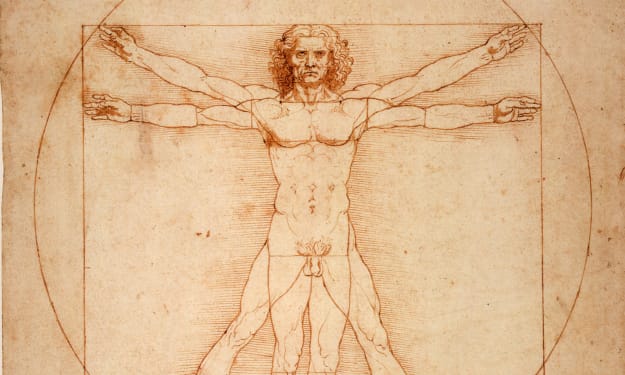
The Enigma of Leonardo: Unraveling the Secrets of History's Genius
In the heart of Renaissance Italy, amid the cobblestone streets and towering cathedrals, lived a man whose brilliance was destined to shape the course of history. His name was Leonardo da Vinci, a enigmatic figure whose talents seemed to know no bounds. But beyond his captivating art and revolutionary inventions, there was a mystery that consumed the minds of scholars and enthusiasts alike.
By Santiago Fonseca2 years ago in History
From Devastation to Resilience: How Hiroshima Emerged Strong after the Atomic Bomb
In the final stages of World War II, the United States sought to bring a swift end to the conflict with Japan. The fateful decision to unleash the unimaginable power of the atomic bomb forever changed history. On August 6, 1945, the city of Hiroshima, Japan, witnessed the unprecedented destruction and horror of nuclear warfare. Yet, unlike other cities facing nuclear disasters, Hiroshima did not succumb to abandonment; it endured and emerged as a symbol of resilience and hope. This is the untold story of how Hiroshima survived the atomic bomb and rose from the ashes to thrive once more.
By Akinwande Johnson2 years ago in History
Decades of Silence Shattered: Roswell Mortuary Workers Reveal All
Glenn Dennis, a mortuary worker, found himself in the heart of one of the most prolific UFO hotspots of all time, Roswell, New Mexico. In this mysterious town, where rumors of a UFO crash near a military base and the recovery of extraterrestrial beings circulated, Glenn Dennis kept his terrifying tale hidden for over four decades. Born on March 24, 1925, Glenn moved to Roswell during his high school years. In 1940, he secured a part-time job at the local Funeral Home in Roswell, where he later became an embalmer after graduating from the San Francisco College of Mortuary Science in 1946. Glenn's meticulous attention to detail and record-keeping at Ballard Funeral Home proved valuable when, in 1947, he encountered something that would haunt him for life - an encounter that remained a closely guarded secret for over 40 years. At the time, he was also working in partnership with Walker Air Base, formerly known as Roswell Army Airfield, assisting with military contracts and attending to deceased service members.
By stephen kinyanjui2 years ago in History
The Last Voyage of the Empress
In the bustling port city of Southampton, England, amidst the turn of the 20th century, a grand vessel called the RMS Empress was preparing for her maiden voyage to Canada. Aboard the luxurious ocean liner, passengers from all walks of life eagerly anticipated the journey that promised to be a life-changing experience.
By Alexia Matei2 years ago in History
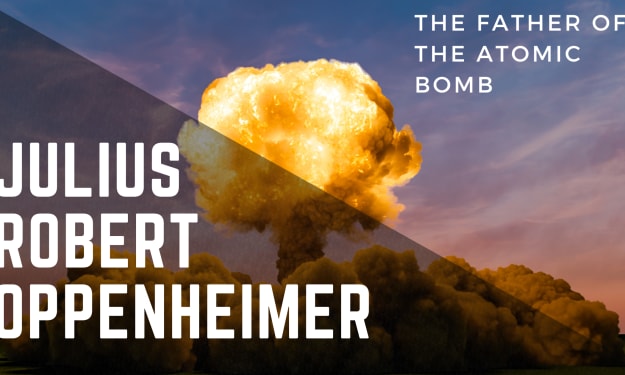
Julius Robert Oppenheimer
For many, the name "Julius Robert Oppenheimer" evokes images of mushroom clouds in far-off deserts, the haunting specter of nuclear annihilation, and the dawning of an era where humanity held in its hands the power to destroy itself. Born in New York City on April 22, 1904, Oppenheimer would come to be known as the "Father of the Atomic Bomb" a title that bore with it both grandeur and moral complexity. Today, we delve into the life of this remarkable physicist, tracing his journey from a young student in Harvard College to the deserts of New Mexico, where he led the project that would forever change the world.
By Alex Parker2 years ago in History
Shackles of History: Unraveling the Dark Tale of the Transatlantic Slave Trade
Few chapters in human history are as ominous and terrifying as the one about the Transatlantic Slave Trade. Millions of African lives were cruelly uprooted by this reprehensible system over the course of more than four centuries, leaving permanent scars on humanity's collective conscience. The history of the slave trade is one of unfathomable misery, tenacity, and the unwavering pursuit of liberation.
By Akinwande Johnson2 years ago in History