
Decades of Silence Shattered: Roswell Mortuary Workers Reveal All
Unveiling the Enigmatic Secrets and Hidden Truths of Roswell's Mysterious Past
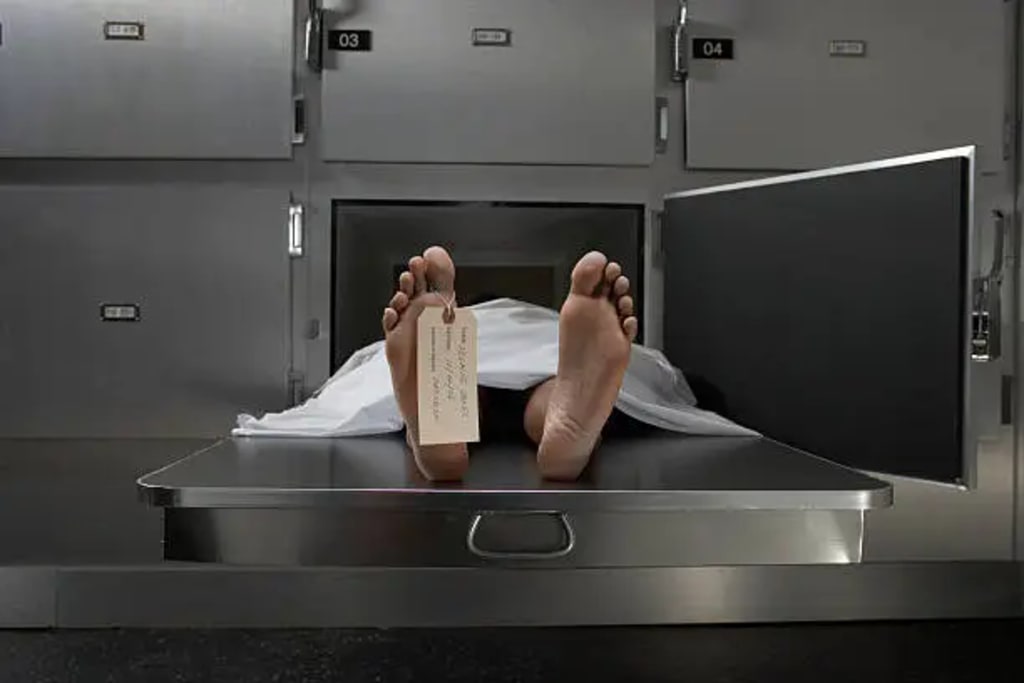
Glenn Dennis, a mortuary worker, found himself in the heart of one of the most prolific UFO hotspots of all time, Roswell, New Mexico. In this mysterious town, where rumors of a UFO crash near a military base and the recovery of extraterrestrial beings circulated, Glenn Dennis kept his terrifying tale hidden for over four decades. Born on March 24, 1925, Glenn moved to Roswell during his high school years. In 1940, he secured a part-time job at the local Funeral Home in Roswell, where he later became an embalmer after graduating from the San Francisco College of Mortuary Science in 1946. Glenn's meticulous attention to detail and record-keeping at Ballard Funeral Home proved valuable when, in 1947, he encountered something that would haunt him for life - an encounter that remained a closely guarded secret for over 40 years. At the time, he was also working in partnership with Walker Air Base, formerly known as Roswell Army Airfield, assisting with military contracts and attending to deceased service members.
Glenn Dennis, also known as W. Glenn Davis during the interview, revealed that only his father and Stanton Terry Friedman, a professional ufologist and American nuclear physicist, were privy to his story before he decided to share it on television in 1990. Despite doubts raised by skeptics regarding fellow UFO witness Gerald Anderson's testimony, who claimed to have been present at the original crash site of the infamous Roswell incident, Dennis remained steadfast in his account. The interview, conducted by unidentified individuals, was filmed and uploaded to the United States national archives website, representing the only unedited record of the conversation. Sitting composed and with folded arms against a curtained background, Dennis was ready to delve into the events that unfolded in 1947, a time when UFO sightings, aliens, and conspiracy theories were rampant, leaving a lasting impact on his life.
The incident began like any other day for Dennis at the funeral home around 1:30 pm on a Sunday afternoon in July. He received a phone call from an officer at the Walker Air and Army Base, a common occurrence given his involvement with the military contracts at the funeral home. However, the questions posed by the officer left him perplexed yet intrigued, leading him into a mystery that would haunt him for the rest of his life.
Glenn Dennis vividly recalled the unusual series of questions he received from the officer at the base. The officer first inquired about the smallest casket that could be hermetically sealed, to which Dennis responded with the dimensions of three feet six inches. Later, another call came through with a question about the procedures for decomposing bodies exposed to various elements. Dennis explained the preservation process involving formaldehyde solution, water, sawdust, lime, and aspiration.
As the officer delved into the specifics of blood, skin, and internal chemicals within decomposed bodies, Dennis sensed that something serious was happening at the base. He suggested using dry ice to preserve the bodies and offered his assistance, but his offer was flatly rejected. Subsequently, he was asked to attend to a severely injured Airman who might not survive. Upon arriving at the medical headquarters, he found the Airman still alive and provided immediate aid.
While there, he encountered a female colleague whom he knew from previous interactions at the terminal. Before he could exchange greetings, she warned him with caution and concern to leave the facility immediately to avoid serious trouble with the attending Lieutenant. Confused and taken aback, Dennis was then stopped by a foreign officer who demanded his clearance credentials and reasons for being on-site.
Dennis explained his role and the calls he had received, only to be shocked when the officer denied any crash or recovery of dead bodies earlier that day. Another officer joined in, threatening him and warning against further investigation, stating that his colleagues would harm him if he persisted. This intimidating encounter left Dennis questioning the truth behind the events he had witnessed and the mysterious nature of the base's activities.
After being escorted out of the building and followed back to the Ballard Funeral Home by the unmarked vehicle with the same officers, Glenn Dennis continued his calm demeanor during the interview. He occasionally displayed a slight stutter or fidgeted with his hands while recounting the events. Reflecting on his initial arrival at the air base on that peculiar evening, Dennis recalled parking his vehicle in the designated area next to a fleet of vehicles. He glanced into one of the slightly open ambulances and saw damaged debris resembling that of an aerial crash, measuring approximately two feet by three feet. The debris appeared to be made of stainless steel with a bluish resin and resembled the shape of a canoe. Interestingly, he mentioned that the broken pieces displayed Egyptian-like hieroglyphs and symbols carved and embedded into the craft, although he didn't give much thought to it at the time.
Returning to his narrative, Dennis expressed concern for his female colleague and his curiosity led him to call the base and request a private conversation with her. They agreed to meet for lunch at the local Officers Club, where they could speak discreetly. During their discussion, his colleague appeared unusually fearful, anxious, and physically distressed, barely touching her food. She secretly showed Dennis a hand-drawn diagram of three bodies purportedly found at the crash site, two of which were described as completely mutilated and unidentifiable. This piece of information became significant to ufologists and potentially groundbreaking when investigating the possibility of extraterrestrial civilizations and life forms.
However, one of the entities seemed to have survived a little longer than the others. Each of the corpses measured between three to four feet tall and bore a resemblance to creatures or animals rather than displaying human characteristics. The interviewers carefully prompted Dennis to repeat the descriptions of the bodies several times to ensure accuracy and preserve the audio recording.
Dennis proceeded to describe what he saw in the drawings provided by his colleague. The entities had large heads without teeth but with rawhide-like gums. Their faces featured two small holes for ears, covered by lobe flaps, and two small holes for nostrils just above the lips. The formation of the head and face bore a resemblance to what is commonly associated with alien-like beings. According to the woman's drawings and descriptions, the visitors possessed remarkably delicate hands with long fingers that lacked thumbs or fingernails but had suction cups on the tips of each finger. Their short arms had a wrist-to-elbow length double that of the elbow-to-shoulder measurements. Most notably, their eyes were set back into their skulls, making the structure appear exceptionally fragile. The entities were unclothed and showed no distinguishable features of age or sex, a detail that struck Dennis as unlike anything his colleague had encountered during her years working in the military.
Another puzzling aspect of the incident was the identity of the doctors who brought the bodies in for examination. According to the lieutenant, she had never seen or met these doctors before in her life, adding to the mystery.
As their awkward lunch concluded, Dennis inquired about the whereabouts of the remains, but his colleague had no information to share. She abruptly left, leaving Glenn shaken, confused, and burdened with more questions than answers. Undeterred by potential consequences, Dennis persisted in trying to meet or contact his colleague in the hope of obtaining more information. However, after a few months of attempting to speak with her, he was informed that she had been transferred to another site, despite being relatively new to Walker Air Base.
Upon receiving a letter from his friend stationed in London, Glenn Dennis grew concerned when he noticed the Army Post Office number quoted in the letter. Only two weeks later, he learned that she had tragically passed away in a plane crash during a training mission, along with five other nurses. However, Dennis refused to accept this narrative and strongly believed that she might still be alive somewhere. The interview revealed that his father had been contacted by the local sheriff, George Wilcox, shortly after the incident at the air base. The sergeant who had escorted Glenn off the property inquired about Dennis's family members, causing his father to worry for their safety. That's when Glenn confided in his father about the strange events he had witnessed, a secret they would both keep for a long time.
As the interview approached its end, Dennis shared that he meticulously kept records and documentation of his experiences at Ballard Funeral Home. However, when the funeral home was later sold, all of his military files, including copies and drawings related to his friend, mysteriously disappeared before he could retrieve them. While some might see it as a coincidence, Dennis strongly believes otherwise. And so, the interview concluded, leaving behind a compelling and enigmatic tale of Glenn Dennis's encounters and the extraordinary events that unfolded in Roswell, New Mexico.
In 1991, Glenn Dennis established the International UFO Museum and Research Center in Roswell, New Mexico. His interview, featured in the Unsolved Mysteries hotline segment on the Roswell UFO incident, gained a cult following and continues to spark debates about the credibility of his testimony. His account was prominently featured in books such as "Crash at Corona" (1992) and "The Truth About the UFO Crash at Roswell" (1994).
However, some ufologists and investigators, like Carl Flock and Kevin Randall, pointed out inconsistencies in Dennis's story, such as the identity of a nurse who allegedly witnessed the alien autopsies and Dennis's involvement in the embalming process. In the book "Witness to Roswell: Unmasking the Six-Year Cover-Up" (2007) by Thomas Carey and Donald Schmidt, they criticize Dennis for providing researchers with a false name for the female lieutenant. Dennis justified this action by promising not to reveal her identity to anyone.
Glenn Dennis passed away in 2015 at the age of 90, having spoken to only a limited group of people about the events he claimed to have witnessed in July 1947. Despite skepticism and scrutiny, Dennis maintained that his account was the truth until the end.
In a world where information can be manipulated and narratives shaped to fit certain beliefs, it's crucial to remain critical and discerning about the information we encounter. Glenn Dennis's story remains a controversial part of UFO lore, leaving us with questions about the nature of truth and the desire to believe in extraordinary events.
About the Creator
Keep reading
More stories from stephen kinyanjui and writers in History and other communities.
Fateful Journey: A Hero's Quest for Love
In the sun-dappled streets of a small town, a proud mother showed off her newborn son. Upon noticing his lucky birthmark, townsfolk predicted he would marry a princess. But soon, these rumors reached the ears of the wicked king.
By stephen kinyanjui2 years ago in History
The Quiet Name on Maple Street
Kim Jong-un was born into a world unlike almost any other—a world sealed by borders, ideology, and secrecy. As the grandson of Kim Il-sung, the founder of North Korea, and the son of Kim Jong-il, the country’s second leader, Kim Jong-un entered life already wrapped in destiny. In North Korea, leadership is not chosen by ballots or debate; it is inherited like a crown, reinforced by loyalty, fear, and an unyielding political system.
By The best writer a day ago in History


Comments
There are no comments for this story
Be the first to respond and start the conversation.