Books
Line of Control: Flames of Rivalry
L The icy winds howled through the valleys of Kashmir, sweeping snow across the jagged ridges of the Line of Control. In this cold, unforgiving terrain, two nations faced each other—India and Pakistan—locked in a rivalry that had burned for over seven decades.
By Muhammad Zahir9 months ago in History
The Changeez Khan
Who Was Changeez Khan? Changeez Khan—known globally as Genghis Khan—was one of the most feared and formidable conquerors in history. Born as Temujin in the 12th century on the vast Mongolian steppes, he rose from humble beginnings to become the founder of the Mongol Empire, which eventually became the largest contiguous empire the world has ever seen.
By The Zeb Scholar 9 months ago in History
Raja-Raymohon Ray
Raja Ram Mohan Roy was a pioneer of modern India, a social reformer, a religious missionary and a pioneer of renaissance. His life and work are so extensive and profound that it would not be an exaggeration to call it the foundation of modern Indian history. Below is a complete and consistent presentation of all aspects of Raja Ram Mohan Roy's life:
By robiul hasan9 months ago in History
India and Pakistan Escalate Military Attacks on Bases Amid Rising Tensions
In a significant escalation of hostilities, India and Pakistan have launched reciprocal attacks on each other's military bases, marking one of the most severe confrontations between the nuclear-armed neighbors in recent years.
By Abjol Hussain Laskar9 months ago in History
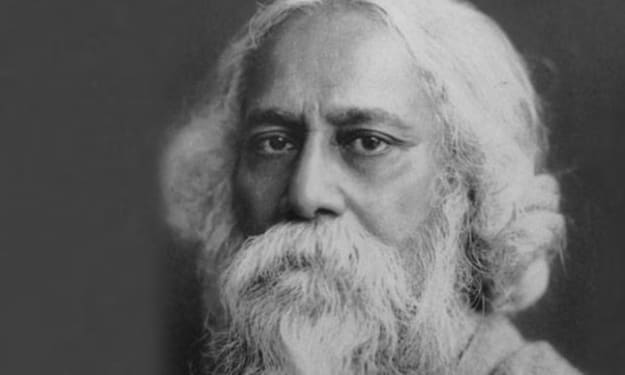
Rabindranath Tagore Jayanti 2025: 25+ Wishes, Messages, and Inspirational Quotes to Share
On May 9, 2025, we commemorate the 164th birth anniversary of Rabindranath Tagore—India’s Nobel laureate poet, philosopher, and cultural icon. Known as Gurudev, Kabiguru, and the Bard of Bengal, Tagore’s legacy transcends literature, music, and art, leaving an indelible mark on the world. His timeless words continue to inspire generations, making Rabindra Jayanti a day of reflection and celebration.
By Abjol Hussain Laskar9 months ago in History
The 2002 Godhra train tragedy and the Gujarat riots.
The year 2002 is marked as a bloody and controversial chapter in India's post-independence history. On the morning of February 27 of that year, a terrible incident took place at the Godhra railway station—a fire broke out in the S-6 coach of the Sabarmati Express, killing 59 Kar Sevaks who were returning from Ayodhya. Immediately after this incident, terrible riots spread across the state of Gujarat, in which about 2,000 Muslims were killed, thousands of Muslim women were raped, mosques were destroyed, businesses were ruined, and millions of people were displaced. This riot was not just a communal outrage—behind it was a dazzling political tableau, state silence, and purposeful administrative inaction. The Godhra incident and the subsequent riots are still controversial, questionable, and symbolize the darkest chapter in politics.
By Abdul Barik9 months ago in History
Delhi Traffic Advisory: Vehicle Restrictions and Alternate Routes Announced Amid Saket Bar Council Elections
The Delhi Traffic Police have issued a comprehensive traffic advisory in light of the ongoing Bar Council elections at the Saket Court Complex. The elections, scheduled from 8:00 AM to 8:00 PM on May 9, 2025, are expected to cause significant traffic congestion in the surrounding areas. To ensure smooth vehicular movement and minimize inconvenience to commuters, specific restrictions and alternative routes have been outlined.
By Abjol Hussain Laskar9 months ago in History
The Full Flower Moon of 2025: A Magical Night Blooms on May 12
Full 'Flower Moon' 2025 Blooms on May 12: A Celestial Spectacle in the Spring Sky The full moon rises each month with its own name and significance, attracting skywatchers and nature enthusiasts alike. The ethereal light of the Full Flower Moon, which is expected to shine brightest on May 12 in 2025, will once more illuminate the night sky. This full moon has historical, cultural, and seasonal significance in addition to being a beautiful astronomical event. What is the "Flower Moon"? Native American and European customs inspired the name "Flower Moon." May marks the beginning of spring in the Northern Hemisphere. Flowers of all kinds begin to bloom in abundance—blanketing meadows, forests, and gardens with vibrant color and life. The "Flower Moon" was the name given to this full moon by early civilizations who used the lunar cycle to track time. The term gained popularity through the Old Farmer's Almanac, which popularized the traditional names of full moons. According to their records, the Flower Moon was a marker of increasing fertility in the earth, warmer weather, and the end of the planting season. When and How to See It In 2025, the Flower Moon will be at its fullest phase on May 12 at 9:56 PM UTC. This may be visible in the early morning of May 13 or in the evening of May 11, depending on your time zone. Regardless of when you see it, the moon will appear full and radiant for a day or two around the peak. To get the most out of your viewing: Find a dark, open area away from city lights. Beginning your observation at moonrise, which occurs shortly after sunset, If you want to get a closer look at the moon's craters and surface textures, you can do so with binoculars or a small telescope. This year’s Flower Moon will not coincide with a lunar eclipse or any unusual celestial event, but its sheer brilliance and the symbolism it carries make it a worthwhile sight. Cultural and Spiritual Significance Full moons have always played an important role in human culture and spirituality. In particular, the Flower Moon is regarded as a time of development, transformation, and celebration. Just as the earth bursts into color, many people use this time to reflect on their own personal growth. In Pagan and Wiccan traditions, the Flower Moon is a time for rituals related to abundance, love, and fertility. It's a period to plant both literal and metaphorical seeds and watch them grow. Buddhists often celebrate Vesak—the birth, enlightenment, and death of the Buddha—during May’s full moon, although the exact date varies based on the lunar calendar. In modern times, many people see the Flower Moon as a time to connect with nature, meditate under the moonlight, or simply enjoy the serenity that the full moon brings. Astrological Influence From an astrological perspective, May’s full moon in 2025 will fall in the sign of Scorpio, a zodiac known for intensity, emotional depth, and transformation. This combination of fertile spring energy with Scorpio’s powerful emotions may encourage introspection, relationship shifts, and a renewed sense of purpose. People who follow astrology might find this a good time to: Let go of emotional baggage Set intentions for personal healing Embrace change and transformation It’s a good opportunity to ask yourself: What is ready to bloom in your life? The Science Behind the Glow The moon doesn’t produce its own light—it reflects the light of the sun. A full moon occurs when the moon is on the opposite side of Earth from the sun, allowing its face to be fully illuminated from our perspective. Because of this alignment, the full moon can sometimes appear larger or brighter than usual, depending on its orbit and position. In 2025, the Flower Moon will not be a supermoon, meaning it won’t appear unusually large in the sky. Still, its beauty will be no less awe-inspiring. Tips for Photographing the Moon If you’re interested in capturing this moment, here are a few tips: Use a tripod to keep your camera steady. Lower the ISO to reduce grain. Use a zoom lens or smartphone telescope attachment for close-up details. Shoot during moonrise or moonset, when the moon appears lower and more colorful due to the Earth’s atmosphere. Even a simple smartphone can capture stunning images when timed right. Conclusion: Pause, Reflect, and Bloom The Full Flower Moon of May 12, 2025, is more than just a natural occurrence—it’s an invitation. It invites us to slow down, look up at the sky, and remember the rhythm of nature. Just as flowers bloom after a long winter, we too have the opportunity to grow, renew, and radiate our inner light. Whether you watch it with friends, from your rooftop, or in quiet solitude, this year’s Flower Moon promises to be a beautiful reminder of the season’s magic. So mark your calendars, prepare your cameras, and get ready to bask in the light of May’s most enchanting lunar show. --- Would you like a shorter version for social media or a Bangla translation of this article?
By Abraham Lopez9 months ago in History
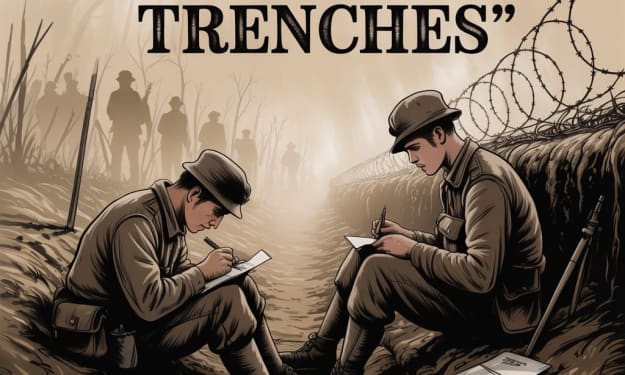
Whispers in the Trenches
France, November 1916 The earth had been torn apart by months of shellfire. Once-verdant fields were now endless miles of churned mud, the kind that swallowed boots and blurred the line between land and death. The trenches stretched for miles like festering wounds, filled with men who hadn’t seen a clean sky in weeks.
By Muhammad Zahir9 months ago in History
“India and Pakistan: A Conflict Rooted in History”
The conflict between India and Pakistan began in 1947 when British India was divided into two countries: India and Pakistan. The division was based on religion, with India becoming a secular state with a Hindu majority, and Pakistan created as a homeland for Muslims. This division, called the Partition, caused mass displacement and violence. Around one million people died, and about 15 million were forced to leave their homes.
By Whispers of Yousaf9 months ago in History
The Golden Ghost of the Baltic: The Lost Wreck of the Vasa Treasure Fleet . AI-Generated.
The Golden Phantom of the Baltic: The Abandoned Wreck of the Vasa Treasure Fleet In the obscure depths of the Baltic Sea rests one of Northern Europe’s most enigmatic maritime legendsa narrative of royal aspiration, national pride, and a submerged fortune. The account of the Vasa treasure fleet and the immense wealth lost beneath the waves illustrates a vivid portrayal of Sweden’s imperial ambitions during the 17th century. This article explores the history of the Vasa warship, the kingdom it served, and the ongoing quest for the elusive riches once intended to finance a Swedish empire.
By Say the truth 9 months ago in History
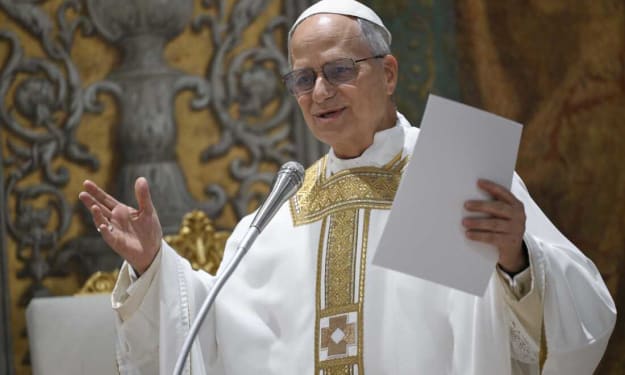
Pope Leo's stance on key issues, from climate change to LGBTQ+ rights to U.S. politics
Your request is inconsistent in some way. Pope Leo XIII held the papal office from 1878 to 1903. During that time, there wasn't much discussion or debate on climate change, LGBTQ+ rights, or the present-day political context of the United States. These issues became institutionalized and came to the forefront of discussion in the late 20th and 21st centuries. Perhaps you wanted to know about the views of the current Pope Francis, as these topics are highly relevant during his pontificate. If so, I am presenting Pope Francis's opinions below. If you genuinely want to know about Pope Leo XIII regarding these specific issues, it must be said that these topics were not even raised during his time. However, Pope Leo XIII is known for his famous encyclical "Rerum Novarum" (1891), where he spoke about workers' rights, fair wages, and social justice. It is regarded as an essential component of Catholic social teaching. These principles can indirectly be relevant to some of today's debates, such as economic inequality or the rights of the poor who are victims of environmental exploitation. Now, if your intention is to know Pope Francis's opinions, his positions are as follows: The Fundamental Values and Position of Pope Francis on Various Topics Since his election in 2013, Pope Francis has been known for his straightforward talk, his empathy for the poor and marginalized, and his bold steps in addressing complex global problems. His thinking is deeply centered on Jesus's mercy, social justice, and the protection of creation.
By Juyel Khan Khan9 months ago in History