Books
Enduring Legacy of the Great Wall
The Great Wall of China: A Monument of Endurance and Empire The Great Wall of China, one of the most iconic landmarks in the world, winds across northern China like a stone dragon, stretching over 13,000 miles. The image you see—a majestic section of the Wall snaking over green hills beneath a golden sky—represents not just architectural achievement, but a profound testament to China's ancient civilizations, military strategy, cultural identity, and resilience.
By Mukhtiar Ahmad8 months ago in History
Álvares de Azevedo
In the history of Brazilian literature, few individuals shine as brightly—and as briefly—as Manuel Antônio Álvares de Azevedo (1831–1852). A prodigy of the Ultra-Romantic movement, Azevedo’s existence was a fleeting comet of poetic brilliance, characterized by melancholy, morbidity, and a fixation on love and death. His works, released posthumously, became cult classics, shaping the influence of generations of Gothic and Romantic authors. This article delves into his tumultuous life, his literary impact, and the tragic fate that secured his status as Brazil’s equivalent to Lord Byron.
By A História8 months ago in History
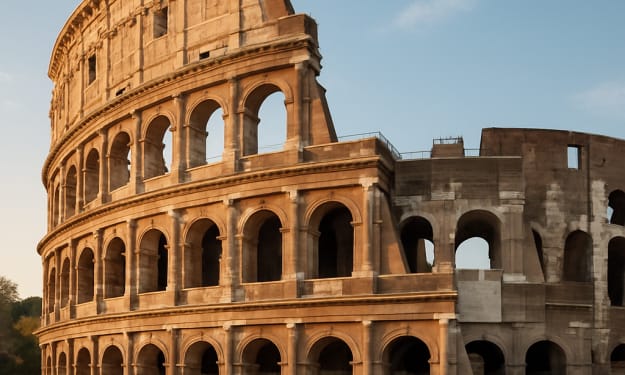
Timeless Glory: Colosseum’s Enduring Legacy
Rising majestically in the heart of Rome, the Colosseum stands as one of the most iconic and enduring symbols of the Roman Empire. Known in ancient times as the Flavian Amphitheatre, this monumental structure was commissioned around 70–72 AD by Emperor Vespasian of the Flavian dynasty and completed by his son Titus in 80 AD. Built to demonstrate the might of the new regime, the Colosseum served not just as a center for entertainment but also as a powerful tool for political propaganda, showcasing the glory, wealth, and engineering genius of the empire.
By Mukhtiar Ahmad8 months ago in History
Timeless Majesty of Giza Pyramids
Rising from the golden sands of the Giza Plateau, just outside modern-day Cairo, the Pyramids of Giza are among the most iconic and enduring symbols of ancient Egypt. These colossal monuments—the Great Pyramid of Khufu, the Pyramid of Khafre, and the Pyramid of Menkaure—were constructed during Egypt’s Fourth Dynasty, over 4,500 years ago. They are not only architectural marvels but also bear powerful testimony to the grandeur, innovation, and spiritual depth of ancient Egyptian civilization.
By Mukhtiar Ahmad8 months ago in History
Timeless Beauty of India's Taj Mahal
The Taj Mahal: A Monument of Eternal Love and Timeless Legacy The Taj Mahal, one of the most iconic and revered architectural wonders of the world, stands in Agra, India, as a symbol of love, loss, and artistic brilliance. Commissioned in 1632 by the Mughal emperor Shah Jahan, this breathtaking white marble mausoleum was built in memory of his beloved wife Mumtaz Mahal, who died during childbirth. Over the centuries, the Taj Mahal has come to represent not only the grandeur of Mughal architecture but also the deep personal love story that inspired its creation.
By Mukhtiar Ahmad8 months ago in History
Kappa: The River Demon of Japanese Mythology. AI-Generated.
Kappa: The River Demon of Japanese Mythology Japan's mythological realm is abundant with intriguing and peculiar beings, collectively referred to as yokai. Among these, the kappaa water-dwelling sprite or demonstands out as one of the most mysterious and enduring figures in Japanese legend. Typically portrayed as a small, humanoid entity with amphibious traits, a shell on its back, and a bowl-like indentation on its head that retains water, the kappa serves both as a menace and a moral educator. It represents Japan’s profound reverence for nature, particularly its waterways, and its longstanding tradition of storytelling.
By Say the truth 8 months ago in History
The Mythical Nine-Tailed Fox: Heritage, Lore, and Cultural Impact
Ancient Roots in China: The Huli Jing The notion of the nine-tailed fox traces back over 2,000 years to ancient China. The earliest documented mention can be found in the “Shanhaijing” (Classic of Mountains and Seas), a Chinese manuscript assembled between the 4th and 1st centuries BCE. The Huli Jing was characterized as a captivating, astute fox spirit that could exist for more than a millennium. According to Daoist beliefs, these foxes amassed spiritual energy through age and meditation, acquiring magical abilities and frequently transforming into human females to engage with humans.
By Say the truth 8 months ago in History
Climate Migration: Millions Move as U.S. Faces Extreme Weather
Introduction Climate change is no longer a distant threat—it is reshaping where and how Americans live. As extreme weather events become more frequent and severe, millions of people across the United States are being forced to relocate. Hurricanes, wildfires, rising sea levels, droughts, and extreme heat are driving what experts call "climate migration," a growing trend where people move to escape environmental disasters and economic instability caused by climate change. The U.S. is now witnessing one of the largest internal migrations in its history, with people fleeing high-risk areas for safer regions. This article explores the causes of climate migration, the most affected regions, the economic and social impacts, and what the future holds as climate displacement accelerates. 1. What is Climate Migration? Climate migration refers to the movement of people due to sudden or gradual changes in their local environment caused by climate change. Unlike traditional migration, which is often driven by economic opportunity or political instability, climate migrants are pushed out by forces beyond their control—rising seas, devastating storms, or unlivable temperatures. In the U.S., climate migration is happening in two main ways: Sudden Displacement: People forced to move immediately after disasters like hurricanes, floods, or wildfires. Gradual Relocation: Families and businesses leaving areas that are becoming increasingly uninhabitable due to rising heat, drought, or repeated flooding. According to a 2023 report by the U.S. Census Bureau, over 3 million Americans have moved due to climate-related factors in the past decade, and that number is expected to rise dramatically. 2. U.S. Regions Most Affected by Climate Migration A. Coastal Areas: Rising Seas and Hurricanes States like Florida, Louisiana, and Texas are experiencing some of the highest rates of climate migration due to hurricanes and sea-level rise. Florida: Miami and other coastal cities face chronic flooding, with projections showing that much of South Florida could be underwater by 2100. Many residents are moving inland or to states like Tennessee and North Carolina. Louisiana: The state loses a football field-sized amount of land to the sea every 100 minutes. Communities like Isle de Jean Charles have already become some of the first official U.S. climate refugees. Texas: Hurricane Harvey (2017) and other extreme storms have pushed people away from Houston and other Gulf Coast cities. B. The West: Wildfires and Drought California, Oregon, and Arizona are seeing mass departures due to wildfires, water shortages, and extreme heat. California: Wildfires have destroyed entire towns (e.g., Paradise in 2018), forcing thousands to relocate. Many are moving to neighboring states like Nevada and Idaho. Arizona & Nevada: Phoenix and Las Vegas face dangerous heatwaves, with temperatures regularly exceeding 110°F. The Colorado River drought is also making life unsustainable for many. C. The Midwest: Flooding and Agricultural Stress States like Iowa, Nebraska, and Missouri are experiencing more frequent and severe flooding, disrupting farming and pushing rural residents to leave. The 2019 Missouri River floods caused billions in damage, accelerating migration out of small farming towns. D. The Northeast: Extreme Weather and Rising Insurance Costs Even historically stable regions like New York, New Jersey, and Massachusetts are seeing climate-driven moves due to Superstorm Sandy-like events, coastal erosion, and skyrocketing home insurance costs. 3. The Economic and Social Impact of Climate Migration A. Housing Crises in Receiving Cities As people flee high-risk areas, they often relocate to cities like Nashville, Denver, and Atlanta, driving up housing prices and straining infrastructure. Austin, Texas, saw a 40% population increase in the past decade, partly due to climate migrants from California and the Gulf Coast. Boise, Idaho, became one of the fastest-growing cities as West Coast residents sought refuge from wildfires. B. Rising Insurance Costs and "Climate Abandonment" Many insurers are pulling out of high-risk states like Florida and California, making homeownership unaffordable. In Florida, some homeowners pay over $6,000 annually for insurance—four times the national average. Banks are increasingly redlining climate-vulnerable areas, refusing mortgages for homes in flood or fire zones. C. Strain on Local Governments Cities receiving climate migrants must expand schools, roads, and emergency services, often without sufficient funding. Meanwhile, shrinking towns in disaster-prone areas face economic collapse as tax bases disappear. D. Mental Health and Community Displacement Being forced to leave one’s home due to climate disasters leads to "solastalgia"—a form of emotional distress caused by environmental change. Indigenous communities and low-income families, who have fewer resources to relocate, are disproportionately affected. 4. The Future of Climate Migration in the U.S. A. Projected Hotspots for Migration By 2050, researchers predict: 13 million Americans could be displaced by sea-level rise alone. The "Climate Belt" (Midwest and Northeast) may see the largest influx of migrants due to more moderate temperatures and water availability. "Climate Havens" like Duluth, Minnesota, and Buffalo, New York, are preparing for population surges. B. Policy Challenges and Solutions The U.S. currently has no federal plan for climate migration, but some steps are being taken: FEMA’s new programs to buy out flood-prone homes. State-level initiatives, like Louisiana’s resettlement programs for coastal communities. Urban planning reforms to build climate-resilient cities. C. The Need for National Action Experts urge: Federal relocation assistance for climate-displaced families. Updated infrastructure policies to protect vulnerable regions. Climate adaptation funding for cities receiving migrants. Conclusion Climate migration is no longer a future possibility—it is happening now. As extreme weather reshapes America’s landscape, millions are being forced to make difficult decisions about where to live. Without urgent action, the economic, social, and humanitarian costs will only grow. The U.S. must develop long-term strategies to manage this crisis, from strengthening climate resilience to supporting displaced communities. The choices made today will determine whether climate migration leads to chaos or coordinated adaptation. One thing is certain: as the planet warms, America’s population map will keep changing. Key Takeaways: Over 3 million Americans have already moved due to climate factors. Coastal cities, wildfire zones, and drought-stricken areas are seeing the most outmigration. Housing shortages, insurance crises, and mental health struggles are major challenges. By 2050, 13 million+ people could be displaced by rising seas and extreme weather. Policy action is needed to manage relocation and protect vulnerable communities.
By Silas Blackwood8 months ago in History