
Timeless Beauty of India's Taj Mahal
A majestic symbol of love, grace, and architectural brilliance.
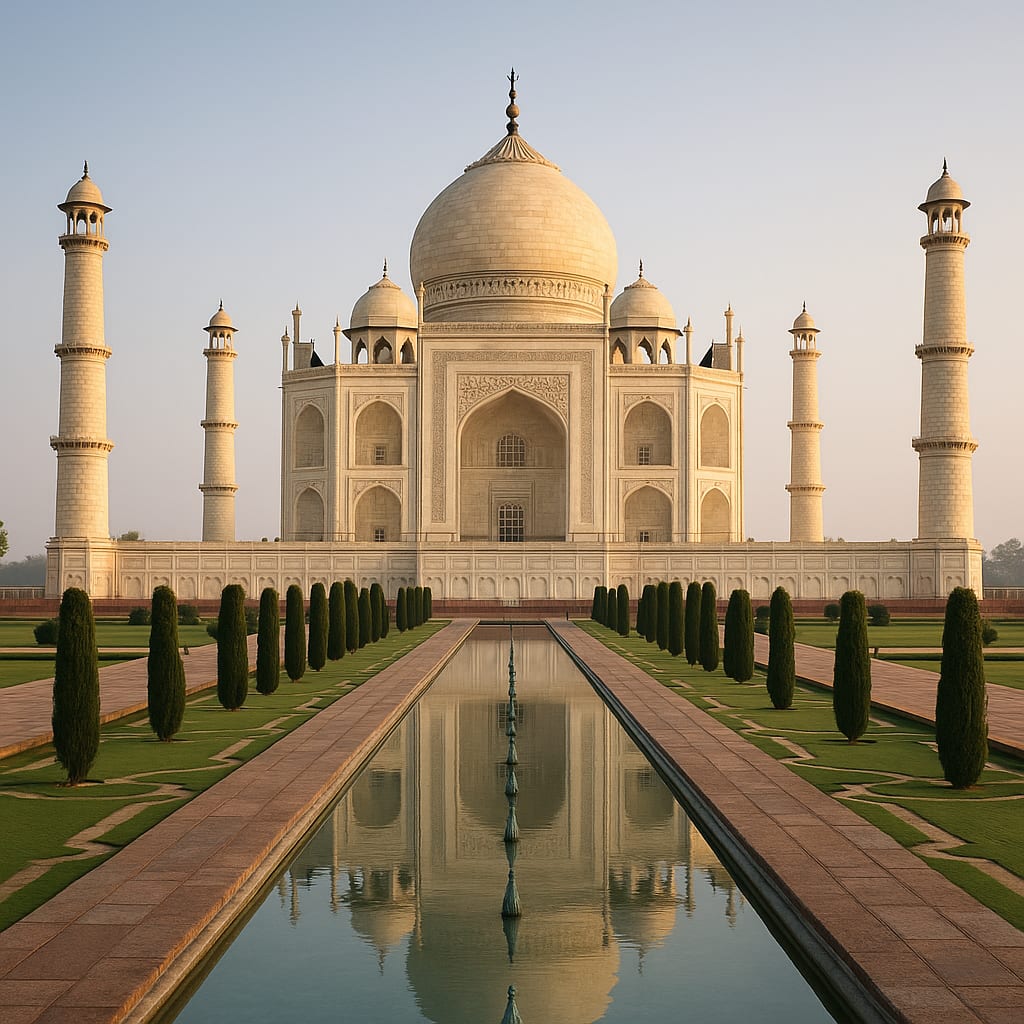
The Taj Mahal: A Monument of Eternal Love and Timeless Legacy
The Taj Mahal, one of the most iconic and revered architectural wonders of the world, stands in Agra, India, as a symbol of love, loss, and artistic brilliance. Commissioned in 1632 by the Mughal emperor Shah Jahan, this breathtaking white marble mausoleum was built in memory of his beloved wife Mumtaz Mahal, who died during childbirth. Over the centuries, the Taj Mahal has come to represent not only the grandeur of Mughal architecture but also the deep personal love story that inspired its creation.
The Love Story Behind the Monument
Mumtaz Mahal, originally named Arjumand Banu Begum, was the chief consort of Shah Jahan and his trusted confidante. Their union was deeply affectionate and marked by mutual respect and companionship. In 1631, during the birth of their 14th child, Mumtaz Mahal died, leaving Shah Jahan heartbroken. Devastated by her death, the emperor vowed to honor her memory with a tomb that would be unparalleled in beauty and magnificence. Thus, the vision of the Taj Mahal was born—a monument that would immortalize their love for eternity.
Construction and Architecture
Construction of the Taj Mahal began in 1632 and took approximately 22 years to complete, with the main mausoleum finished in 1643 and surrounding buildings and gardens completed later. The project enlisted more than 20,000 artisans and workers from across the Mughal Empire and beyond, including architects, calligraphers, masons, and stonecutters from Central Asia and Iran. Ustad Ahmad Lahauri, an accomplished architect of Persian origin, is generally considered the principal designer of the Taj Mahal.
The structure exemplifies the pinnacle of Mughal architecture, which blends elements from Islamic, Persian, Ottoman Turkish, and Indian architectural styles. The centerpiece of the complex is the stunning white marble mausoleum, which rests on a square plinth and features a symmetrical building topped by a massive central dome and surrounded by four minarets. The white marble was sourced from Makrana in Rajasthan, and precious and semi-precious stones used for intricate inlay work were brought from across Asia.
Symbolism in Design
Every aspect of the Taj Mahal’s design is imbued with symbolic meaning. The symmetry of the complex is believed to represent balance and harmony, while the central dome, resembling a lotus flower, symbolizes purity. The gardens, inspired by Persian Charbagh design, are divided into four parts by water channels and pathways, symbolizing the four flowing rivers of Paradise mentioned in the Quran.
The main chamber of the mausoleum houses the cenotaphs of Mumtaz Mahal and Shah Jahan, which are elaborate and highly decorated with inlaid calligraphy and floral patterns. However, the actual graves lie in a simpler crypt beneath the chamber, adhering to Islamic tradition.
Cultural and Historical Significance
Beyond its architectural grandeur, the Taj Mahal holds immense cultural and historical importance. It stands as a testament to the zenith of Mughal power and cultural achievement in India. The construction techniques and artistic elements used in the Taj Mahal influenced numerous other buildings and architectural styles in India and beyond.
In 1983, the Taj Mahal was designated a UNESCO World Heritage Site, described as “the jewel of Muslim art in India and one of the universally admired masterpieces of the world’s heritage.” It attracts millions of visitors annually and remains a source of national pride for India.
Preservation and Challenges
Despite its iconic status, the Taj Mahal faces several preservation challenges. Pollution from industrial activity and vehicular traffic in Agra has contributed to the yellowing of its once-pristine white marble. Environmentalists and conservationists have raised concerns about the structural integrity of the monument, especially the foundation, which is built on a riverfront using wood that relies on moisture from the Yamuna River to remain strong.
To combat these threats, the Indian government and international agencies have taken steps to preserve the site. The Taj Trapezium Zone (TTZ), a 10,400 square-kilometer area around the monument, was established to control pollution levels. In recent years, restoration efforts have included cleaning the marble surfaces with a clay pack treatment known as "Multani Mitti" to restore its original whiteness.
The Taj Mahal in Popular Culture
The Taj Mahal has captivated the imagination of poets, writers, artists, and filmmakers for centuries. It is frequently cited in literature and music as a metaphor for eternal love and human devotion. Its image is iconic and universally recognized, appearing in countless postcards, travel documentaries, and artistic renditions. Indian poet Rabindranath Tagore famously described it as “a teardrop on the cheek of time,” capturing the sorrow and beauty it represents.
In popular culture, the monument has also become a backdrop for many romantic narratives, further cementing its association with love. It has appeared in several international films and continues to inspire awe among visitors from all walks of life.
Legacy of a Love Immortalized
The Taj Mahal endures not merely as a piece of architectural brilliance but as a timeless symbol of love and human emotion. It is a monument that transcends time, culture, and geography, speaking to the universal human experience of love, loss, and remembrance. Through the marble walls, intricate carvings, and celestial design, Shah Jahan’s tribute to Mumtaz Mahal continues to echo through history, inviting the world to witness a love immortalized in stone.
As the sun rises over Agra and bathes the Taj Mahal in hues of gold and amber, it reminds the world of the power of love—a love that built a legacy, a legacy carved in white marble for eternity.
About the Creator
Keep reading
More stories from Mukhtiar Ahmad and writers in History and other communities.
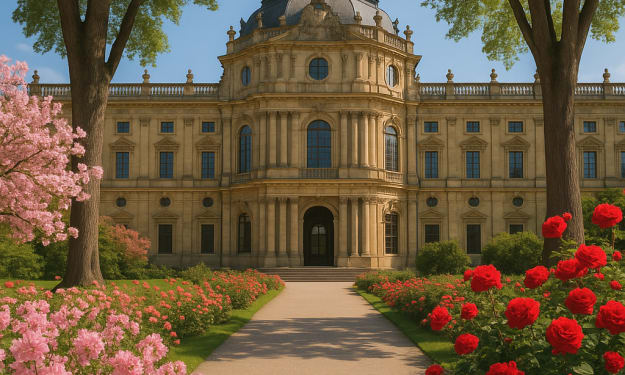
Baroque Beauty in Blooming Historic Gardens.
The Timeless Elegance of Baroque Architecture in Historic Gardens Architecture is often described as frozen music, and nowhere is that symphony more profound than in the grandeur of Baroque buildings nestled within nature’s tranquil embrace. The image of a historic Baroque-style building surrounded by blooming roses, cherry blossoms, and towering trees offers a vivid snapshot of a time when art, architecture, and landscape design harmonized to express power, beauty, and divinity.
By Mukhtiar Ahmad10 months ago in History
Author’s Advice
If you would’ve asked me 20 years ago did I know I’d become a writer and an author, I would’ve said “nope, ain’t happening”. As fate would have it I did become an author and I can honestly say I’m loving it so far. It really does feel good to be a writer. I’ve learned a lot on this journey and I feel like with even me being as new to this world as I am, there’s some wisdom I need to share with every other aspiring author.
By Joe Patterson4 days ago in Journal



Comments
There are no comments for this story
Be the first to respond and start the conversation.