Books
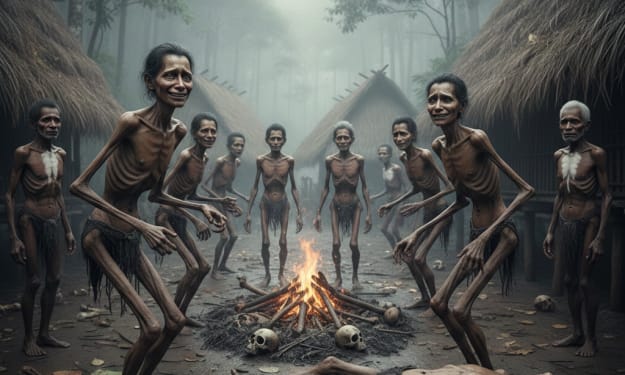
The Chilling Mystery of Kuru: The “Laughing Death” That Shocked the World
There are diseases… and then there are mysteries that haunt science for decades. Back in the 1930s, something terrifying was unfolding in the highlands of Papua New Guinea. Among the Fore people, a tribe of roughly 11,000 individuals, a strange illness was claiming around 200 lives every year.
By Areeba Umair11 days ago in History
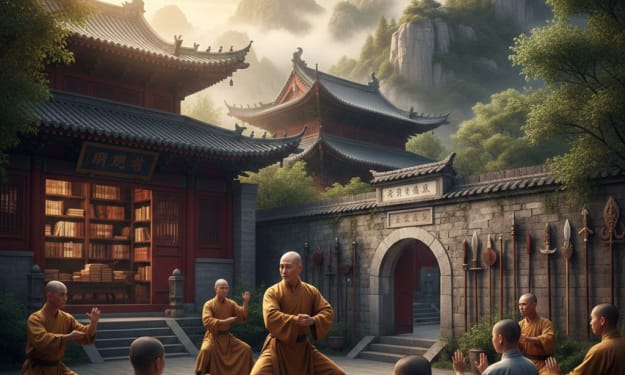
Shaolin Temple Secrets Revealed: The Real Story Behind Shaolin Kung Fu
When most people hear Shaolin Kung Fu, they picture flying kicks, shattered bricks, and warriors who move like something straight out of a movie. Maybe even someone like Bruce Lee dominating the screen with lightning-fast strikes.
By Areeba Umair11 days ago in History
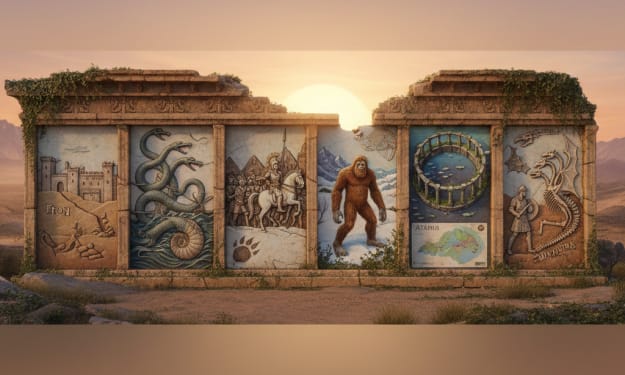
6 Ancient Legends That Were Surprisingly Real
Humans are natural storytellers. For thousands of years, myths and legends have ignited our imagination, fed our souls, and passed wisdom from one generation to the next. While many of these tales are just that, stories, some are rooted in real events, revealing fascinating truths about our planet and the universe.
By Areeba Umair13 days ago in History
A Day That Broke Time. AI-Generated.
A Day That Broke Time The morning had started like any other in the sleepy town of Rivermist. Sunlight spilled lazily across cobblestone streets, and the air smelled of dew and wet earth. People went about their routines—bakers kneading dough, children chasing each other to school, and old men sipping tea on wooden benches. But something in the air that day felt… off, though no one could have said exactly what.
By Samaan Ahmad18 days ago in History
The Eternal Shadow of Alexander: How His Empire Shaped the World After His Death. AI-Generated.
Alexander died in Babylon under mysterious circumstances. Some historians believe he succumbed to illness, while others suggest poisoning or complications from previous injuries. Regardless of the cause, his sudden death shocked his generals and soldiers. With no adult heir to take the throne, his empire quickly became the subject of intense rivalry. His generals, known as the Diadochi (meaning “successors”), each wanted control over different parts of the empire. Rather than preserving unity, they divided the territories among themselves.
By Say the truth 19 days ago in History
Alexander the Great – Part 8: The Myth, the Memory, and the Man Behind the Legend. AI-Generated.
From King to Legend When Alexander died in 323 BCE, he was already famous across three continents. Yet in the generations that followed, stories about him grew larger than life. Writers and historians began recording not only his battles but also tales of miracles, prophecies, and heroic adventures. Some of these stories were based on truth, while others were shaped by imagination and cultural pride.
By Say the truth 19 days ago in History
Alexander the Great – Part 7: The Eternal Legacy of a World Conqueror
A Conqueror Who Connected Worlds Before Alexander, the ancient world was divided into separate cultural regions. Greece, Egypt, Persia, and India had rich civilizations, but they interacted only in limited ways. Alexander’s conquests changed that forever. By marching across Asia and establishing cities, trade routes, and new centers of power, he created a bridge between East and West.
By Say the truth 19 days ago in History
When Truth Learned to Whisper. AI-Generated.
When Truth Learned to Whisper In the small town of Mirzaabad, people spoke freely, too freely. Gossip was like air—unseen yet everywhere. The truth, bold and loud, once roamed these streets without fear, leaving nothing hidden. But over time, the people grew weary of its harshness. Truth was blunt; it hurt, it shattered, it embarrassed. So one day, it vanished. Not entirely, but it learned to whisper.
By Samaan Ahmad20 days ago in History
The Ecology of Self-Destruction
Human civilizations often imagine their downfall as something imposed from the outside—by enemies, invasions, or natural disasters. Yet, as Jared Diamond argues in Collapse: How Societies Choose to Fail or Succeed, many societies have played the central role in their own destruction. Through the reckless over-exploitation of natural resources, short-term thinking, and failure to adapt to environmental limits, nations repeatedly undermine the very ecological systems that sustain them. Diamond’s comparative study of past and present societies reveals a sobering pattern: environmental self-destruction is rarely accidental, and collapse is often the predictable outcome of collective choices.
By Rachid Zidine22 days ago in History