
Alexander the Great – Part 8: The Myth, the Memory, and the Man Behind the Legend
As centuries passed after the death of Alexander the Great, the line between history and legend began to blur. The man who once rode across deserts and mountains leading armies became something more than a king—he became a symbol. Part 8 of Alexander’s story explores how his image transformed over time, how different civilizations remembered him, and how the myth of Alexander became as powerful as the real historical figure.

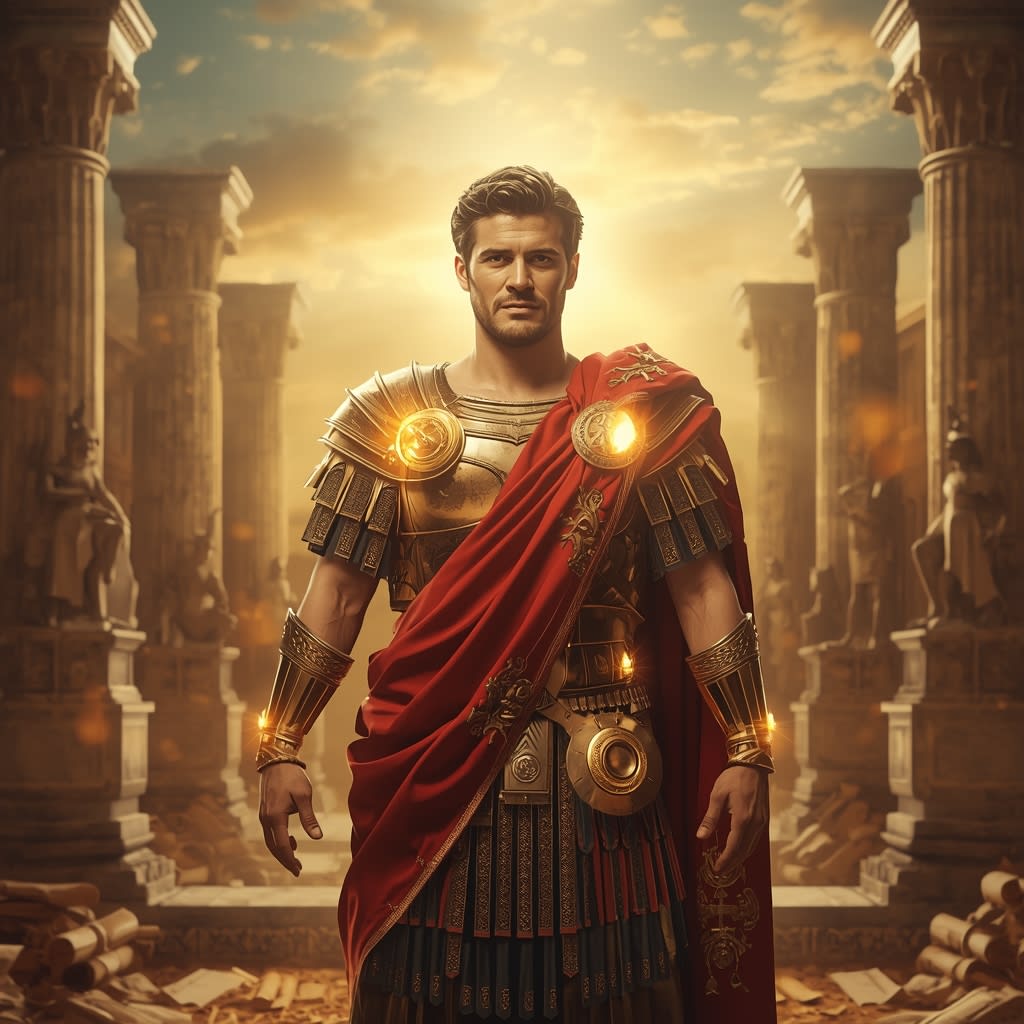
From King to Legend
When Alexander died in 323 BCE, he was already famous across three continents. Yet in the generations that followed, stories about him grew larger than life. Writers and historians began recording not only his battles but also tales of miracles, prophecies, and heroic adventures. Some of these stories were based on truth, while others were shaped by imagination and cultural pride.
In Greek tradition, Alexander was remembered as the ultimate hero-king—a student of Aristotle, a fearless commander, and a ruler chosen by destiny. He was portrayed as brave, intelligent, and nearly unstoppable. Greek writers emphasized his military genius and his role in spreading Greek culture across the known world.
In Egypt, Alexander was honored as a pharaoh. He had been crowned in Memphis and founded the city of Alexandria, which became one of the greatest cities of the ancient world. Egyptian traditions sometimes portrayed him as a divine figure, chosen by the gods to rule and bring prosperity.
In Persia, where Alexander had overthrown the mighty Achaemenid Empire, memories of him were more complex. Some viewed him as a destructive conqueror, while others later depicted him as a wise and just ruler who respected Persian traditions. Over time, Persian stories transformed him into a heroic figure who possessed both strength and wisdom.
Alexander in Eastern Traditions
Perhaps the most fascinating transformation of Alexander’s image occurred in the East. In Persian and Islamic literature, he became known as Iskandar. In these stories, he was often portrayed as a philosopher-king who traveled the world seeking knowledge and justice.
One popular legend described Alexander’s journey to the “ends of the earth,” where he built a great wall to keep out destructive forces. In some versions, he searched for the Fountain of Youth, hoping to achieve immortality. These stories blended history with myth, turning Alexander into a legendary traveler and seeker of wisdom.
In India, where Alexander’s army reached the Hydaspes River, he was remembered as a powerful but distant figure. Local traditions sometimes described him as a great warrior who encountered strong resistance and chose diplomacy over destruction. His meeting with King Porus became a symbol of mutual respect between two powerful rulers.
The Alexander Romance
One of the most influential sources of Alexander’s legendary image was a collection of stories known as the Alexander Romance. Written centuries after his death, these tales spread across Europe, the Middle East, and Asia. They were translated into many languages and adapted to fit different cultures.
In these stories, Alexander battled mythical creatures, explored unknown lands, and encountered strange civilizations. He was portrayed as both a warrior and an explorer, driven by curiosity and ambition. While historians recognize that many of these stories are fictional, they played a major role in shaping how people across the world imagined Alexander.
The Alexander Romance helped transform him from a historical king into a global legend. For medieval readers, he was not just a conqueror but also a hero of epic adventures, similar to figures from mythology.
Influence on Medieval and Renaissance Europe
During the Middle Ages, Alexander’s story continued to inspire European writers and leaders. Knights and kings admired his courage and ambition. He was often included in lists of the “Nine Worthies,” a group of legendary heroes who represented ideal leadership and chivalry.
Artists and poets depicted him as a model of bravery and honor. His life story was retold in manuscripts, paintings, and theatrical performances. Even though centuries had passed since his campaigns, his name remained synonymous with greatness.
During the Renaissance, renewed interest in classical history brought Alexander back into focus. Scholars studied ancient Greek and Roman texts, examining his campaigns and leadership style. Military leaders analyzed his strategies, while philosophers debated his character and motivations.
The Man Behind the Myth
Despite the many legends surrounding him, historians continue to study the real Alexander. He was a complex individual—a brilliant commander, a visionary leader, and a man driven by ambition. He could be generous and respectful toward defeated enemies, but he could also be ruthless in battle.
Alexander’s personality combined confidence, curiosity, and determination. He believed he was destined for greatness and pursued his goals with relentless energy. His willingness to adopt elements of foreign cultures showed a level of adaptability rare among conquerors of his time.
At the same time, his rapid expansion and constant campaigns placed enormous strain on his empire and his soldiers. His early death left many questions unanswered. What would have happened if he had lived longer? Could he have stabilized his empire and created a lasting global kingdom? These questions continue to fascinate historians.
Alexander in Modern Culture
Even in the modern world, Alexander the Great remains a powerful symbol. His life has inspired films, novels, documentaries, and academic studies. Military academies analyze his tactics, while historians debate his legacy. Some view him as a visionary who connected cultures, while others see him as a conqueror whose campaigns brought destruction.
His name is still used as a measure of greatness. Leaders, athletes, and innovators are sometimes compared to Alexander when they achieve extraordinary success. The phrase “conquer the world” often evokes images of his rapid rise from king of Macedon to ruler of a vast empire.
An Immortal Legacy
Alexander the Great lived for only 32 years, yet his influence has lasted for more than two millennia. Few historical figures have inspired so many stories across so many cultures. He became a hero, a legend, and a symbol of ambition and exploration.
The myth of Alexander may differ from the historical reality, but both are powerful in their own ways. Together, they form a legacy that continues to shape how people understand leadership, ambition, and the pursuit of greatness.
In the end, Alexander’s story is not just about the past—it is about the enduring human fascination with those who dare to dream beyond limits. Whether seen as a conqueror, a king, or a legend, Alexander the Great remains one of history’s most unforgettable figures.
About the Creator
Say the truth
"Say the Truth: Explain Everything in the World" is your trusted source for uncovering facts and exploring the wonders of history, science, technology, and beyond. We simplify complex ideas and reveal truths to inspire curiosity .
Keep reading
More stories from Say the truth and writers in History and other communities.
Alexander the Great – Part 7: The Eternal Legacy of a World Conqueror
A Conqueror Who Connected Worlds Before Alexander, the ancient world was divided into separate cultural regions. Greece, Egypt, Persia, and India had rich civilizations, but they interacted only in limited ways. Alexander’s conquests changed that forever. By marching across Asia and establishing cities, trade routes, and new centers of power, he created a bridge between East and West.
By Say the truth 3 days ago in History
Augustus Caesar — The Silent Victor
Augustus Caesar did not conquer Rome with thunder and spectacle. He conquered it with silence, patience, and restraint. Where others seized power through open violence, Augustus mastered something far rarer: the ability to win without appearing to rule. In doing so, he ended a century of civil war and founded an empire that would endure for centuries. His genius was not in dramatic battlefield heroics, but in knowing when *not* to act—and when to let others believe nothing had changed.
By Fred Bradford6 days ago in History
When Truth Learned to Whisper
When Truth Learned to Whisper In the small town of Mirzaabad, people spoke freely, too freely. Gossip was like air—unseen yet everywhere. The truth, bold and loud, once roamed these streets without fear, leaving nothing hidden. But over time, the people grew weary of its harshness. Truth was blunt; it hurt, it shattered, it embarrassed. So one day, it vanished. Not entirely, but it learned to whisper.
By Samaan Ahmad4 days ago in History



Comments
There are no comments for this story
Be the first to respond and start the conversation.