
Alexander the Great – Part 7: The Eternal Legacy of a World Conqueror
More than two thousand years after his death, Alexander the Great remains one of the most influential figures in world history. His empire did not survive intact for long, but the impact of his conquests reshaped civilizations from the Mediterranean to India. The final chapter of Alexander’s story is not about battles or campaigns—it is about the long shadow he cast over politics, culture, warfare, and human imagination.

A Conqueror Who Connected Worlds
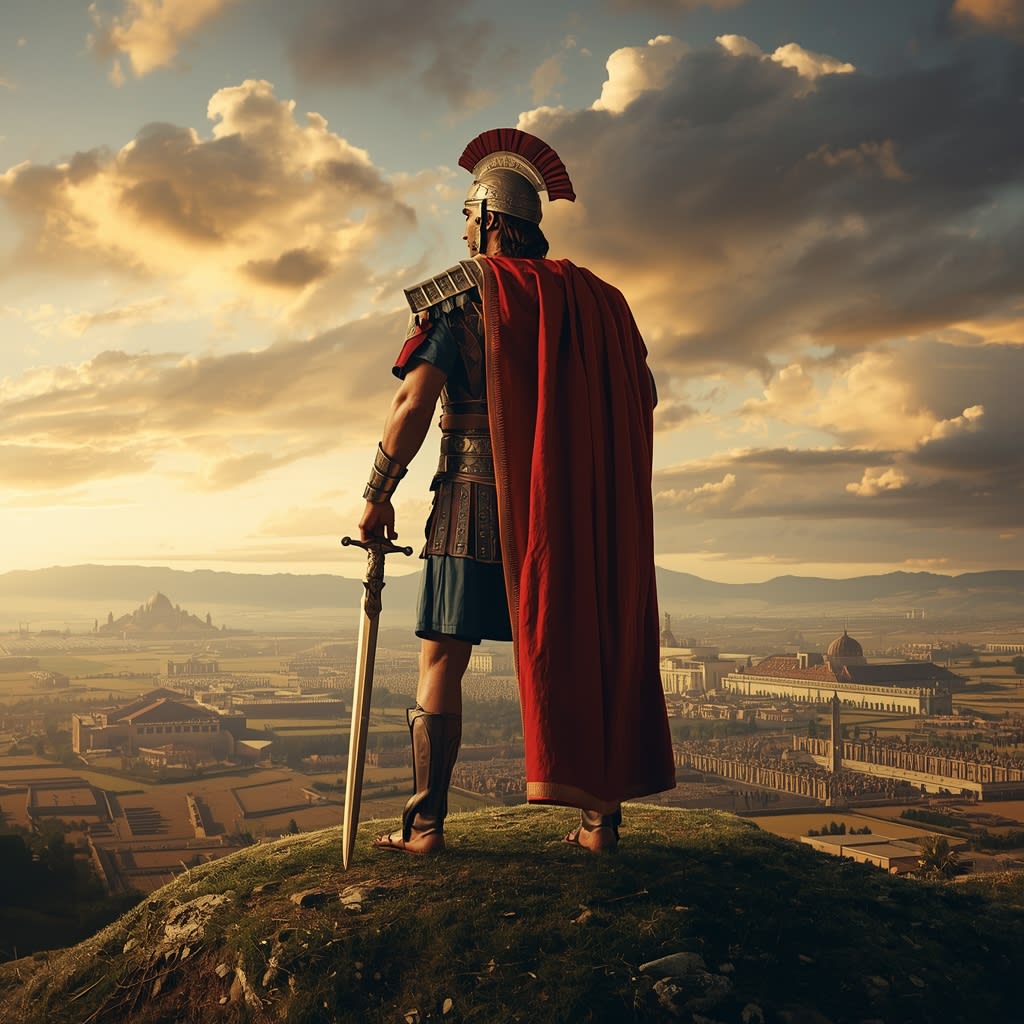
Before Alexander, the ancient world was divided into separate cultural regions. Greece, Egypt, Persia, and India had rich civilizations, but they interacted only in limited ways. Alexander’s conquests changed that forever. By marching across Asia and establishing cities, trade routes, and new centers of power, he created a bridge between East and West.
Greek language and culture spread across vast territories, becoming the common thread linking diverse peoples. In return, Greek culture absorbed influences from Egypt, Persia, and India. This blending created what historians call the Hellenistic world—a cultural environment where ideas, art, religion, and science mixed in ways that had never happened before.
This cultural exchange allowed knowledge to travel more easily. Scientific discoveries, philosophical ideas, and artistic styles moved across borders, shaping the intellectual foundations of later civilizations. Alexander may have been a conqueror by sword, but his long-term influence was cultural and intellectual.
Influence on Rome and Future Empires
One of the most important legacies of Alexander was his influence on the Roman Empire. When Rome rose to power centuries later, its leaders studied Alexander’s campaigns carefully. Roman generals admired his bold strategies, rapid movements, and ability to inspire loyalty among his troops.
Julius Caesar, one of Rome’s most famous leaders, reportedly wept when he saw a statue of Alexander. At the same age, Alexander had already conquered much of the known world, while Caesar had yet to achieve similar greatness. Roman emperors and generals continued to look to Alexander as a model of leadership and ambition.
Rome eventually conquered many of the territories that had once belonged to Alexander’s successors. In doing so, it inherited the Hellenistic world he had created. Greek language, philosophy, and art became central to Roman culture, ensuring that Alexander’s influence remained alive even as new empires rose.
Cultural and Scientific Impact
The Hellenistic world produced remarkable achievements in science, philosophy, and art. Centers like Alexandria in Egypt became hubs of learning where scholars from different regions gathered to exchange ideas. The famous Library of Alexandria housed vast collections of knowledge, preserving and expanding on Greek, Egyptian, and Eastern texts.
Mathematicians such as Euclid and Archimedes made groundbreaking discoveries. Astronomers studied the stars and planets with increasing accuracy. Doctors advanced medical knowledge by studying anatomy and disease. These achievements were made possible by the interconnected world that Alexander’s conquests had helped create.
In art and architecture, Hellenistic styles blended realism with emotional expression. Sculptures became more lifelike, showing movement and feeling. Buildings combined Greek design with local influences, creating unique architectural styles across the ancient world.
Alexander in Legend and Myth
Over time, Alexander’s life became the subject of legends and stories. In some cultures, he was portrayed as a heroic warrior blessed by the gods. In others, he was seen as a wise ruler or even a semi-divine figure. Tales of his adventures spread across Europe, the Middle East, and Asia, becoming part of local folklore.
In Persian and Islamic traditions, stories about Alexander—often called Iskandar—depicted him as a just and powerful king who traveled the world in search of knowledge. In medieval Europe, he was celebrated in epic tales as the ultimate knight and conqueror. These stories transformed Alexander from a historical figure into a legendary hero whose life inspired generations.
Even today, his name is associated with ambition and greatness. The phrase “to conquer like Alexander” has become a symbol of extraordinary achievement. His life story continues to inspire books, films, and works of art around the world.
Lessons in Leadership and Ambition
Alexander’s life offers many lessons about leadership, ambition, and the pursuit of greatness. He showed that determination and vision can transform a small kingdom into a global power. His ability to inspire loyalty among his soldiers and adapt to different cultures helped him succeed in unfamiliar lands.
However, his story also serves as a reminder of the challenges of maintaining power. His empire collapsed quickly after his death because it relied heavily on his personal leadership. Without a clear plan for succession, his generals fought among themselves, dividing the empire into separate kingdoms.
This contrast between his extraordinary achievements and the fragility of his empire highlights the importance of stability and long-term planning in leadership. Alexander’s life demonstrates both the power of ambition and the risks that come with rapid expansion.
A Legacy Beyond Conquest
Alexander’s greatest legacy lies not in the territory he conquered but in the connections he created. By linking distant regions and encouraging cultural exchange, he helped shape a more interconnected world. The spread of Greek language and ideas influenced philosophy, science, and art for centuries.
Even after his empire fragmented, the Hellenistic world continued to thrive. Trade routes expanded, cities flourished, and knowledge spread across continents. The cultural blending that began under Alexander laid the groundwork for later civilizations, including the Roman and Byzantine Empires.
Today, historians view Alexander not only as a military genius but also as a figure who transformed global history. His campaigns reshaped political boundaries, while his cultural influence changed how people thought, learned, and interacted.
The Eternal Conqueror
Alexander the Great died young, but his impact has endured for more than two millennia. Few individuals in history have left such a lasting mark on so many regions and cultures. From the spread of Hellenistic civilization to the inspiration he provided for future leaders, his legacy remains powerful.
He is remembered as a fearless warrior, a visionary leader, and a symbol of ambition. His life story continues to fascinate historians, writers, and readers alike. Even in the modern world, the name Alexander the Great evokes images of courage, determination, and the desire to achieve the extraordinary.
In the end, Alexander’s greatest achievement was not just conquering lands—it was changing the course of history. By connecting civilizations and spreading ideas across continents, he helped shape the world that followed. His empire may have faded, but his legacy remains eternal, proving that some figures in history never truly disappear.
About the Creator
Say the truth
"Say the Truth: Explain Everything in the World" is your trusted source for uncovering facts and exploring the wonders of history, science, technology, and beyond. We simplify complex ideas and reveal truths to inspire curiosity .
Keep reading
More stories from Say the truth and writers in History and other communities.
The Final Legacy of Alexander the Great: How One Man Changed the Ancient World
Alexander inherited a strong kingdom from his father, Philip II of Macedon, but he transformed it into something far larger. Within a little more than a decade, he conquered the Persian Empire, marched through Egypt, reached Central Asia, and entered parts of India. This rapid expansion created one of the largest empires of the ancient era. Yet Alexander’s vision went beyond military victory. He sought to create a world where Greek and Eastern cultures blended together. This cultural mixing became one of his most lasting achievements.
By Say the truth 6 days ago in History
The Long Afterlife of Colonialism
Colonialism is often treated as a historical event—something that ended when flags were lowered and independence was declared. But what if colonialism never truly left? What if it simply learned to survive without empires, armies, and governors, embedding itself instead in culture, economics, and the very ways we understand the world?
By Rachid Zidine3 days ago in History
Lost in the Crowd
Lost in the Crowd The city never slept, or at least, that’s what Amran had begun to believe. Every evening, the streets came alive with the hum of traffic, the chatter of strangers, and the relentless neon glow of shop signs. But tonight felt different. Tonight, amidst the sea of people, he felt invisible.
By Samaan Ahmad2 days ago in History



Comments
There are no comments for this story
Be the first to respond and start the conversation.