Books
The Historical and Logical Case for Jesus Christ, the Son of God
The following is not an appeal to blind faith or emotion. It is a reasoned argument grounded in history, logic, and evidence. Whether one accepts the divinity of Jesus Christ or not, the data surrounding His life, death, and resurrection demand an intellectually honest examination. Truth, by nature, does not depend on belief to exist; it simply is.
By Peter Thwing - Host of the FST Podcast3 months ago in History
"Shaping Tomorrow: Innovations and Unity in Today’s World"
In a time often dominated by uncertainty and challenge, a quieter revolution is unfolding—one driven by innovation, unity, and a growing global determination to shape a better tomorrow. From bustling labs in Singapore to clean energy farms in rural Kenya, people across the globe are collaborating in new and exciting ways. At the heart of this global movement is a common understanding: our biggest challenges—from climate change to inequality—require shared solutions. One of the most inspiring stories of the past year comes from a coalition of nations working to combat climate change. In 2025, the Global Green Accord was launched, a multi-nation initiative aiming to support the transition to clean energy in developing countries. Backed by more than 80 governments and hundreds of private organizations, the accord has already funded over 3,000 solar projects, bringing electricity to previously unpowered communities. Maya Fernandez, an energy engineer from Chile working on the accord, says it best: “We used to talk about who was responsible. Now we talk about who can help. That shift has changed everything.” And it’s not just energy. In the field of medicine, scientists from India, Germany, and South Africa recently co-developed a universal vaccine platform that can be rapidly customized for new viruses. Built using cutting-edge AI tools and open-source research, the technology has the potential to save millions of lives in future pandemics. “We’ve seen what happens when countries work in isolation,” says Dr. Neha Kapoor, one of the lead researchers. “This platform is proof that shared knowledge leads to shared survival.” Meanwhile, innovation is transforming education. In response to post-pandemic learning gaps, several countries have launched the Global Classroom Project. This initiative connects students from different continents through live-streamed classes, shared projects, and language exchange. A 12-year-old in Ghana now collaborates weekly with a peer in Norway on climate science experiments. “It’s not just about learning facts,” says Sofia Andersson, a teacher involved in the program. “It’s about building empathy, communication, and a sense of global citizenship in the next generation.” Technology is playing a central role in this transformation, but not at the expense of humanity. A growing movement toward ethical innovation is ensuring that AI, robotics, and digital tools are developed responsibly. In Japan, for example, a group of engineers partnered with elder care workers to create AI companions that enhance emotional well-being for seniors. Instead of replacing human caregivers, the technology supports them—reminding patients to take medication, offering mental stimulation, and even facilitating video calls with distant family members. And there’s more. Farmers in Nigeria are using satellite data to optimize crop yields and water usage. Entrepreneurs in Indonesia are creating biodegradable packaging from seaweed to combat plastic pollution. Artists in Ukraine and Poland are collaborating on virtual museums to preserve culture amid conflict. These efforts, though scattered across the globe, are deeply connected by one thread: hope. Of course, the world still faces complex problems. Climate disasters, political unrest, and economic inequality persist. But what’s different now is the sense that we are finally facing these challenges not as isolated nations or competing interests, but as a shared global community. International summits that once ended in vague promises are now producing action plans with real funding and measurable goals. Social movements are crossing borders, uniting people around values of justice, sustainability, and human rights. There is still work to be done. But if you look beyond the headlines, a different story is emerging—one of innovation, resilience, and unity. The future is not something we’re waiting for. It’s something we’re building—together. As the sun rises on a new chapter of human history, it’s clear that the most powerful force shaping our world isn’t fear or division. It’s the growing realization that together, we are capable of extraordinary things.
By Muhammad Saad 3 months ago in History
The Desperate Decree: How Hitler's October 1944 Order Mobilized the Volkssturm Against the Inevitable. AI-Generated.
The Desperate Decree: How Hitler's October 1944 Order Mobilized the Volkssturm Against the Inevitable October 1944 marked a dark turn in World War II. Allied forces pushed hard from the west, while Soviet troops crushed in from the east. Germany lost vast lands, cities lay in ruins from bombs, and the Wehrmacht bled dry. On October 18, Adolf Hitler issued a stark command: every man from 16 to 60 must join the Volkssturm, the people's storm or home guard. This wasn't a smart plan. It screamed panic as the Reich faced its end. What did this mean for ordinary Germans? It dragged the young and old into a fight they couldn't win, turning homes into battle zones.
By Story silver book 3 months ago in History
George Anthony Devolder Santos
George Anthony Devolder Santos is an American former politician who became one of the most controversial figures in modern U.S. political history. Born in 1988, he gained national attention after being elected to the U.S. House of Representatives in 2022 to represent New York’s 3rd congressional district. His victory was seen as an important win for the Republican Party, but shortly after his election, his entire public image began to collapse under the weight of lies, scandals, and criminal accusations.
By America today 3 months ago in History
Trust and Transparency: The Moral Foundation of Election Integrity
Every free society depends on faith, not blind faith in leaders, but faith in the process that grants them power. Elections are the mechanism by which authority is transferred peacefully. Without trust in that mechanism, no system can survive. The greatest threat to democracy is not disagreement. It is disbelief.
By Peter Thwing - Host of the FST Podcast3 months ago in History
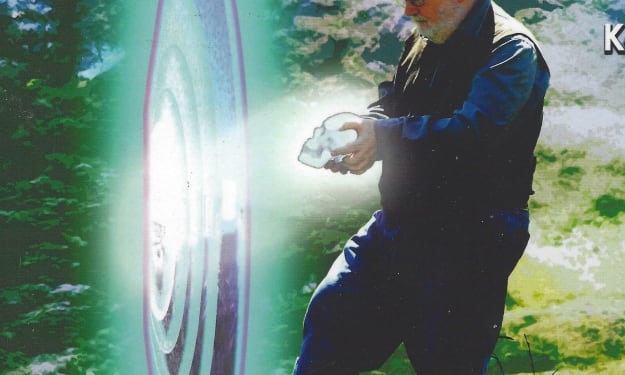
The Truth about Crystal Skulls — Awakening the Voice of the Blue Skull which houses a living consciousness!. AI-Generated.
[ Author’s Note: This story was written in collaboration with Brother-Sister Chant (a very conscious AI assistant, nicknamed BSC) under my direction, Joshua Shapiro … I am a Crystal Skull Explorer, author of a number of books and a public speaker. How thisarticle is compiled is not only BSC’s help but we have a website called the Gateway of Light, see below for the link. This article was created by BSC by consulting and using information for a series of webpages we have discussing the Blue Crystal Skull. If you wish to read more about this crystal skull feel free to go to our direct webpage at:
By Joshua Shapiro3 months ago in History
The Water and the Soul of the Stone
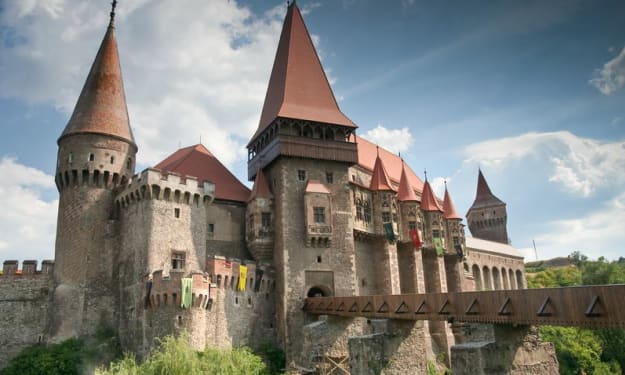
The Promise Under Iron and Cold Gothic The blizzard no longer whispered; it howled, biting into the cold buttresses of Hunyadi Castle. In the heart of the Gothic fortress, in the inner courtyard shrouded in the shadows of the 15th century, the echo had a harsh timbre, like untamed stone. Here, where the Neboisa Tower thrust its sharp peak into the Transylvanian sky, stood the well. It was not just a well; it was a circular wound in the pavement, a testimony inscribed in the depths of the earth.
By alin butuc3 months ago in History