alin butuc
Bio
I am a passionate writer of stories and books. I explore the human soul, from deep psychological thrillers to heartfelt romance. Join me on a journey through words and discover a world of memorable characters and powerful emotions.
Stories (23)
Filter by community
The Epic of 1917
Before discussing the cannons of Mărăști, one must understand the deplorable state of the country at the beginning of 1917. Following the disastrous campaign of 1916, two-thirds of Romanian territory, including Bucharest, was under German and Austro-Hungarian occupation. The Government, the Royal Family, and the remnants of the army had retreated to Moldavia.Moldavia had become a vast refugee camp. Famine, the biting cold, and typhus were ravaging the population, killing more people than the enemy's bullets. However, amidst this apocalyptic landscape, a miracle occurred: the reorganization of the army. Under the guidance of the French Military Mission led by General Henri Berthelot, the Romanian soldier was rearmed, trained in modern warfare tactics, and, most importantly, restored to his dignity. King Ferdinand’s promises regarding land reform and universal suffrage transformed peasants into soldiers ready for the ultimate sacrifice.
By alin butucabout a month ago in History
The Echo from the Depths
The Echo from the Depths The city of Vespera slept under a silver cloak of stars, its flickering lights reflecting in the dark waters of Siren's Bay. The salty air, carried by a gentle breeze, brought with it ancient whispers, tales of lost ships and fantastic sea creatures. In the heart of this city, in an old stone house with windows overlooking the sea, lived Elara.
By alin butuc3 months ago in Fiction
The Water and the Soul of the Stone
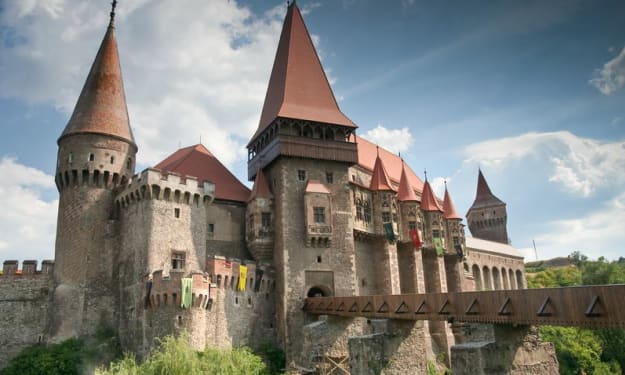
The Promise Under Iron and Cold Gothic The blizzard no longer whispered; it howled, biting into the cold buttresses of Hunyadi Castle. In the heart of the Gothic fortress, in the inner courtyard shrouded in the shadows of the 15th century, the echo had a harsh timbre, like untamed stone. Here, where the Neboisa Tower thrust its sharp peak into the Transylvanian sky, stood the well. It was not just a well; it was a circular wound in the pavement, a testimony inscribed in the depths of the earth.
By alin butuc5 months ago in History
The Saga of the Twin Islands The Echo of the Pink Coral and the Secret of the Wind
The beginning is not a year, but a whisper. A whisper carried by the east wind, murmuring tales between the islands of the Lesser Antilles, places that the gods sprinkled upon the boundless blue. In those times without maps, when the land of Wadadli was young, it vibrated with the life of the Arawak people, who also gave it its name: "Our land." Wadadli had a younger, more modest sister, a flat land of coral, called by the same people simply and with reverence: Wa’omoni, "The land with holy waters." These were to become, through centuries and through blood, Antigua and Barbuda.
By alin butuc5 months ago in History
Grandpa's Hologram
In Răzvan's Village, a small, isolated settlement nestled in the heart of the hills, the year 2025 had brought with it a quiet modernity, but also great sadness. Here, heritage was measured in aromas, and the most precious was that of sourdough bread—a 300-year-old recipe, known only by Grandpa Nicu, the village baker.When Grandpa Nicu passed away, the recipe died with him. His text file, saved on an old tablet, was incomplete. The bread baked by his granddaughter, Ana—a software engineer who had returned home—lacked that "soul."Thus, the idea was born: Ana used all of her grandfather's video recordings, voice memos, and handwritten notes to train a Holographic Artificial Intelligence. This AI was not just an archive; it was a simulation of her grandfather's consciousness, capable of speaking, thinking, and, most importantly, "feeling" the recipe.One cold evening, the holographic light flickered to life in the old bakery. Grandpa Nicu stood there once more, a warm, ethereal specter of light, with his virtual apron tied around his waist.
By alin butuc5 months ago in Fiction
The Double Echo of the Douglas
The Pivot: 03:07 A.M. The city slept beneath a heavy blanket of November. Alexandru leaned over his desk, surrounded by sketches, old books, and the faint hum of his computer. He was a young man of 28, with tired eyes but a feverish spark of genius. The object of his passion, his five-year obsession, was The Architect’s Hourglass—an urban legend among those passionate about space and time theory, which claimed to hold the key not only to perfect perspective but also to the understanding of all choices, made or unmade.Alexandru’s project, a predictive modeling algorithm for urban density, was ready. In six minutes, he was due to submit the application to a prestigious global competition that could change his life, offering him unlimited funding for research.The phone, resting on the edge of the desk, vibrated. A call from an unknown number, at 03:07.Alexandru looked up. Six minutes. If he answered, he would break his absolute state of flow, risking the loss of concentration on the final details. If he ignored it, he would miss a potential essential contact.
By alin butuc5 months ago in Fiction
the ruler of the Romanian countries vlad tepes
In December 1476, the air cut like an icy scimitar across the frozen plain of Bărăgan. Vlad, the Ruler of Wallachia, known to his enemies as Drăculea, felt his throne as brittle as the ice beneath his horse’s hooves. Though he had regained the throne with the aid of Stephen the Great and Bathory, he knew that peace was only an illusion under the cold, starry sky. The Ottomans were lurking on the Danube, and the Wallachian boyars, always a tangle of snakes ready to strike, had bowed their heads only long enough to see his feet leave the princely court.Vlad was nearing 45, but his steel eyes, etched by years of captivity in Buda and bloody campaigns, retained the intensity of a cornered wolf. He was left with a small army of loyal Moldavians, delegated by Stephen, and a few Wallachian faithful. They were too few to withstand a full invasion, but enough for one last battle.
By alin butuc5 months ago in History
The Beginnings of the Ottoman Empire
The Ottoman Empire originated in the late 13th century in Anatolia (Asia Minor), where various Turkic emirates emerged after the decline of the Seljuk Sultanate of Rum. The tribe led by Osman I (hence the name "Ottoman") began to expand, taking advantage of the weakness of its Byzantine neighbors and the lack of cohesion among other Turkic tribes.Under successors like Orhan I and Murad I, the Ottomans crossed from Asia into Europe, conquering vast territories in the Balkans. They developed a formidable army, including the famous elite unit of the Janissaries, soldiers recruited from Christian children in conquered provinces, raised and trained to serve only the Sultan. This army was modern, well-disciplined, and effectively used artillery, long before many European armies.
By alin butuc5 months ago in History
The Song of the Silent Depths
The Ocean, a vast and unpredictable blue heart, has beaten for millennia to the rhythm of the Moon and the wind. It was not merely an expanse of saltwater, but an ancient consciousness, a liquid library where each wave was a page and each current, a story. For us, the people of the surface, the ocean was an abyssal mystery, a promise of adventure, and a permanent threat. But for its creatures, it was the only home, the only reality.In the depths where sunlight danced only as a faded memory, lived Ariel, a humpback whale of an impossible age to measure. She was not the largest, but her song was the oldest, a melancholic ballad that traversed millennia, carrying the echoes of all the whales that had ever been. Ariel's song was not just a call or a warning; it was a chronicle of the ocean, a collection of memories of the waves' calm and fury, of births and deaths, of great migrations and the secrets of the deep. Adults, those who have weathered so many storms of life, can understand the weight of such an ancient song.Ariel spent her days in slow drift, listening. She listened to the whispers of coral reefs, the heartbeats of tiny fish, the seismic rumble of tectonic plates, and, most importantly, the Deep Silence, a place where the ocean seemed to hold its breath. In the Deep Silence, Ariel communicated with Orion, a gigantic, venerable sea turtle whose shell bore the scars of hundreds of years of travel. Orion was the ocean's sage, the one who remembered the Moon's cycles and the location of every forgotten island. He knew how to navigate the strongest currents and find the richest algae fields, but also how to understand the ominous signs of change.
By alin butuc5 months ago in Motivation
Switching to Stout
Initially, at St. James's Gate, Arthur Guinness produced ale (a lighter-colored beer, popular in Ireland at the time). However, Arthur was a visionary who observed trends. In England, especially in London, Porter beers (a type of black beer, fermented with roasted malt) had become extremely popular. Porter was more stable and better withstood long-distance transport, making it perfect for export.
By alin butuc5 months ago in Fiction
The Echo of the Shadow in Iași
In an Iași enveloped by late autumn, where rusty leaves danced a melancholic tango on the old cobblestones, and the air carried the sweet aroma of freshly baked cozonac, a story unfolded that defied the boundaries of reality. It wasn't a tale of noisy ghosts or spectral apparitions, but one far more subtle, more insidious, an illusion so powerful that it shaped destinies.
By alin butuc6 months ago in Fiction