Ancient
Prehistoric Human Cultures
Prehistoric human cultures refer to the societies and way of life of humans before recorded history, which spans millions of years, covering the early stages of human evolution through the development of modern Homo sapiens. Here's an overview of major periods and some lesser-known cultures:
By snowycloudabout a year ago in History
The 2,000-Year-Old Roman Parade Helmet
In May 2010, a remarkable discovery was made in Cumbria, a picturesque county in northwestern England, by a local treasure hunter using a metal detector. Buried beneath the soil for nearly two millennia lay a beautifully preserved Roman helmet and mask, dating from the late 1st to early 2nd century AD. The helmet, believed to have been used by Roman nobles during cavalry parades, offers a rare glimpse into the ceremonial splendor of ancient Rome’s military tradition. When it was sold at Christie's Auction House in London in April 2023 for an astounding $3.6 million—eight times its estimated value—it became one of the most famous Roman artifacts discovered in the UK.
By Deji Akomolafeabout a year ago in History
What Did Wealthy Romans Smell Like?
In 2019, an unexpected discovery was made in the small Spanish town of Carmona. As a resident was digging a swimming pool in their backyard, they broke through the earth and into an underground chamber. What lay beneath was not just empty space but an intact Roman family tomb dating back to the 1st century AD. Six burial urns were found inside, along with various funerary offerings, each shedding light on the Roman customs and beliefs surrounding death and the afterlife. Among these offerings was something extraordinary—a small, delicately carved bottle of quartz crystal containing the perfectly preserved remnants of an ancient perfume. This discovery provides modern scholars with a rare glimpse into what wealthy Romans may have smelled like during their daily lives.
By Deji Akomolafeabout a year ago in History
The Viking Settlements and Expansion in the British Isles
By the mid-ninth century, the Vikings had firmly established themselves across parts of Ireland, Scotland, and England, leaving an indelible mark on the history of the British Isles. These Norse warriors, hailing from Scandinavia, were renowned for their maritime prowess, fearless adaptability, and opportunistic raids. The period from the late eighth century through the mid-ninth century saw these seafaring raiders evolve from opportunistic plunderers to settlers and rulers, carving out domains across the British Isles and leaving a lasting impact on the region's political landscape.
By Deji Akomolafeabout a year ago in History
The Enigmatic Legacy of the Chumash Painted Cave
Tucked away in the hills near Santa Barbara, California, lies an extraordinary treasure—a small cave, known as the Chumash Painted Cave. The cave is modest in size, but the stories its walls tell are nothing short of magnificent. The Chumash, an indigenous people of California, used the cave as a sacred place, adorning its walls with vibrant, intricate paintings. These rock art images, believed to date back to the 1600s and earlier, continue to captivate visitors and scholars alike, even though the meanings behind them remain lost to time.
By Deji Akomolafeabout a year ago in History
The Golden Bust of Marcus Aurelius
In 1939, the tranquil town of Avenches, Switzerland, was thrust into the archaeological spotlight. Deep beneath the soil, hidden for centuries, a golden bust of the Roman Emperor Marcus Aurelius was unearthed during excavations at Aventicum, the ancient capital of the Helvetii tribe. Aventicum, which had been absorbed into the Roman Empire in 15 BC under Emperor Augustus, was once a flourishing Roman settlement, and its ruins are a testament to the grandeur of Rome’s influence in ancient Switzerland.
By Deji Akomolafeabout a year ago in History
The Oldest Door in Britain: A 1,000-Year-Old Connection to the Anglo-Saxon Past
Hidden within the stone walls of Westminster Abbey, one of Britain's most iconic landmarks, lies an extraordinary relic that has survived the test of time: a wooden door, thought to be the oldest surviving door in Britain. This door, crafted from the timber of the original Anglo-Saxon abbey, is over 1,000 years old and offers a tangible link to England's distant past. Its remarkable age and the history surrounding it make this simple yet enduring piece of craftsmanship a symbol of the nation's rich cultural heritage.
By Deji Akomolafeabout a year ago in History
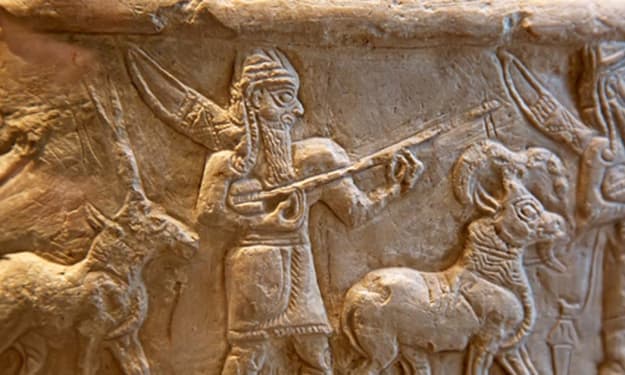
The Sumerians: A Civilization with Advanced Knowledge of Astronomy and Medicine
Over 6,000 years ago, in the fertile plains of Mesopotamia, an ancient civilization emerged that would forever leave a mark on the annals of history. The Sumerians, who thrived in what is now modern-day Iraq, are widely recognized as one of the world’s oldest known civilizations. However, their achievements go far beyond establishing early forms of writing, law, and city planning. Recent studies of their ancient texts and artifacts reveal something even more astonishing: their deep knowledge of astronomy, medicine, and what appears to be an understanding of genetic science. Could the Sumerians have possessed knowledge far more advanced than we ever realized? Let’s delve into the mystery of the Sumerians’ profound insights into the cosmos and life itself.
By Deji Akomolafeabout a year ago in History
Mada'in Saleh: A Nabatean Jewel Emerging from the Sands of Saudi Arabia
In the vast desert of Saudi Arabia, near the border with Jordan, stands one of the world’s most ancient and captivating archaeological sites: Mada'in Saleh. Also known as Al-Hijr or Hegra, this ancient city, dating back nearly four thousand years, is an enigmatic relic of the Nabatean civilization. Though often overshadowed by its more famous sibling Petra, located in present-day Jordan, Mada'in Saleh is equally significant in understanding the Nabatean culture and its lasting influence on the region. Among its many remarkable features is Qasr al-Farid, an iconic and monumental tomb known as the "Lonely Castle."
By Deji Akomolafeabout a year ago in History
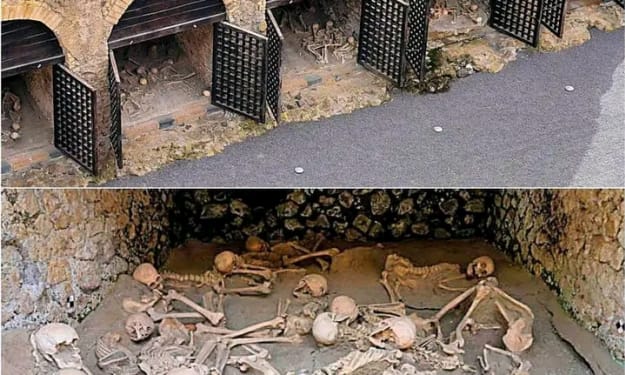
A Frozen Moment in Time: The Beachfront of Herculaneum
On a tragic day in 79 AD, Mount Vesuvius erupted with cataclysmic force, forever altering the landscape of the Roman Empire. While the nearby city of Pompeii often takes center stage in discussions of this disaster, the neighboring city of Herculaneum holds an equally haunting and compelling story. Unlike Pompeii, which was buried under a layer of ash, Herculaneum was engulfed by a river of superheated volcanic mud and pyroclastic surges. This thick covering preserved the city in remarkable detail, offering us a rare and intimate glimpse into the lives of the ancient Romans.
By Deji Akomolafeabout a year ago in History