Ancient
The Fascinating History of Cemeteries
When we think of cemeteries, images of spindly trees, rusted gates, crumbling stones, and solitary mourners often come to mind. However, it wasn’t long ago that many burial grounds were vibrant places, filled with blooming gardens and crowds of people strolling among the headstones. How did cemeteries transform into the solemn spaces we recognize today?
By DANIEL AKAM OKOabout a year ago in History
A Brief History of Alcohol
The fascinating history of alcohol begins with a curious chimpanzee that discovers a bounty of overripe plums. Drawn to the intoxicating aroma of the split fruit, the chimpanzee indulges in these treats and soon experiences some unusual effects. This unwitting creature inadvertently uncovers a natural process that humans would later harness to create beer, wine, and a variety of other alcoholic beverages.
By DANIEL AKAM OKOabout a year ago in History
If you want to know the true history of the world, there is no alternative to travel.. Content Warning. AI-Generated.
Want to indulge yourself? Go on a trip now. He who travels more is always ahead of others. If you want to know the true history of the world, there is no alternative to travel. If you are upset, go on a journey, discover yourself and everyone anew. If you don't travel, you will never know how beautiful the world is. Traveling to a completely new place gives a new feeling and enjoyment of life.There is a wonderful combination of beauty in our golden Bengal. The beauty of Bangladesh is unfolding in different ways in different regions. There the beauty of Sylhet is indescribable. Entire Sylhet is surrounded by greenery. Constantly calling tourists. In winter, summer and monsoon seasons, the beauty of nature unfolds in harmony with its beauty.
By Mk Moumitaabout a year ago in History
The 13th-Century Toilet at St Andrews Castle: A Glimpse Into Medieval Sanitation
St Andrews Castle in Scotland, perched dramatically on a cliff overlooking the North Sea, holds centuries of history within its weathered stone walls. While it is well known as the residence of bishops, a fortress, and a site of political intrigue, one of its more unusual features is its medieval toilet system—what’s often referred to as a “garderobe.” This 13th-century toilet at St Andrews Castle was ingeniously constructed to empty directly down the cliff and into the sea, serving as a unique solution to the waste disposal challenges of medieval times.
By Deji Akomolafeabout a year ago in History
The Spooky Ghost Town You’ve Never Heard of
Imagine wandering through the vast wilderness of British Columbia, breathing in the crisp mountain air and soaking in the stunning views of towering forests and rugged fjords. As you venture deeper into this remote land, along the wild Alaskan border, you stumble across something truly unexpected: a quaint little town nestled at the very tip of a massive fjord. At first glance, it seems full of life. The homes are well-maintained, the streets are spotless, and—here’s the kicker—the lights are still on in every building. It’s like a Norman Rockwell painting come to life... except, no one’s home. Welcome to Kitsault, a ghost town frozen in time, with all the lights on but not a soul to be seen.
By Marveline Merababout a year ago in History
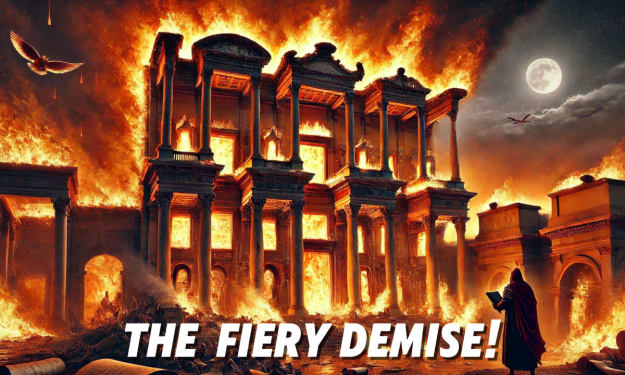
The Ancient World’s Ultimate Knowledge Hub That Went Up in Flames (Literally!): The Library of Alexandria
Imagine a place where the world’s greatest minds gathered to share knowledge, philosophy, science, and art—essentially the intellectual equivalent of the best university, museum, and think tank combined. That was the Library of Alexandria, a beacon of knowledge in the ancient world and, quite possibly, the ultimate treasure trove of human achievement. It was a place where scrolls piled higher than your unread emails, and scholars could spend their entire lives researching just about everything.
By Marveline Merababout a year ago in History
The Roman Cisternone: A Testament to the Ingenuity of Ancient Roman Engineering
Nestled beneath the streets of Albano Laziale, a town near Rome, lies one of the most extraordinary yet lesser-known marvels of Roman engineering: the Cisternone Romano, or Roman Cistern. This massive underground water reservoir, built almost 1,800 years ago, stands as a silent witness to the ingenuity, craftsmanship, and architectural prowess of ancient Roman builders. Constructed between the 2nd and 3rd centuries AD under the direction of Emperor Septimius Severus, the Roman Cisternone was designed to supply water to the camp of the Second Parthian Legion. However, its significance transcends its functional origins, becoming an enduring monument to the might and sophistication of the Roman Empire.
By Deji Akomolafeabout a year ago in History
Things Britain Took from Added Countries: A Bequeathal of Colonialism and Empire
Things Britain Took from Added Countries: A Bequeathal of Colonialism and Empire** The British Empire, at its height, was the bigger advantage in history, accurate all-embracing territories aloft Asia, Africa, the Americas, and beyond. While Britain contributed to abstract advancements and basement in its colonies, it additionally affianced in great allocation of resources, cultural artifacts, and treasures from these nations. Abounding of the affluence and adeptness of Britain during the empire-building years was complete on the bribery of colonies, about involving addition of absolute goods, cultural symbols, and acclimatized resources.
By Say the truth about a year ago in History
Pompeii . AI-Generated.
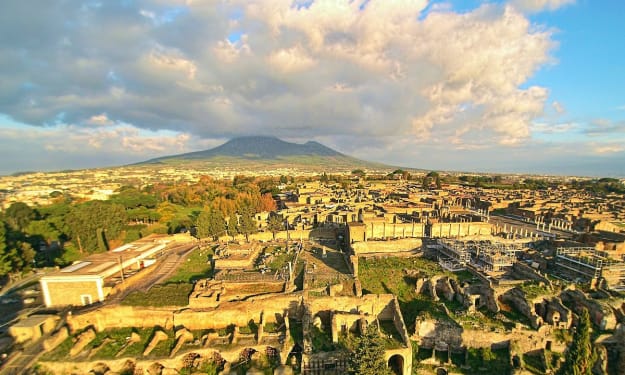
In 79 AD, at approximately 1:00 p.m. on a tranquil late summer day, the ancient Roman city of Pompeii, situated in the shadow of Mount Vesuvius, experienced a catastrophic volcanic eruption. Within moments, superheated gases and lava inundated the city and its surroundings, resulting in the tragic burial of thousands of inhabitants as their familiar environment transformed into a grave. Nearly two millennia later, Pompeii remains a city suspended in time. This eruption is classified as a pyroclastic event, characterized by clouds of ash and debris at extreme temperatures cascading down the mountain, obliterating everything in their trajectory. Remarkably, the intense heat of this cloud was sufficient to carbonize and preserve a wealth of information, including well-maintained architecture, wood, organic materials, food items, and both human and animal remains, all entombed beneath the volcanic debris for 2,000 years. Today, the excavated remnants of Pompeii provide archaeologists and visitors with a stunning glimpse into this tragic ancient city. Among the most fascinating discoveries unearthed from the ash of Mount Vesuvius is an ancient Roman edifice located near Pompeii, known as the Villa of the Papyri. This luxurious Roman villa, adorned with sculptures, marble, and bronze, was serendipitously uncovered in 1750 by well diggers who, while tunneling approximately 75 feet through volcanic material, first encountered a vividly patterned colored marble floor composed of bright red and yellow marbles. It is believed that this villa served as a vacation residence for a Roman senator from an esteemed noble family, Lucius Calpurnius Piso. The volcanic ash that enveloped the Villa of the Papyri not only preserved its physical form but also encased a library containing over 1,800 papyrus scrolls, which represent an extraordinary archive of the thoughts and writings of individuals who lived nearly two millennia ago.
By Lawrence Meliabout a year ago in History
Written Language of the Pre Columbian West
I always wondered if the Native American tribes had written language. Considering the numerable tribes, their cultural differences, their environmental differences, their geographical differences, and the different times during which they occupied various territories, I assumed one tribe or another must have written language, but did they?
By Aaron Dennisabout a year ago in History