
The Spooky Ghost Town You’ve Never Heard of
A Ghost Town Frozen in Time

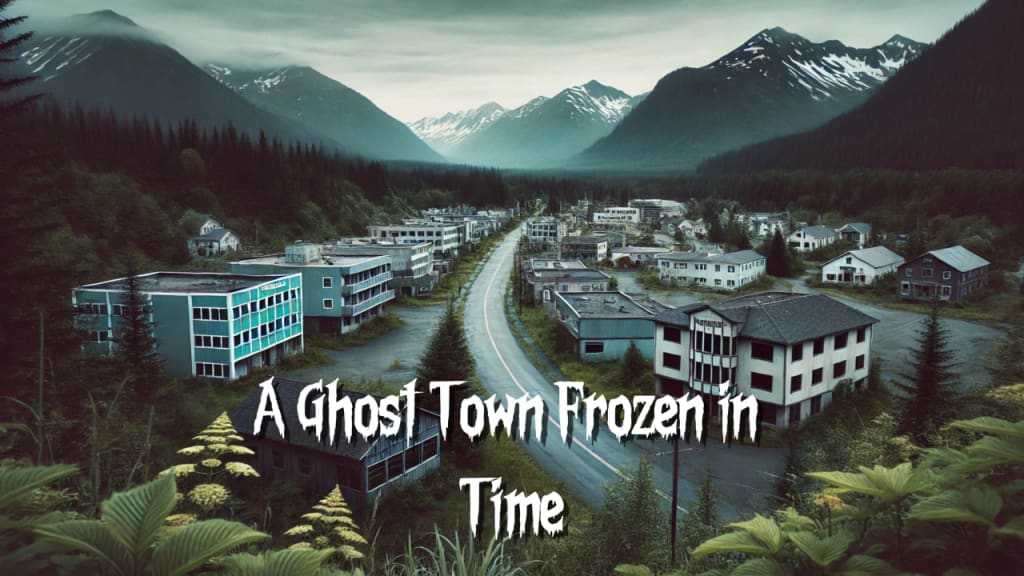
Imagine wandering through the vast wilderness of British Columbia, breathing in the crisp mountain air and soaking in the stunning views of towering forests and rugged fjords. As you venture deeper into this remote land, along the wild Alaskan border, you stumble across something truly unexpected: a quaint little town nestled at the very tip of a massive fjord. At first glance, it seems full of life. The homes are well-maintained, the streets are spotless, and—here’s the kicker—the lights are still on in every building. It’s like a Norman Rockwell painting come to life... except, no one’s home. Welcome to Kitsault, a ghost town frozen in time, with all the lights on but not a soul to be seen.
Why Was This Creepy Village Abandoned One Night? You'll definitely enjoy this!
How Kitsault Was Born: A Town With a Bright Future (At First)
Kitsault wasn’t always a ghost town. In fact, it was once a bustling little haven for over 1,200 people. The town was built in 1979, fueled by high hopes and even higher expectations. Its purpose? To house the workers of a nearby mine that extracted molybdenum, a metal used in everything from steel production to electrical components. Molybdenum was the “it” metal of the late '70s, and Kitsault was born to support the booming industry.
Imagine the excitement! Brand new homes, a modern shopping mall, restaurants, a hospital, and even a pub. The town had everything—at least for a while. Kitsault seemed like a dream come true for the families that lived there. It was a $43 million investment, a fresh start, and a bright future all rolled into one. For the workers and their families, life was good.
But all good things come to an end, right? For Kitsault, the end came almost as quickly as the beginning.
The Great Molybdenum Crash: Lights Out (But Not Really)
Just when Kitsault was hitting its stride, disaster struck. No, it wasn’t a natural disaster or a pandemic—it was something far more devastating (at least for the residents): a market crash. The price of molybdenum plummeted faster than you can say “financial ruin,” and the mine was forced to shut down.
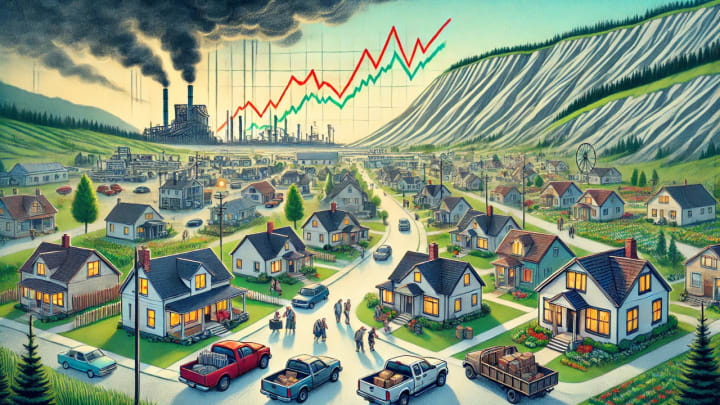
With no mine, there were no jobs. And with no jobs, there was no reason for anyone to stay. The town’s residents, who had just settled into their cozy new homes, were given the boot. Pretty much overnight, the entire population packed up their lives and hit the road, leaving behind a perfectly functioning town—one that would soon become one of the eeriest ghost towns you’ve probably never heard of.
The Town That Time Forgot: Kitsault Today
Now here’s where things get interesting. Normally, when people leave a town, everything shuts down. The power’s cut off, the buildings decay, and nature slowly reclaims the land. But Kitsault isn’t your typical ghost town.
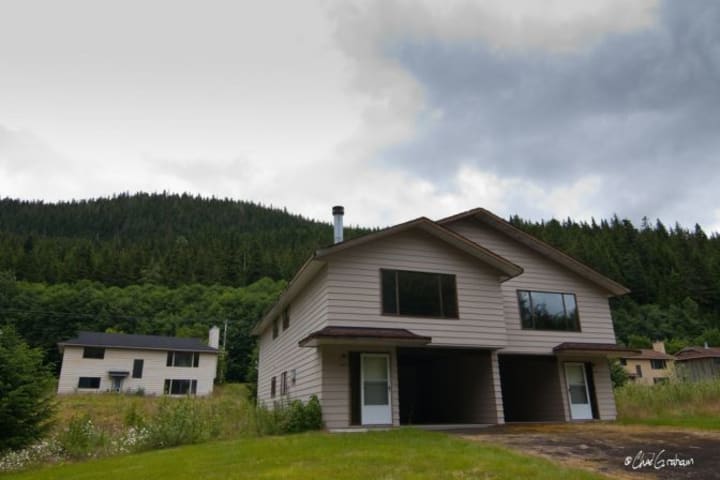
Despite the complete evacuation, the power was never turned off. In fact, the entire town is still maintained to this day. Every year, workers come to clean the streets, repair the buildings, and make sure Kitsault remains in pristine condition. So, while the town is empty of people, it looks as if it could spring back to life at any moment.
The homes are fully furnished. Tables are set as if waiting for the next family dinner. The local pub’s beer taps may be dry, but they’re polished and ready for use. It’s almost as if the town is waiting, patiently, for the day when its residents return. But let’s be real—no one’s coming back. Kitsault is stuck in a strange limbo, where the lights are always on, but nobody’s home.
Kitsault’s Modern-Day Mystery: A Town for Sale
For over 30 years, Kitsault has stood as a monument to what might have been. But here’s the kicker: it was never completely abandoned in the legal sense. In 2004, an Indian-American businessman named Krishnan Suthanthiran purchased the entire town for a cool $5.7 million. His vision? To transform Kitsault into a utopian paradise for intellectuals and innovators—an idyllic retreat where the brightest minds could collaborate on world-changing ideas while enjoying the spectacular natural beauty of British Columbia.
Sounds amazing, right? There was just one small problem: it never happened. The grand plans for Kitsault fizzled out, and instead of becoming a paradise for intellectuals, the town has become a surreal, real-life ghost story. The vision of a thriving, futuristic town full of brilliant thinkers was, it seems, nothing more than a pipe dream.
Kitsault’s Future: A Natural Gas Goldmine?
The story doesn’t end there, though. Kitsault’s strange and eerie chapter may be drawing to a close, but a new one could be on the horizon. Recently, there’s been talk of turning Kitsault into something far less poetic than a hub for intellectual collaboration: a Liquified Natural Gas (LNG) plant. That’s right—the same town that was once an epicenter of metal mining may soon become a hub for exporting natural gas.
Whether or not this plan comes to fruition is still up in the air. But if there’s one thing we’ve learned about Kitsault, it’s that the town has a knack for surprising everyone. From boom to bust to ghost town to potential energy hub, Kitsault’s story is far from over.
What’s It Like to Visit Kitsault?
So, what’s it like to visit this abandoned town that’s not really abandoned? Let’s just say it’s a little creepy—and a lot fascinating. Visitors aren’t exactly welcomed with open arms (there’s a large locked gate at the town’s entrance and signs warning off trespassers), but that hasn’t stopped the curious from trying to get a peek at this frozen-in-time town.
If you do manage to catch a glimpse, Kitsault is something straight out of a post-apocalyptic movie. The perfectly maintained streets, the glowing windows, the untouched buildings—it all gives the impression that life is just waiting to resume. But as you stand there, taking it all in, the eerie silence reminds you that Kitsault is, for now at least, a town of ghosts.
Lessons from Kitsault: When Boomtowns Go Bust
So, what’s the moral of the story? If someone offers to buy your town for millions of dollars, you might want to ask what they plan to do with it. Just kidding (sort of). But the real lesson is that places like Kitsault serve as a reminder of how quickly things can change. One moment, a town is a booming hub of activity; the next, it’s an empty shell, preserved like a time capsule for future generations to marvel at.
Kitsault’s story is a fascinating snapshot of human ambition, economic volatility, and the weird ways that towns can live on, even when the people who called them home have long since moved on. It’s a place that feels alive and dead all at once—a ghost town that refuses to let go of its past, even as it waits for a future that may never come.
Conclusion: Kitsault’s Place in Ghost Town Lore
Kitsault may not be as famous as other ghost towns like Bodie, California, or Pripyat, Ukraine, but it holds a special place in the annals of abandoned places. It’s not just a town that was deserted; it’s a town that was deserted, yet left perfectly intact—a place where time has stood still for over three decades, and where the lights are still on, waiting for people who may never return.
Whether it becomes an LNG plant or simply remains a mysterious, glowing ghost town in the wilds of British Columbia, Kitsault’s story is one that’s sure to captivate and intrigue for years to come. After all, how many places can you name where the lights are always on, but nobody’s home?
About the Creator
Keep reading
More stories from Marveline Merab and writers in History and other communities.
The Ancient World’s Ultimate Knowledge Hub That Went Up in Flames (Literally!): The Library of Alexandria
Imagine a place where the world’s greatest minds gathered to share knowledge, philosophy, science, and art—essentially the intellectual equivalent of the best university, museum, and think tank combined. That was the Library of Alexandria, a beacon of knowledge in the ancient world and, quite possibly, the ultimate treasure trove of human achievement. It was a place where scrolls piled higher than your unread emails, and scholars could spend their entire lives researching just about everything.
By Marveline Merababout a year ago in History
World War I
The morning fog lay thick over the trenches of northern France, clinging to the earth as if it too feared what was about to happen. Private Thomas Hale pulled his coat tighter around himself, though it did little to stop the cold from seeping into his bones. He had been in the trenches for six months, yet the damp smell of mud, smoke, and fear still felt unfamiliar, like a nightmare he could not wake from.
By Maavia tahir4 days ago in History
Chicago Hospital Held Newborn Baby for 8 Months Over an Unpaid Medical Bill
Debts were handled much differently in the 19th and early 20th century. Back then, people who accrued debt had more to fear than letters and calls from collection agencies the same way we do today, especially if they owed a hospital or doctor money.
By Criminal Matters5 days ago in History



Comments (1)
lovely piece👌