Ancient
Rise from Qin: The First Step to Chinese Unification. AI-Generated.
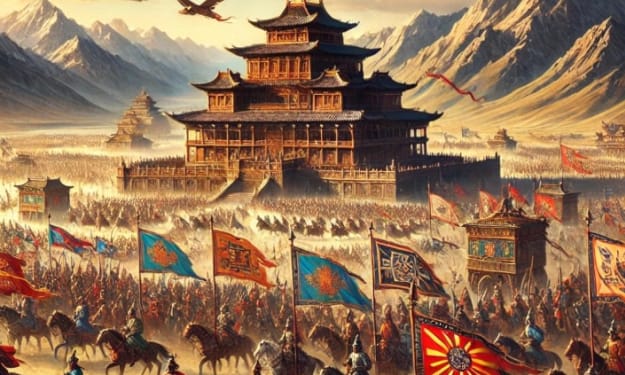
Rise from Qin: The First Step to Chinese Unification In the annals of world history, few figures loom as large as Qin Shi Huang, the first Emperor of a unified China. Before he wore the yellow robes of the Son of Heaven, he was known as Ying Zheng, a young king from the western frontier state of Qin. His rise marked the beginning of one of the most transformative periods in Chinese history. This first part of the series explores the early life of Ying Zheng and how the Kingdom of Qin, once considered a barbaric backwater by its eastern rivals, rose to dominate the Warring States.
By Say the truth 10 months ago in History
The Emergence of the First Emperor
He proclaimed himself "Qin Shi Huang," translating to "First Emperor of Qin," and enacted extensive modifications to centralize authoritystandardizing currencies, weights, measures, laws, and even the written language. He initiated monumental infrastructure initiatives such as the initial iteration of the Great Wall and an extensive national road network. However, his most extravagant undertaking was his tomb, safeguarded by the Terracotta Army, a site that would remain undiscovered for over 2,000 years.
By Say the truth 10 months ago in History
The Burial Mask of Pop Culture. AI-Generated.
A mummy is generally understood as any corpse that has been remarkably preserved, and its story stretches across nearly every corner of the globe. But when it comes to monsters, it’s nearly impossible not to picture that iconic, linen-wrapped, upright figure.
By ADIR SEGAL10 months ago in History
Dawn on an Empty Beach
When Liang set foot on the sand, the horizon was a soft brushstroke of purple and gold. The only marks were his dark footprints, which gradually vanished into the flow of breathing. The world had not yet recalled to be noisy, and the sea mist chill the air.
By MD SHAMIM RANA10 months ago in History
NASA Curiosity Rover Finds Largest Organic Molecules on Mars Major Breakthrough in Search for Life.
NASA Curiosity Rover Finds Largest Organic Molecules on Mars Major Breakthrough in Search for Life. In a groundbreaking discovery that reignites the question of life beyond Earth NASA's Curiosity rover has detected the largest organic molecules ever found on Mars. These complex carbon based compounds considered essential building blocks of life were discovered in rock samples analyzed by Curiosity’s onboard instruments in the Gale Crater an area long suspected to have once hosted liquid water.
By Adnan Rasheed10 months ago in History
"The Vanished Wealth of the Soviet Empire". AI-Generated.
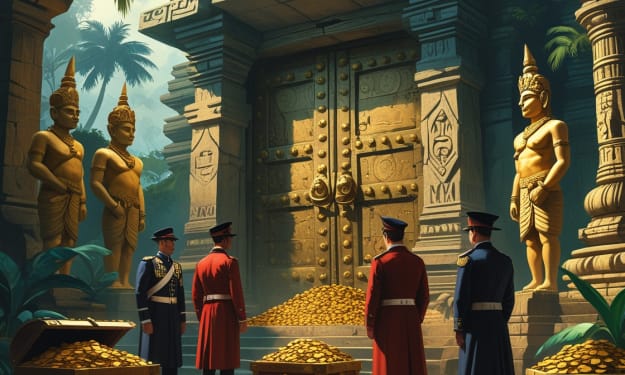
The Disappeared Fortune of the Soviet Empire: Discovering the Soviet Union’s Concealed Treasures From gold bullion lost amidst the Russian Revolution to invaluable artworks concealed in bunkers throughout Eurasia, the history of the Soviet Union is filled with narratives of vanished wealth, state treasures, and clandestine caches. This article examines the legends, realities, and persistent enigmas regarding the extensive yet elusive riches of the Soviet Empire.
By Say the truth 10 months ago in History
The Sleepers of the Cave. AI-Generated.
The Sleepers of the Cave The Miraculous Story of Ashab-e-Kahf A long time ago, in a land ruled by a powerful and unjust king, there lived a group of young men who believed in one true God. This was a time when the people of the land were forced to worship idols and obey the king without question. The king claimed divine authority, and anyone who refused to worship him or the idols was punished severely.
By Zeeshan Ali10 months ago in History
Houston Stuns Duke in Final Four Comeback to Reach NCAA Championship
SAN ANTONIO — In a thrilling Final Four showdown, Houston pulled off an incredible comeback to defeat Duke 70-67, overcoming a 14-point deficit in the final eight minutes. With this stunning victory, the Cougars are now set to face Florida in the NCAA Championship game on Monday night.
By Muhammad Hayat10 months ago in History
Harlow's End: Echoes of the Nameless Stranger
The Nameless Stranger The stranger came into town just after the rain. He didn't say a word as he passed the broken town sign that read "Welcome to Harlow's End." His boots were wet, his coat was covered in road dust, and there was silence. Population: crossed out in black spray paint. He came to a stop at the diner because the neon sign was flickering, as if it was trying to decide if it was still going to glow. Inside, the usual suspects—farmers, wanderers, and a disheveled waitress with too many secrets—shut down. Not because he looked dangerous, but because he looked like he didn’t belong anywhere. Tall. Pale. Eyes the color of river stone. No bags. No ID. No name. He sat at the counter and ordered coffee. Black. When the waitress asked his name for the tab, he just said, “No need.” And smiled like it was the saddest joke in the world. That night, strange things started happening. The dogs howled without a reason. Power flickered. The old church bell rang once—though the rope had snapped years ago. By morning, the mayor’s son was missing. They remembered the stranger, of course. How could they forget him? But when they checked the booth he’d sat in, the seat was bone-dry—untouched. The coffee cup was still full. Still warm.
By Al Amin Islam 10 months ago in History
“The Fortune That Escaped the Empire: British Colonialism’s Greatest Missed Treasures”
The Lost Riches: The Biggest Treasure Missed by the British Empire Throughout the era of colonial expansion, the British Empire plundered immense wealth from its colonies across Asia, Africa, and the Americas. From India's diamonds and spices to Africa’s gold and minerals, Britain amassed unprecedented fortunes. However, history also holds fascinating accounts of enormous treasures that evaded British grasp—treasures buried, lost, or hidden in plain sight, never to be seized by the crown. Among these, one of the most legendary missed fortunes lies in India: the hidden treasures of the Maratha Empire and Tipu Sultan’s lost wealth.
By Say the truth 10 months ago in History
The history of pyramids
In 1993, Rudolph Gatenbrink, a German engineer, explored a shaft in the Great Pyramid of Giza's Queen's Chamber. Unlike the King's Chamber shafts, these didn't lead outside. Instead, they went about 10 feet into the wall, reaching a dead end. Their purpose remained a mystery. Rudolph built a small robot with a camera and light. It was small enough to fit in the 8-inch square shaft. What happened next changed his life. The robot reached the expected end but kept going. It climbed at a 40-degree angle into a longer, unknown section. The camera showed it traveled another 90 yards. It stopped at a small limestone door. Two copper handles were on the door. This baffled Rudolph's team. Metal had never been found inside the Great Pyramid. It was supposedly all limestone. The door had small gaps around the edges. This suggested something was behind it. Was it placed there later? Or was it meant to protect something? Rudolph wanted to know what was behind the door. He asked Zahi Hawass, the Egyptian Minister of Antiquities, for permission to investigate. But instead of permission, Zahi and Egyptian authorities shut down Rudolph's team. They were banned from further research. Zahi has a history of suppressing evidence that conflicts with mainstream Egyptology. Most mainstream Egyptology is based on speculation. This is especially true for the Great Pyramid. What you learned about it may not be facts. It may be unproven ideas based on limited evidence. Mainstream scientists believe the Great Pyramid was built around 4,500 years ago. Pharaoh Khufu supposedly built it as his tomb. They say it took only 20 years to finish. The pyramid once looked different. It was covered in smooth, white limestone. A solid gold capstone sat on top. Around the 1200s, an earthquake hit Egypt. It caused buildings in Cairo to collapse. Some limestone broke off the pyramid. Egyptians then removed the remaining limestone and the capstone. They used them to rebuild the city. This left the pyramid with its current blocky look. A sarcophagus sits in the King's Chamber. Mainstream Egyptologists say this proves it was Khufu's tomb. But no mummy, including Khufu's, has ever been found in the Great Pyramid. No mummies have been found in any pyramid. Khufu's name appears in the pyramid, adding to the idea that it was his tomb.Red paint inscriptions were found inside the Great Pyramid. Unlike carved hieroglyphs, this was graffiti painted on the walls. Someone may have added it long after construction. Tagging a building doesn't mean you built it. No hieroglyphs were carved inside the Great Pyramid. The builders didn't seem to need them. Also, no hieroglyphs mention who built the pyramids or how. Only a small statue, possibly of Khufu, has been found. It was not near the Great Pyramid. Mainstream theories about the pyramid seem weak. The monument's size makes you question ancient history.
By Mostafa Al Aklouk10 months ago in History
# "The Fed Chair warns that Trump's tariffs could cause inflation to rise and growth to slow," .. AI-Generated.
Federal Reserve Chair Jerome Powell has issued a stark warning: former President Donald Trump’s proposed tariff policies could lead to **higher inflation** and **slower economic growth** in the U.S. If Trump wins the election in 2024, he has promised to slap tariffs on Chinese goods of at least 60%, which could disrupt global trade and hurt American consumers.
By Mihad Hasan Antor10 months ago in History