
The Emergence of the First Emperor
Qin Shi Huang, originally named Ying Zheng in 259 BCE, ascended to authority during an era characterized by relentless conflict known as the Warring States Period. By the age of 13, he had attained the title of King of Qin, one of the seven principal states in ancient China. Through unyielding military endeavors, tactical partnerships, and governmental reforms, he successfully consolidated all states under a unified dominion by 221 BCE.

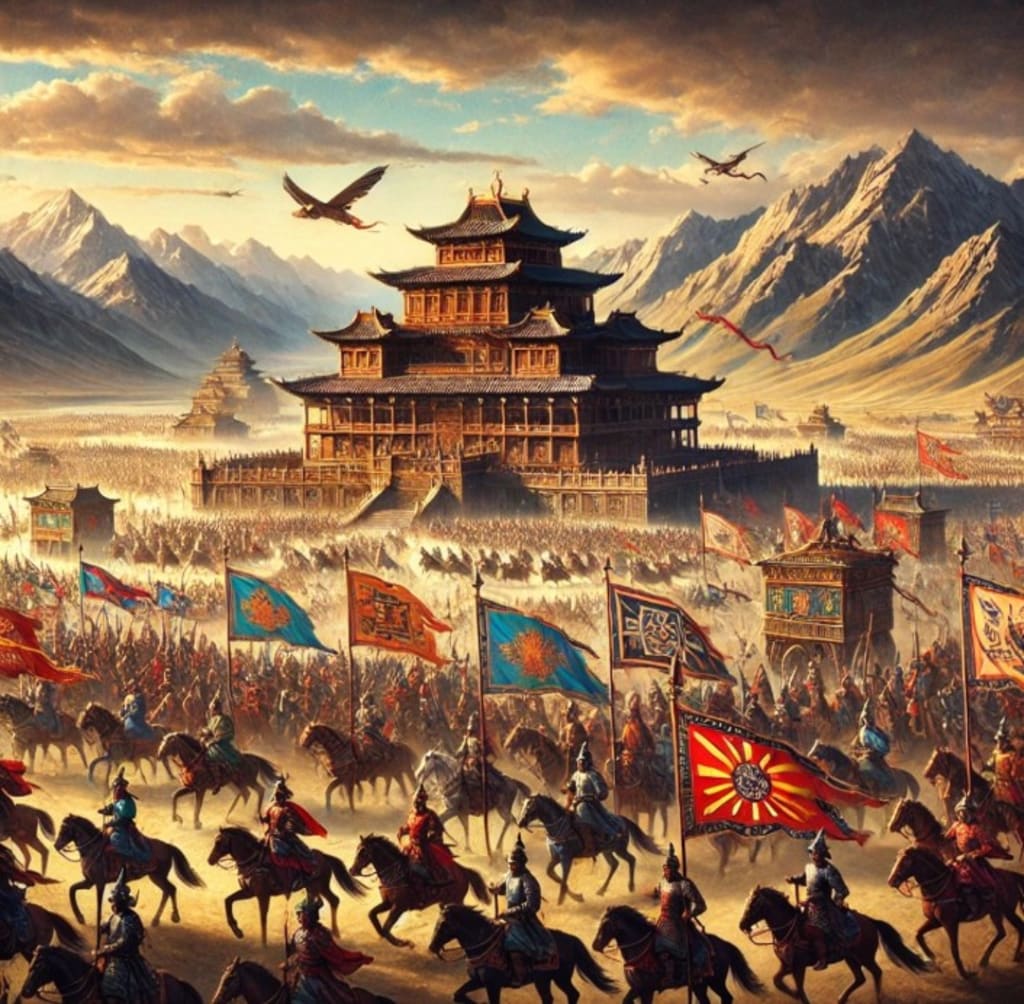
He proclaimed himself "Qin Shi Huang," translating to "First Emperor of Qin," and enacted extensive modifications to centralize authoritystandardizing currencies, weights, measures, laws, and even the written language. He initiated monumental infrastructure initiatives such as the initial iteration of the Great Wall and an extensive national road network. However, his most extravagant undertaking was his tomb, safeguarded by the Terracotta Army, a site that would remain undiscovered for over 2,000 years.
Yet, despite all his achievements, Qin Shi Huang was profoundly preoccupied with an aspect he could not master: mortality.
The Emperor's Fascination with Immortality
Qin Shi Huang’s dread of death was intense. As he advanced in age, he became increasingly engulfed by the notion of eternal existence. He dispatched envoys and alchemists throughout China and beyond in search of the fabled Elixir of Immortality. It is said that he even commanded expeditions to the Eastern Sea in pursuit of Penglai, a mythical isle where immortals resided.
Among his trusted sages was an alchemist named Xu Fu, who professed to possess knowledge of life-extending potions. Ironically, some of these mixtures were thought to contain mercurya hazardous substance that may have expedited the emperor’s demise rather than averting it.
An Untimely Death Away from Home
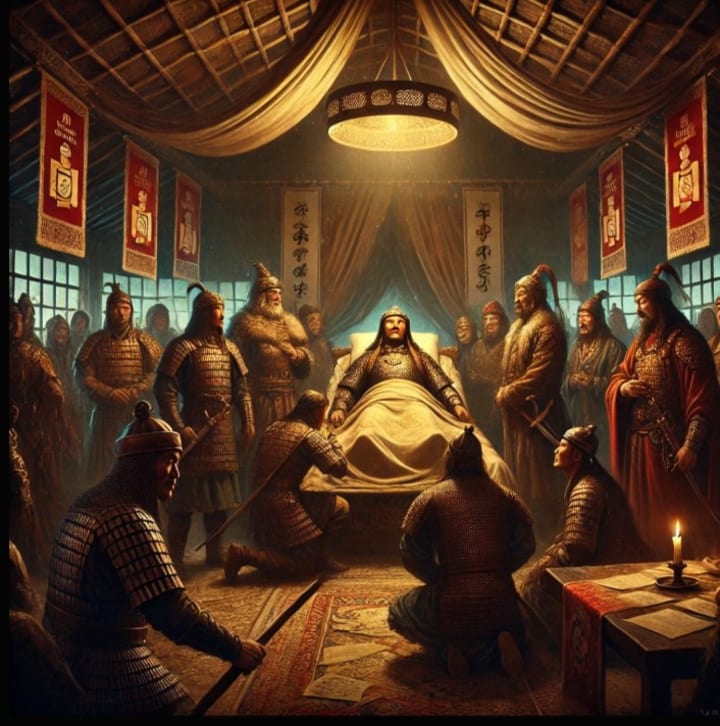
In 210 BCE, while on a significant inspection expedition of eastern China, Qin Shi Huang abruptly fell ill and passed away in Shaqiu, distant from the capital of Xianyang. He was merely 49 years of age.
His death was hidden for several weeks by Prime Minister Li Si and Chief Eunuch Zhao Gao, who feared disorder and possible insurrection. They conveyed his remains back to the capital in a chariot filled with decomposing fish to obscure the odor of decay. His younger son, Huhai, was installed as emperor through forged edicts, while the legitimate heir, Fusu, was compelled to take his own life.
This clandestine and tumultuous transition established the foundation for the rapid collapse of the Qin Dynasty.
Hypotheses Regarding His Demise
Historians persist in deliberating the true cause of Qin Shi Huang’s death. Various hypotheses prevail:
Mercury Poisoning: Many contend that he succumbed to unintentional mercury poisoning, originating from the elixirs of immortality prescribed by his court alchemists. Ironically, the very potions intended to confer eternal life may have culminated in his end.
Natural Causes or Stroke: Ancient accounts, particularly those from historian Sima Qian, indicate he suffered a severe illness, potentially from overexertion, stress, or a stroke induced by hypertension.
Assassination or Internal Conspiracy: In light of the significant power struggle that arose following his demise, some theorize that he may have been poisoned by individuals within his own court, such as Zhao Gao, who subsequently engineered the deaths of numerous royal family members.
Mythical Curse: According to folklore, after failing to locate the elixir of life during a distant expedition, Xu Fu may have placed a curse on the emperor. While legendary, this narrative contributed to the lore surrounding his death.
Legacy of an Immortal Vision
Notwithstanding his early death, Qin Shi Huang bequeathed an extraordinary legacy. His Terracotta Army, unearthed in 1974 adjacent to his vast, yet unopened mausoleum, astonished the world. Thousands of life-sized warriors, each possessing unique characteristics, safeguard his tomb, potentially defending him in the afterworld.
The emperor’s subterranean palace remains largely unexplored. Ancient writings indicate that rivers of mercury flowed within it, replicating the topography of his empire. Contemporary examinations have revealed elevated mercury levels in the soil surrounding the tomb, providing some credibility to the ancient narrativesand reaffirming the notion that his fixation with mercury may have ultimately led to his demise.
Conclusion
Qin Shi Huang aspired to govern not merely China, but also eternity. His enigmatic deathveiled in secrecy, deception, and perhaps mercuryreflects the shadowy magnificence of his rule. While his remains may rest concealed within a tomb that modern science is reluctant to disturb, his legacy as the inaugural emperor of a unified China continues to influence history.
As archaeology and scientific inquiry progress, the mysteries interred with Qin Shi Huang may eventually be revealed. Until such time, the enigma of his death endures as one of the most significant imperial puzzles in Chinese history.
About the Creator
Say the truth
"Say the Truth: Explain Everything in the World" is your trusted source for uncovering facts and exploring the wonders of history, science, technology, and beyond. We simplify complex ideas and reveal truths to inspire curiosity .
Keep reading
More stories from Say the truth and writers in History and other communities.
"The Vanished Wealth of the Soviet Empire"
The Disappeared Fortune of the Soviet Empire: Discovering the Soviet Union’s Concealed Treasures From gold bullion lost amidst the Russian Revolution to invaluable artworks concealed in bunkers throughout Eurasia, the history of the Soviet Union is filled with narratives of vanished wealth, state treasures, and clandestine caches. This article examines the legends, realities, and persistent enigmas regarding the extensive yet elusive riches of the Soviet Empire.
By Say the truth 10 months ago in History
Saudi Arabia Warns Against War
Saudi Arabia Warns Against War: Why Riyadh Opposes a U.S. Attack on Iran As tensions between the United States and Iran continue to rise, Saudi Arabia has taken a notable and cautious position: warning against any U.S. military attack on Iran. This stance may surprise some observers given the long history of rivalry between Riyadh and Tehran, but it reflects a broader regional concern that another major war in the Middle East could spiral beyond control.
By Wings of Time 4 days ago in History
Napoleon Bonaparte — From Corsican Outsider to Emperor of Europe
Napoleon Bonaparte was born on August 15, 1769, on the Mediterranean island of Corsica, a land that had only recently come under French control. His family was of modest noble status, and young Napoleon grew up feeling like an outsider—Corsican by culture, yet educated as a Frenchman. This sense of being different shaped his fierce ambition and iron will. From an early age, he showed a sharp mind, a deep love for history, and an unusual talent for mathematics, which later proved essential in warfare.
By The best writer 6 days ago in History
How to Succeed at the Benson Directory®
Congratulations and welcome to the Benson Directory® employee #22391! As our newest call handler, you will have the privilege of speaking with dozens of unique and interesting people on a daily basis as well as the opportunity to earn bonuses for high performance. Contained within this handbook you will find a set of ease to follow instructions designed to help you settle in to your new role and begin paving the way to success.
By S. A. Crawford3 days ago in Fiction



Comments
There are no comments for this story
Be the first to respond and start the conversation.