Analysis
Title: The Greatest Lost Treasures Yet to Be Discovere
The Greatest Lost Treasures Yet to Be Found Introduction Throughout history, countless treasures have been hidden, lost, or stolen, their whereabouts still unknown. Legends of lost gold, hidden artifacts, and vanished riches have inspired treasure hunters and historians alike. Some of these treasures could be worth billions of dollars if found. This article explores some of the greatest lost treasures that have yet to be discovered, their historical significance, and theories about their possible locations.
By Say the truth 11 months ago in History
Kamakshi Amman Temple and the Power of Divine Feminine Worship in Hinduism
Introduction: The Divine Feminine and Her Role in Hinduism In Hinduism, the Divine Feminine is revered as a powerful, nurturing force that governs the cycles of life, creation, and cosmic order. The concept of Shakti, or divine feminine energy, is central to many forms of worship and spirituality in Hinduism. Kamakshi Amman Temple, located in the sacred city of Kanchipuram, Tamil Nadu, is one of the most revered temples dedicated to the Divine Feminine. The goddess Sri Kamakshi Ambal, who embodies the essence of Shakti, is worshiped as the protector, creator, and sustainer of the universe, representing the ultimate force of love, compassion, and spiritual power.
By Sri Kamakshi Ambal Temple11 months ago in History
The Influence of Kamakshi Amman Temple on Local Communities and Regional Culture
Introduction: A Pillar of Community and Cultural Identity Situated in the historic city of Kanchipuram, Tamil Nadu, Kamakshi Amman Temple is not just a revered site of worship but a central figure in shaping the spiritual and cultural identity of the local community. The temple, dedicated to Sri Kamakshi Ambal, the goddess of compassion, love, and divine feminine energy, has been a beacon of faith, culture, and tradition for centuries. Its influence extends far beyond the temple walls, impacting not only the spiritual lives of devotees but also the region's cultural practices, festivals, and community spirit.
By Sri Kamakshi Ambal Temple11 months ago in History
The Cost of Victory: Analyzing the True Winners and Losers of Modern Warfare
Imagine two neighboring nations, X and Y, that share the same language, culture, and lifestyle. To an outsider, distinguishing between their people is nearly impossible. Yet, one day, a war erupts between them over a disputed territory. Nation X loses 3,000 soldiers and approximately $1 billion (today’s value), while Nation Y suffers the loss of 5,000 soldiers and $600 million. After weeks of intense fighting, the war ends—but the borders remain unchanged. Despite this, both nations declare victory, and the territorial dispute continues to this day.
By InkForChange11 months ago in History
What We Fought For. Content Warning.
The United States of America is at a critical crossroads at this moment in history. The country is heavily divided over politics, religion and entitlement to basic human rights. Life is in turmoil around the board for many of those living in the US. On the political spectrum, there are two very different sides at odds over the morals and values of the country. However, there is a clear lack of understanding over the history of the United States of America, our formation, the government powers, and the US Constitution. When compared to other countries in around the world, the US is one of the youngest in existence, having only been formed about 250 years ago.
By Luna Verity11 months ago in History
What If You Could Time Travel to a Gladiator Fight? Here’s What You’d See. Content Warning.
Imagine stepping into a time machine, setting the dial to ancient Rome, and arriving at the peak of the Colosseum’s glory. The year? 80 AD. The event? A gladiator fight so intense it makes modern sports look like child’s play. Here’s what you’d experience as you witness the blood-soaked spectacle firsthand.
By Marveline Merab11 months ago in History
Illuminating Spaces: The Interplay of Light and Shadow in Architecture
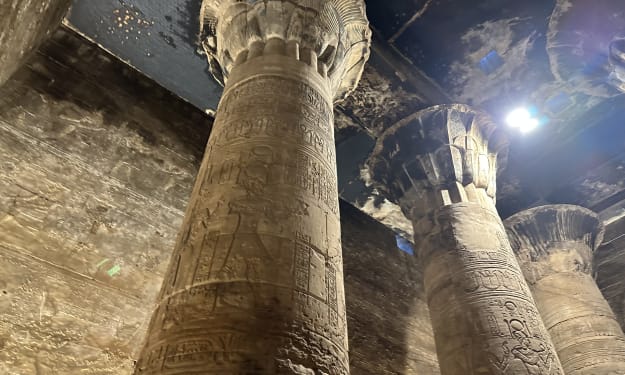
Throughout history, ancient architects harnessed the interplay of light and shadow to create structures that were not only functional but also imbued with aesthetic beauty and spiritual significance. By aligning buildings with celestial events, selecting materials that interacted with sunlight, and employing architectural techniques to manipulate illumination, these builders crafted dynamic spaces that continue to captivate us today.
By Siboli Mukherjee11 months ago in History
Japan’s Energy Revolution: Balancing Solar and Nuclear Power for a Sustainable Future
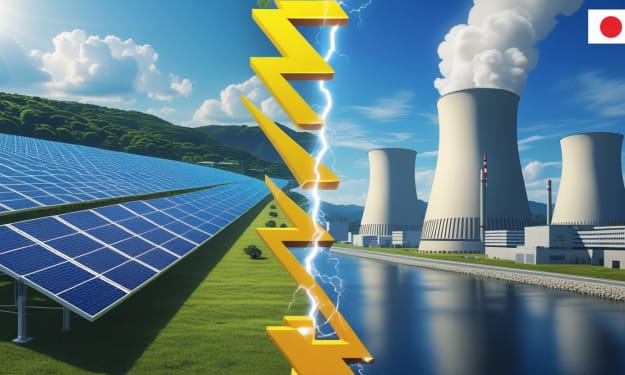
Japan’s Energy Revolution: Balancing Solar and Nuclear Power for a Sustainable FutureJapan, a global leader in technology and innovation, is undergoing a significant energy transformation. As the world shifts towards sustainability, Japan is making strategic moves to reduce its dependence on fossil fuels. But how is the country balancing its energy needs between solar power and nuclear energy?In this video, we explore Japan’s ambitious energy revolution—the rise of solar power, the revival of nuclear energy, and what it means for the future of clean energy.Japan’s Energy Crisis and Policy ShiftFor decades, Japan relied heavily on imported fossil fuels, fueling its rapid industrial growth. However, the 2011 Fukushima Daiichi nuclear disaster forced the nation to rethink its energy strategy.Before Fukushima, nuclear power supplied 30% of Japan’s electricity.In the aftermath, all nuclear reactors were shut down for safety inspections.This led to a 50% increase in fossil fuel imports, driving up energy costs.Rising electricity prices and growing climate concerns pushed the government to seek alternatives. Japan introduced aggressive policies promoting renewable energy, particularly solar power, with subsidies and feed-in tariffs to encourage investment.As a result, Japan became one of the world’s top five solar energy producers. However, despite this progress, challenges remained. Solar power’s dependence on weather conditions and the high cost of fossil fuel imports made energy stability a pressing issue. This led policymakers to reconsider nuclear energy as part of Japan’s long-term energy strategy.The Rise of Solar Power in JapanJapan’s commitment to solar energy is evident in its large-scale adoption across cities, rural areas, and even on floating solar farms.Key Developments in Japan’s Solar Energy:• Floating Solar Farms: Given Japan’s limited land availability, floating solar farms on reservoirs and lakes maximize energy production while minimizing land-use conflicts.• Residential Solar Panels: Government incentives have encouraged millions of households to install solar panels, reducing reliance on the national grid.• Advanced Solar Technology: Companies like Sharp and Panasonic have developed high-efficiency solar panels capable of generating power even in low sunlight.Challenges of Solar Energy in Japan:• Intermittency Issue: Solar power is weather-dependent, making energy storage crucial.• High Initial Costs: While subsidies help, installing solar panels still requires significant investment.• Grid Stability: The national grid struggles to manage large fluctuations in solar energy production.Despite these challenges, Japan continues to innovate with battery storage and smart grid technologies, ensuring a more reliable solar energy system.Japan’s Nuclear Power RevivalFollowing the Fukushima disaster, Japan shut down all 54 nuclear reactors, leading to strong public opposition. However, over time, the government has implemented some of the world’s strictest nuclear safety regulations and gradually restarted several reactors under enhanced security measures.Why is Japan Reviving Nuclear Power?🔹 Energy Security: Unlike solar and wind, nuclear energy provides a stable and continuous power supply.🔹 Lower Carbon Emissions: Nuclear power is carbon-free, helping Japan achieve its climate goals.🔹 Economic Stability: Restarting reactors reduces dependence on costly fossil fuel imports.How Safe Are Japan’s Nuclear Reactors Today?• New Safety Standards: Post-Fukushima, Japan has introduced some of the strictest nuclear regulations in the world.• Advanced Reactor Technology: Development of Small Modular Reactors (SMRs) and next-generation nuclear plants enhances safety.• Improved Cooling Systems: Modern reactors now feature passive cooling mechanisms to prevent meltdowns.However, nuclear power remains a controversial topic. Surveys indicate that over 50% of the Japanese population still opposes nuclear energy, citing safety concerns. Despite this, economic and environmental pressures continue to drive the government’s nuclear policies.Balancing Solar and Nuclear for a Sustainable FutureJapan’s energy transition isn’t about choosing between solar and nuclear—it’s about finding the right balance. The government’s energy roadmap includes:🔹 Expanding solar capacity while investing in advanced energy storage solutions like lithium-ion and hydrogen batteries.🔹 Using nuclear power as a stable backup to ensure energy security.🔹 Developing other renewables, including offshore wind farms and hydrogen energy.By integrating multiple energy sources, Japan aims to build a resilient, stable, and low-carbon energy future.Japan’s Energy Goals for 2050To become carbon neutral by 2050, Japan has set ambitious targets:• 50-60% renewable energy (solar, wind, hydro).• 20-25% nuclear energy as a stable backup.• Minimal fossil fuel use, primarily for emergency reserves.To achieve these goals, Japan is investing in AI-driven smart grids, energy-efficient infrastructure, and next-generation nuclear technology.ConclusionJapan’s energy transformation is a testament to resilience, innovation, and sustainability. The country is proving that solar and nuclear power can coexist, creating a cleaner and greener future.But what do you think? Should Japan rely more on solar energy, or is nuclear power essential for energy stability?Share your thoughts in the comments!👉 Don’t forget to like, share, and subscribe for more in-depth content on global innovations!
By MystiTech Hub11 months ago in History
The Victorian Mental Asylums
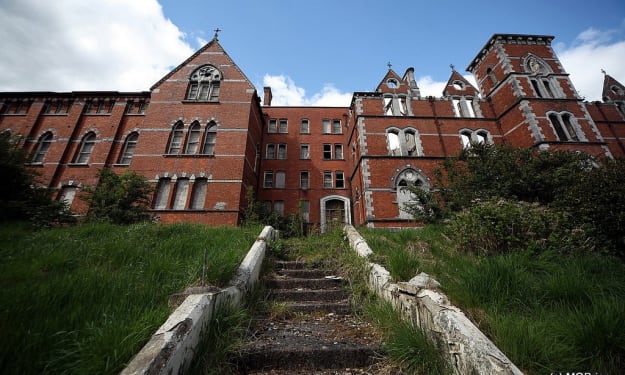
Today, Mental Health is one of the most important ‘fields’ within medicine. Every single day, new ways are being found in which to help those with mental health problems to ‘recover’ as quickly or as slowly as he or she needs, in other words, at the person’s own pace. This ‘medicine’ is not just tablets and tranquilizers or anti-depressants, but a whole range of ‘ways’ to help the person ‘mentally’ to get back to a normal life.
By Ruth Elizabeth Stiff11 months ago in History
Why History Matters How It Influences Our Future
What if I told you that your smartphone's existence was influenced by a war that happened over 70 years ago? The technological advances from World War II laid the groundwork for many modern innovations we take for granted today. This is just one example of how the past
By Ravi Patel11 months ago in History
14 Facts About Howard Hughes That You Never Knew
Howard Hughes wasn’t just rich—he was ridiculously rich. But unlike your typical billionaire, he didn’t just buy yachts and collect mansions. No, Hughes built the world’s largest wooden airplane, bought entire casinos just to be left alone, and once spent four months locked in a dark room watching the same movie on repeat. His life was a mix of brilliance, madness, and jaw-dropping eccentricity. Think of him as Elon Musk, if Elon Musk also happened to be a full-time hermit with a serious germ phobia.
By Marveline Merab11 months ago in History