
The Victorian Mental Asylums
Today's Lesson Is:

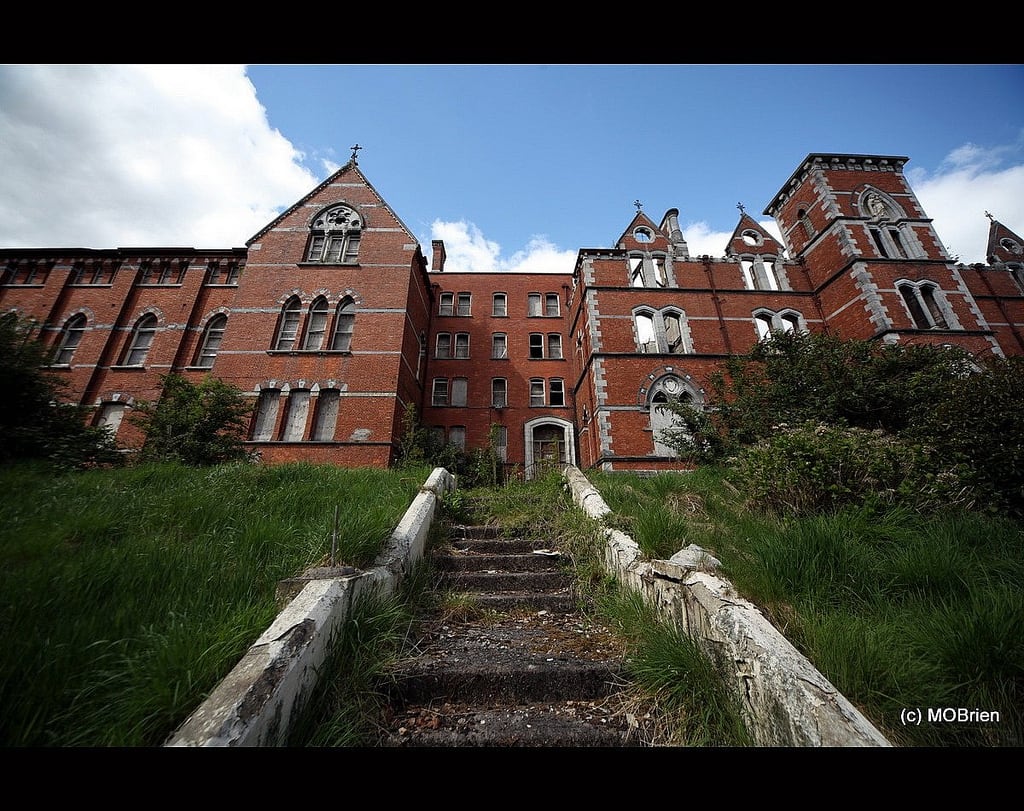
Today, Mental Health is one of the most important ‘fields’ within medicine. Every single day, new ways are being found in which to help those with mental health problems to ‘recover’ as quickly or as slowly as he or she needs, in other words, at the person’s own pace. This ‘medicine’ is not just tablets and tranquilizers or anti-depressants, but a whole range of ‘ways’ to help the person ‘mentally’ to get back to a normal life.
Unfortunately, this wasn’t always the ‘way’ that those with mental ‘needs’ were ‘looked after’.
The Victorian Mental Asylum was very different to our Psychiatric Hospitals today. “Mental Health” as a field of medicine was in its infancy and the medical profession back then was doing a great deal of ‘guessing’ when it came to helping the mentally challenged. To us, these old Asylums sound like places of torture rather then healing.
The word “Asylum” means ‘retreat’ or ‘sanctuary’ and these ‘hospitals’ were originally built to protect the mentally challenged. When a family felt that they could no longer care for their loved one, he or she was put into an Asylum to be looked after by ‘professional’ doctors and nurses. However, some were ‘put away’ because they ‘would not do as they were told’. For example, if a beautiful 18 year old young woman refused to marry a 59 year old rich man, her father would have her ‘committed’ to an Asylum until she came to her senses, which rarely happened because the young lady very often lost her mind because of the ‘treatment’ she received.
Harriet Martinea was a social campaigner who lived and worked in the 1800’s (1802 - 1876). She is quoted as saying, after her own observations: “In pauper asylums we see chains and strait-waistcoats, three or four half-naked creatures thrust into a chamber field with straw, to exasperate each other with their clamour and attempts at violence; or else gibbering in idleness or moping in solitude”. Such treatment and conditions would not be allowed today.
Many of those who were in charge of these Asylums had little or no professional medical training. These ‘doctors’ and ‘nurses’ were more like guards than medical staff, and the emphasis was on stopping the person from hurting themselves, and others, rather than ‘healing’ the mind. Patients were often strapped to a bed and left, unsupervised, overnight. When a patient was found dead one morning due to strangulation, the authorities realized that this kind of ‘treatment’ had to change. It would still take many years to put these changes into place.
Back in those days, the mentally challenged were treated as moral misfits, being punished by God, and they were separated from normal society. “Curing” the person or patient was not even considered or thought about.
Nellie Bly gives us a first-hand account of what it was like to be in a Mental Asylum. Nellie was a journalist who went ‘undercover’ at the Blackwell Island Insane Asylum in 1887 in New York. What she reported makes for disturbing reading. “For crying the nurses beat me with a broom handle and jumped on me. Then they tied my hands and feet, and throwing a sheet over my head, twisted it tightly around my throat, so I could not scream, and thus put me in a bathtub of cold water. They held me under until I gave up every hope and became senseless”.
Patients in some of the Asylums were ‘experimented’ on. Asylums were the perfect ‘lab’ for psychiatric experimentation. Electroconvulsive (ECT) ‘treatment’ was one of the most infamous to be used. Electricity was still a new form of energy in Victorian times and it was believed that passing electricity through the brain ‘re-wired’ the mind. Unfortunately, patients received this ‘treatment’ without the use of general anesthesia and this was more of an ‘experimental treatment’ at the time. If the electric current was too strong, the patient ended up having (what we now know) an epileptic convulsion. Thankfully today, although ECT is still used, it is done under medical conditions with professionally trained doctors and nurses, and only after every other treatment has been tried, and it is given under general anesthesia.
Lobotomies were a type of brain surgery which severed the connection between the frontal lobe and other parts of the brain. This left the patient emotionally blunted and restricted intellectually. Thankfully, this ‘surgery’ was eventually banned.
The ‘System’ that was being used was changed to the ‘Non-Restraint System’ and attitudes towards the mentally challenged started to slowly change towards ‘helping’ and ‘healing’ the patient.
Today, the emphasis is on listening and giving the patient the respect that he or she deserves, and although medicine does ‘play its part’, the ‘treatment’ is more about helping the person to help themself.
We live in a much more advanced era compared to the Victorian Mental Asylums, so never be afraid to ask for help when feeling mentally challenged, because you will get the very “safe” treatments of professionally and medically trained doctors and nurses today, who will listen and understand you.
About the Creator
Ruth Elizabeth Stiff
I love all things Earthy and Self-Help
History is one of my favourite subjects and I love to write short fiction
Research is so interesting for me too
Keep reading
More stories from Ruth Elizabeth Stiff and writers in History and other communities.
The Victorian Workhouse
Helping “the poor” in an organized way goes as far back as 1388 when the Poor Law Act was introduced. This Law started to increase the involvement of the state to take responsibility towards the poor people who lived within their parish. The Poor Relief Act of 1576 was brought out for those who could work or who were willing to work in order to receive support. In 1601, the legal framework made the parish ‘responsible’ for “enacting the poor relief within geographical boundaries. This is the foundation of the principles for the Victorian Workhouses.
By Ruth Elizabeth Stiff11 months ago in History
3 Ordinary Places That Hid Something Truly Disturbing for Years
Most of us take comfort in ordinary places. Schools feel safe. Homes feel familiar. Workplaces feel predictable. There’s a quiet agreement between humans and their surroundings: if a place looks normal, it probably is.
By Enoch Saginia day ago in History


Comments (1)
Wow! So many victims