Siboli Mukherjee
Bio
I decode innovation's human side. From ancient ingenuity to modern tech, I uncover how culture shapes progress. Join me in exploring the stories, ideas, and journeys that connect creativity, logic, and discovery.
Stories (8)
Filter by community
Illuminating Spaces: The Interplay of Light and Shadow in Architecture
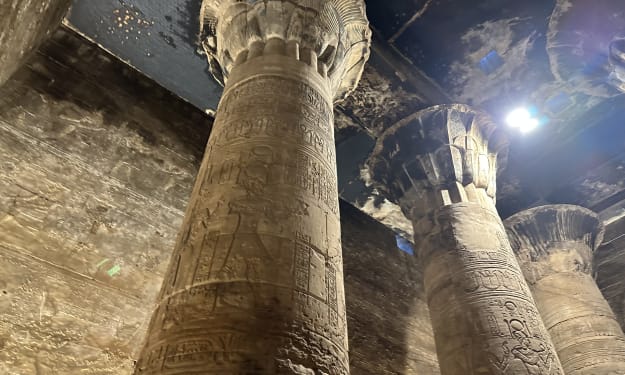
Throughout history, ancient architects harnessed the interplay of light and shadow to create structures that were not only functional but also imbued with aesthetic beauty and spiritual significance. By aligning buildings with celestial events, selecting materials that interacted with sunlight, and employing architectural techniques to manipulate illumination, these builders crafted dynamic spaces that continue to captivate us today.
By Siboli Mukherjee11 months ago in History
The Mysteries of the Blue Lotus: A Sacred Bloom of the Ages
The first time I saw a Blue Lotus, it wasn’t in a temple carving or an ancient manuscript—it was in the still waters of a small pond in Egypt. The flower sat there, untouched by time, its petals stretching toward the sun like an offering. Something about it felt almost otherworldly, as if it held secrets whispered through the ages.
By Siboli Mukherjee11 months ago in History
Discover the Enchanting Nubian Village in Egypt: A Hidden Gem on the Nile
Nestled along the banks of the Nile River near Aswan, the Nubian Village in Egypt is a vibrant, culturally rich destination that offers a unique blend of history, tradition, and breathtaking scenery. Known for its colorful houses, warm hospitality, and deep-rooted heritage, the Nubian Village is a must-visit for travelers seeking an authentic experience in Egypt.
By Siboli Mukherjee11 months ago in History
Nefertiti: The Enigmatic Queen of Egypt
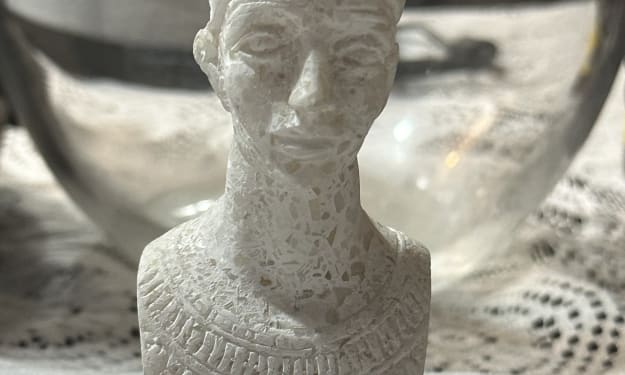
Few names in ancient history evoke as much fascination as Nefertiti. Known for her legendary beauty, her powerful role as queen, and the mystery surrounding her fate, she remains one of Egypt’s most intriguing figures. But Nefertiti was more than just a beautiful face—she was a co-ruler, religious revolutionary, and possibly even a pharaoh in her own right.
By Siboli Mukherjee11 months ago in History
The Key of Life: Ankh in Ancient Egypt
The ancient Egyptian civilization, known for its profound philosophical and architectural achievements, gave the world many enduring symbols, among which the Ankh, or "Key of Life," stands out. This hieroglyphic representation, resembling a cross with a loop at the top, conveys eternal life, divine energy, and cosmic balance. While widely recognized as a religious icon, the Ankh's significance extends into metaphysics, sociocultural identity, and structural symbolism.
By Siboli Mukherjee11 months ago in History
Echoes of the Pharaohs: How Egyptian Civilization Shapes the AI Revolution
Artificial Intelligence (AI) is revolutionizing the modern world, but its core principles—pattern recognition, automation, and data processing—have deep historical roots. Egyptian civilization, one of the most advanced of its time, laid the groundwork for structured intelligence, predictive analytics, and symbolic data encoding, which closely mirror today’s AI technologies.
By Siboli Mukherjee12 months ago in History
The Greatest Female Pharaoh: Hatshepsut, Egypt’s Forgotten Queen
Hatshepsut, often overshadowed by her male counterparts, was one of ancient Egypt’s most accomplished and visionary rulers. Despite ruling in a time when female pharaohs were rare, she not only claimed the throne but also flourished, leaving behind an extraordinary legacy of wealth, art, and diplomacy. Her reign, from 1479 to 1458 BCE, remains a testament to her intelligence, ambition, and political acumen.
By Siboli Mukherjee12 months ago in History
The Original Potential of Mummification: A Deeper Look into Preservation, Science, and Legacy
Mummification is one of the most fascinating preservation techniques in history. While most people associate it with ancient Egypt and religious afterlife beliefs, its original potential extended far beyond mythology. Mummification was an advanced process that showcased early biochemical knowledge, anatomical understanding, and societal structures. This blog explores its origins, methods, global practices, and modern relevance.
By Siboli Mukherjee12 months ago in History