Analysis
Resistance Grows as Proposed Cuts Threaten Health Care for Over 79 Million in US
In the latest wave of political and economic debates, proposed cuts to federal health care programs have ignited a firestorm of opposition across the United States. At stake is the well-being of over 79 million Americans who rely on government-supported health services, particularly Medicaid and Medicare. These proposed reductions, aimed at curbing federal spending, have drawn sharp criticism from health professionals, advocacy groups, and ordinary citizens alike, who warn of devastating consequences for public health.
By Md polash Ali10 months ago in History
Global markets in freefall as Trump digs in on tariff ‘medicine’
In a week marked by heightened economic anxiety, global markets have taken a steep dive as U.S. President Donald Trump doubles down on his controversial tariff strategy, calling it the “medicine” needed to cure what he describes as unfair trade practices by America’s largest trading partners. While Trump insists the long-term benefits will outweigh the short-term pain, investors and economists alike are warning of serious consequences for the global economy.
By Md polash Ali10 months ago in History
10 Scientific Facts Found in Ancient Indian Texts Centuries Before Modern Discovery
10 Scientific Facts Found in Ancient Indian Texts Centuries Before Modern Discovery Long before Newton dropped his apple and Einstein bent space-time, the ancient sages of India were penning down ideas that today’s scientists are only beginning to understand. Hidden in the verses of texts like the Rigveda, Sushruta Samhita, and Bhagavata Purana are shockingly accurate descriptions of scientific phenomena—ranging from gravity and atomic theory to surgical procedures and time dilation. While often dismissed as mythology or philosophy, these texts are treasure troves of forgotten knowledge.
By Riya mandal10 months ago in History
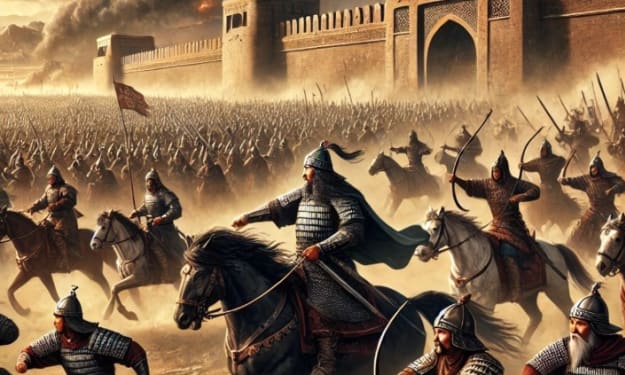
“The Emperor’s Sword: Conquest of Chu”. AI-Generated.
the fall of Han, the Qin army’s appetite for conquest only grew stronger. Their next and most formidable adversary lay in the south—the powerful State of Chu. Unlike the relatively smaller and politically fractured states Qin had defeated earlier, Chu was a colossus. Spanning vast fertile lands, steeped in rich cultural traditions, and renowned for its seasoned warriors, Chu had long been a thorn in the side of Qin's ambitions. For King Zheng of Qin, the future First Emperor, subjugating Chu would not only be a strategic necessity but a personal crusade to establish unquestionable supremacy over all the Warring States.
By Say the truth 10 months ago in History
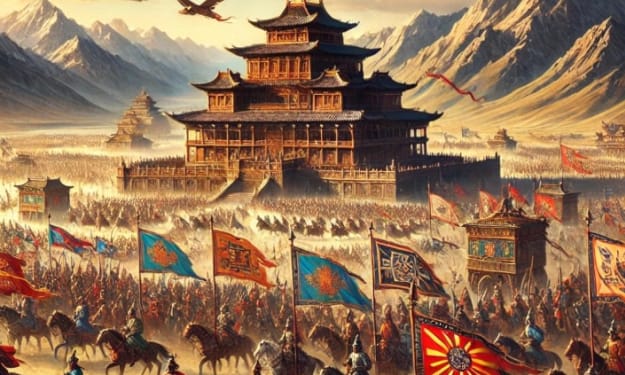
Rise from Qin: The First Step to Chinese Unification. AI-Generated.
Rise from Qin: The First Step to Chinese Unification In the annals of world history, few figures loom as large as Qin Shi Huang, the first Emperor of a unified China. Before he wore the yellow robes of the Son of Heaven, he was known as Ying Zheng, a young king from the western frontier state of Qin. His rise marked the beginning of one of the most transformative periods in Chinese history. This first part of the series explores the early life of Ying Zheng and how the Kingdom of Qin, once considered a barbaric backwater by its eastern rivals, rose to dominate the Warring States.
By Say the truth 10 months ago in History
The Emergence of the First Emperor
He proclaimed himself "Qin Shi Huang," translating to "First Emperor of Qin," and enacted extensive modifications to centralize authoritystandardizing currencies, weights, measures, laws, and even the written language. He initiated monumental infrastructure initiatives such as the initial iteration of the Great Wall and an extensive national road network. However, his most extravagant undertaking was his tomb, safeguarded by the Terracotta Army, a site that would remain undiscovered for over 2,000 years.
By Say the truth 10 months ago in History
Dawn on an Empty Beach
When Liang set foot on the sand, the horizon was a soft brushstroke of purple and gold. The only marks were his dark footprints, which gradually vanished into the flow of breathing. The world had not yet recalled to be noisy, and the sea mist chill the air.
By MD SHAMIM RANA10 months ago in History
How Japan’s Aging Population is Driving Technological Advancement
How Japan’s Aging Population is Driving Technological Advancement Discover how Japan’s aging crisis is fueling world-changing innovations in robotics, healthcare, and AI — transforming elderly care into a global model of technological progress.
By MystiTech Hub10 months ago in History
The World’s Most Disliked Countries in 2024 – Understanding the Global Perception
Introduction In a time when the world is more interconnected than ever, global perception carries significant weight. Nations are judged not just by their policies or leaders but by their international behavior, media portrayal, and historical context. A recent global survey conducted by the International Statistics Organization in 2024 has revealed a list of the 15 most disliked countries in the world. While such lists spark heated debate, they also invite deeper reflection. Why are some countries so disliked? Is it due to politics, war, culture, or something more complex?
By Insect Legends10 months ago in History
Why Japanese Education Became a Role Model for the World
How Discipline, Innovation, and Cultural Values Shaped Japan’s Exceptional Learning System When the world thinks of educational excellence, Japan often stands out. With high-performing students, orderly classrooms, and impressive literacy rates, Japan’s education system is widely admired. But what lies behind this success? The answer is a powerful blend of cultural tradition, post-war reform, and an unwavering commitment to continuous improvement.
By MystiTech Hub10 months ago in History