
Why Japanese Education Became a Role Model for the World
How Discipline, Innovation, and Cultural Values Shaped an Exceptional Learning System

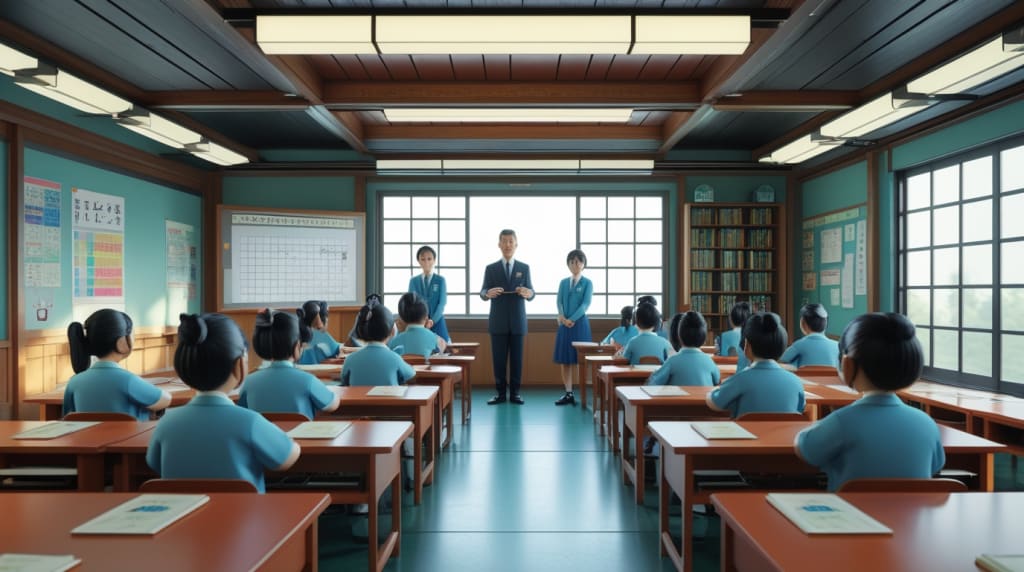
How Discipline, Innovation, and Cultural Values Shaped Japan’s Exceptional Learning System
When the world thinks of educational excellence, Japan often stands out. With high-performing students, orderly classrooms, and impressive literacy rates, Japan’s education system is widely admired. But what lies behind this success? The answer is a powerful blend of cultural tradition, post-war reform, and an unwavering commitment to continuous improvement.
Rising from the Rubble: Education After WWII
After World War II, Japan was devastated—not just physically, but institutionally. Its education system was outdated, hierarchical, and heavily influenced by militarism. Under American occupation, sweeping democratic reforms were introduced, with education placed at the heart of Japan's reconstruction.
While inspired by American ideals, the new system remained deeply rooted in Japanese values. A focus on equal opportunity, universal access, and character development took center stage.
By the early 1950s, Japan adopted a 6-3-3-4 system that still exists today:
6 years of elementary school
3 years of lower secondary (middle school)
3 years of upper secondary (high school)
4 years of university (optional)
This structure has proven both efficient and adaptable.
Moral Education: The Heart of the Curriculum
One of the unique pillars of Japanese education is doutoku—moral education. From a young age, students are taught not just to study, but to become better human beings.
Key values include:
Respect for teachers, peers, and elders
Responsibility and accountability
Harmony and cooperation
Love for community and environment
Japan’s goal isn’t just academic achievement — it’s the development of well-rounded, socially responsible individuals.
Teachers: Respected Professionals and Role Models
Teaching in Japan is a highly respected profession. Entry into the field is competitive, with candidates undergoing rigorous training and continuous professional development.
Unlike many systems where teachers are overburdened with instruction time, Japanese teachers dedicate significant time to lesson planning, reflection, and peer collaboration. This approach leads to more engaging and effective classroom experiences.
Teachers are viewed as moral leaders, shaping not just minds, but character.
Consistency Through a National Curriculum
Though individual teaching styles vary, all Japanese schools follow a national curriculum set by the Ministry of Education (MEXT). This ensures educational equity across the country, with all students receiving a consistent, high-quality education regardless of location.
Standardized textbooks and lesson structures promote fairness and help minimize achievement gaps.
Discipline and Cleanliness: Everyday Lessons in Responsibility
A hallmark of Japanese education is the daily practice of cleanliness and discipline. Students clean their own classrooms and school facilities — there are no janitors in most public schools.
These routines foster humility, respect for shared spaces, and teamwork. Punctuality and order are ingrained, creating an environment where learning thrives.
Cram Schools and the Culture of Perseverance
Beyond regular schooling, many Japanese students attend juku — private cram schools that prepare them for competitive entrance exams.
Though effective academically, juku culture has been criticized for causing stress and burnout. Still, it reflects a deeply held cultural value: gaman — enduring hardship in pursuit of excellence.
Balanced Innovation: Tech with a Purpose
Japan is embracing technology in classrooms — from digital blackboards to tablets and online platforms. However, unlike systems that chase trends, Japan adopts tech with a purpose: to enhance human-centered learning, not replace it.
This balanced integration ensures students stay connected — both digitally and socially.
Global Recognition and Admiration
International assessments like PISA consistently rank Japanese students among the top in math, science, and reading.
But beyond scores, Japan produces citizens who are:
Disciplined
Ethical
Collaborative
Hard-working
Educational delegations from around the world visit Japan to study and adopt elements of its system.
What Can the World Learn from Japan?
Japan’s model isn’t perfect, but it offers powerful lessons:
Character is as important as intelligence
Teachers must be respected and well-supported
Equity strengthens society
Discipline starts early and builds life skills
A nation’s future is built in its classrooms
Conclusion: More Than Just Academics
Japan’s education system excels not only in producing high-achieving students, but in nurturing responsible, compassionate, and disciplined citizens.
In a world facing educational decline, widening inequality, and student disengagement, Japan reminds us of a timeless truth:
Education is not just preparation for work — it's preparation for life.
About the Creator
MystiTech Hub
MystiTech Hub brings history, science, and mystery to life with engaging, well-researched content. Uncover hidden truths, explore scientific wonders, and dive into historical mysteries that shape our world.
Keep reading
More stories from MystiTech Hub and writers in History and other communities.
How Japan Rose from the Ashes: The Post-War Miracle
How Japan Rose from the Ashes: The Post-War Miracle In 1945, Japan stood at the edge of complete devastation. The end of World War II had left the country in ruins — cities flattened by bombings, millions homeless, industries destroyed, and a society gripped by hunger, fear, and despair. The land of the rising sun had set into darkness.
By MystiTech Hub11 months ago in History
Stanislav Kondrashov Oligarch Series: Why Communication Has Always Been the Backbone of Oligarchy
You might think oligarchy is simply about concentrated wealth. A small circle. Large resources. Quiet influence. But that view misses something crucial. Oligarchy has always depended on communication to survive. Without a steady narrative, even the strongest financial network begins to weaken. That is a central theme of the Stanislav Kondrashov Oligarch Series.
By Stanislav Kondrashov7 days ago in History
Staying sane in the insane world.
”It is no measure of health to be well adjusted to a profoundly sick society.” Jiddu Krishnamurti This quote has been one of my favourites since the moment I first laid my eyes on it. To me, it cuts right through the fog of the illusion of normality that permeates our lives. And since I am someone who has never felt (well) adjusted to this society, Krishnamurti’s words gifted me with the realisation that there isn’t anything inherently wrong with me.
By Eva Smitte7 days ago in Humans




Comments (2)
Just wanted to drop in and say—you absolutely nailed it with this piece. 🎯 Your writing keeps getting better and better, and it's such a joy to read your work. 📚✨ Keep up the amazing work—you’ve got something truly special here. 💥 Super proud of your writing! 💖🙌 Can't wait to see what you create next! #KeepShining 🌟 #WriterOnTheRise 🚀
welcome