
The Long Walk to Freedom: A Story Inspired by Nelson Mandela
In the rolling green hills of the village of Mvezo, nestled in the Eastern Cape of South Africa, a child was born who would one day become the symbol of freedom, justice, and resilience. His name at birth was Rolihlahla, a Xhosa word meaning “pulling the branch of a tree,” or more colloquially, “troublemaker.” But the world would come to know him by a different name—Nelson Mandela.

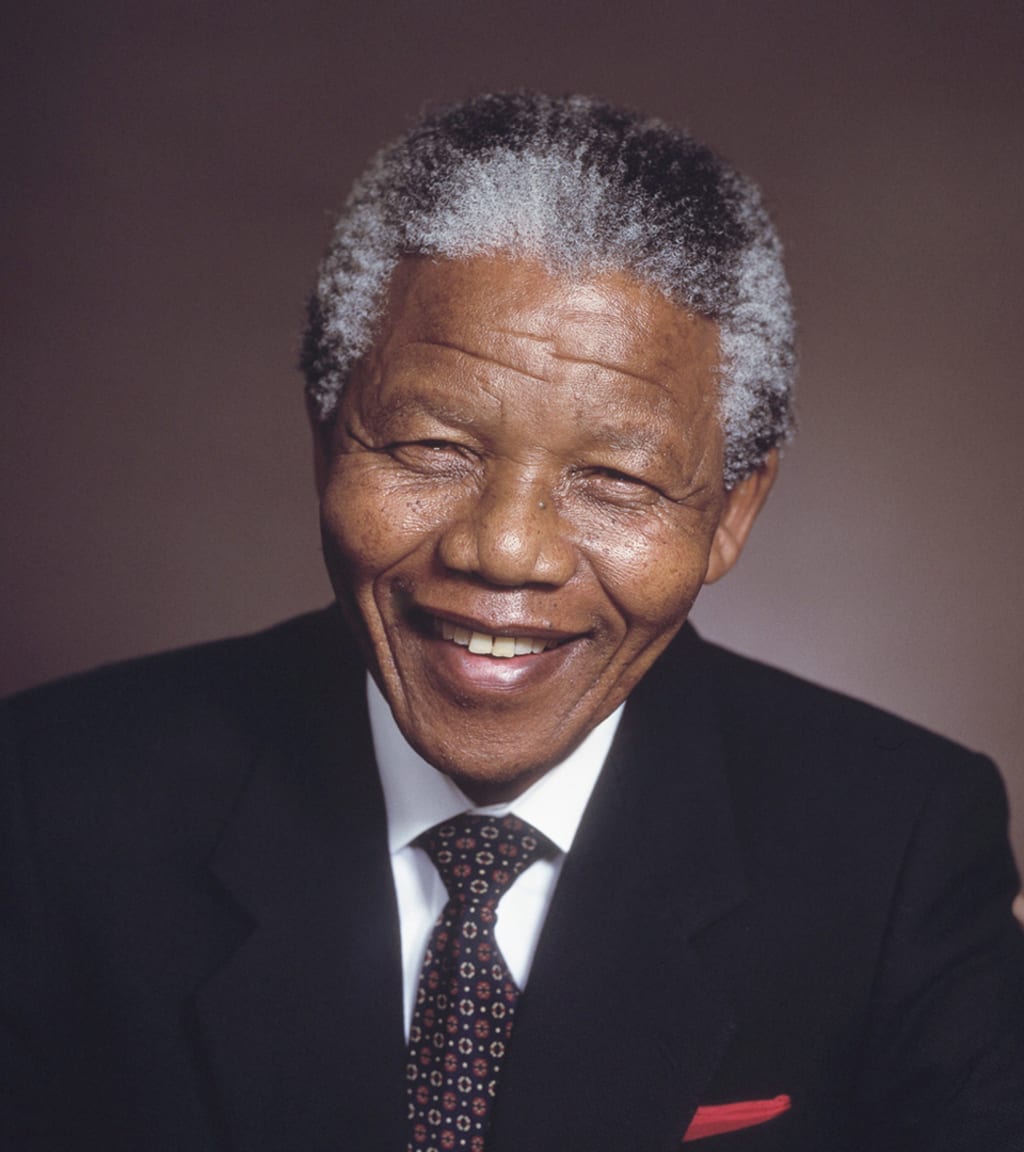
Raised in the traditions of his Thembu tribe, young Mandela grew up listening to the elders speak around evening fires, their voices filled with stories of ancestral valor, lost kingdoms, and the dream of African unity. His father, a respected chief and advisor, instilled in him the values of dignity and resolve. But life took a sharp turn when Mandela’s father died when he was only nine years old. The loss marked not just an emotional turning point but a physical one as well—he was sent to live with Chief Jongintaba, a powerful regent of the Thembu people.
Mandela received the best education available to a black South African at the time. He was introduced to Western literature, law, and politics. However, it wasn’t just textbooks that educated him. Mandela watched and listened as white colonial rulers governed his people with arrogance and inequality. These injustices etched a sense of purpose into the young man’s soul.
At the University College of Fort Hare, he began to see his own potential as a leader. There, he met Oliver Tambo, who would become a lifelong friend and comrade. But it wasn’t long before his ideals clashed with authority. He participated in a student protest and was expelled. A rebellious decision, but one that would shape the course of his destiny.
Fleeing an arranged marriage planned by the regent, Mandela moved to Johannesburg. There, he worked various jobs—security guard, law clerk—and lived among the city’s poorest residents. The inequality he saw in the mines, in the streets, in the treatment of black workers, only deepened his conviction that something had to change. It was in Johannesburg that Mandela found his voice and his cause, joining the African National Congress (ANC) and becoming a revolutionary.
The year was 1944, and South Africa was gripped by the terrifying tentacles of apartheid—a brutal system of racial segregation. White minority rule dominated every aspect of black South Africans’ lives: where they lived, where they worked, what education they received, even which benches they could sit on in parks. Mandela and a new generation of ANC leaders were determined to resist.
Mandela believed in nonviolent protest. He organized marches, boycotts, and strikes, drawing inspiration from Mahatma Gandhi. But the apartheid regime was ruthless. It responded with violence, arrests, and fear. Mandela was arrested multiple times, but he never backed down. He co-founded South Africa’s first black law firm with Tambo, offering free legal aid to those who had nowhere else to turn.
Then came the Sharpeville Massacre of 1960—police fired on a peaceful protest, killing 69 unarmed people. The incident was a watershed moment. Mandela, like many others, began to question whether peaceful resistance was enough. He went underground and helped form Umkhonto we Sizwe—the Spear of the Nation—a militant wing of the ANC. Their aim was to sabotage infrastructure, not harm people, but the government painted them as terrorists.
In 1962, Mandela was captured and sentenced to five years in prison. Two years later, he and other ANC leaders were tried for sabotage and conspiracy to overthrow the government in what became known as the Rivonia Trial. In the courtroom, Mandela gave a speech that echoed through history:
“I have cherished the ideal of a democratic and free society... It is an ideal for which I am prepared to die.”
He was sentenced to life imprisonment.
For 27 long years, Mandela remained behind bars, most of them on Robben Island—a wind-swept, desolate place surrounded by shark-infested waters. The prison was harsh: hard labor, poor food, and emotional isolation. Guards tried to break his spirit, but Mandela never yielded. He educated himself and his fellow inmates. He read poetry, studied law, and kept his mind free, even if his body was confined.
Outside, the world changed. Protests erupted across South Africa. International pressure mounted. Sanctions were imposed. Mandela’s name became a global rallying cry—Free Nelson Mandela! became the anthem of the oppressed.
By the late 1980s, the apartheid regime began to crumble under pressure. President F.W. de Klerk saw the writing on the wall. In a bold and unexpected move, he released Mandela on February 11, 1990.
When Mandela walked free from Victor Verster Prison, holding his wife Winnie’s hand and raising his fist to the sky, the world stopped to watch. Cameras captured the moment, but what they could not capture was the silent, unwavering resolve in his eyes—the same resolve he carried into exile, into prison, and now into freedom.
Mandela preached reconciliation, not revenge. He sat down with his former jailers. He negotiated with the same government that imprisoned him. In 1994, he stood for election in South Africa’s first democratic vote and became the country’s first black president.
He led with grace. He wore the Springbok jersey—once a symbol of white supremacy—to unite the country during the Rugby World Cup. He invited former enemies to the table. He created the Truth and Reconciliation Commission, not to punish, but to heal.
Mandela served only one term as president, choosing dignity over power. He stepped down in 1999, believing that a true leader knows when to pass the torch. In his later years, he focused on charitable work, particularly HIV/AIDS awareness. The world celebrated him with awards, honorary degrees, and the Nobel Peace Prize in 1993.
On December 5, 2013, Nelson Mandela passed away at the age of 95. South Africa mourned, but so did the world. From presidents to peasants, people wept for a man who taught them that courage was not the absence of fear, but the triumph over it.
Epilogue: A Legacy Etched in Time
Nelson Mandela’s life was not a fairy tale. It was hard, painful, and often lonely. But it was also majestic in its purpose. He taught that justice is not given; it is fought for. He showed that forgiveness can rebuild what hatred has broken. And he proved that one man, armed with hope, can transform a nation.
His autobiography, Long Walk to Freedom, begins with a powerful line:
"I have walked that long road to freedom. I have tried not to falter; I have made missteps along the way."
We all walk our own roads, stumble on our own stones. But if Mandela’s story teaches us anything, it is that no chain is too strong, no wall too high, and no injustice too deep that the human spirit cannot rise above it.
He was more than a president. More than a revolutionary.
He was a mirror reflecting the best of humanity.
And his journey—marked by sacrifice, resilience, and boundless hope—continues to inspire millions to stand tall, speak up, and walk their own long roads to freedom.
About the Creator
AMIT
Experienced in Data Entry, Web Research, and Lead Generation. I deliver accurate, on-time results to help businesses grow. Reliable, detail-oriented, and always ready to assist with your data needs.
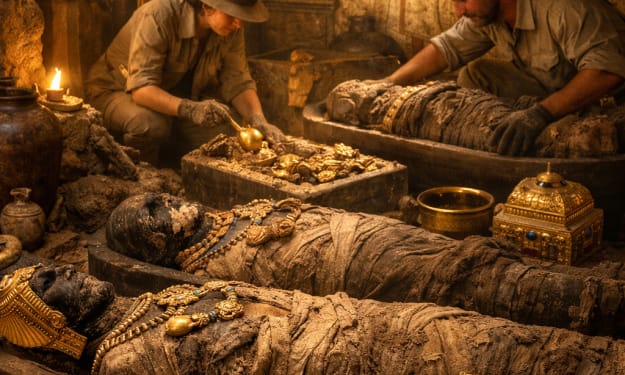
Ancient Egyptian Tomb Yields Newly Discovered Mummified Remains of Royal Goldsmiths
In a remarkable archaeological discovery in Egypt, a team of researchers has uncovered a series of mummified remains belonging to royal goldsmiths within a previously unexplored tomb. The find, located near Luxor in the Valley of the Kings, offers an extraordinary glimpse into the lives of highly skilled artisans who served the pharaohs of ancient Egypt.
By Irshad Abbasi 6 days ago in History



Comments
There are no comments for this story
Be the first to respond and start the conversation.