
“The Emperor’s Sword: Conquest of Chu”
In this second part of the series, we explore how Qin Shi Huang, the First Emperor of China, led a brutal but brilliant campaign against the powerful Chu state—a rival known for its rich lands and fierce warriors. Through deception, military brilliance, and absolute resolve, he brought Chu to its knees, further uniting China under his iron rule.

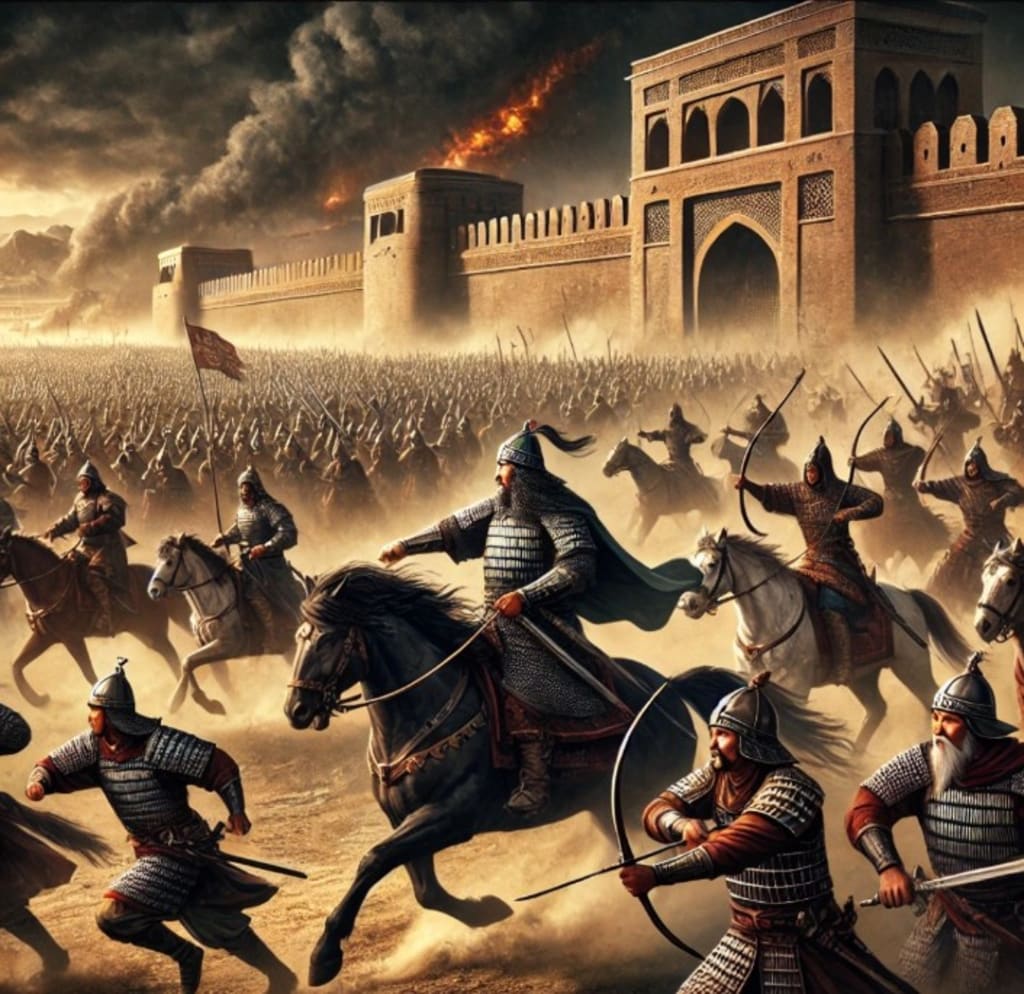
the fall of Han, the Qin army’s appetite for conquest only grew stronger. Their next and most formidable adversary lay in the south—the powerful State of Chu. Unlike the relatively smaller and politically fractured states Qin had defeated earlier, Chu was a colossus. Spanning vast fertile lands, steeped in rich cultural traditions, and renowned for its seasoned warriors, Chu had long been a thorn in the side of Qin's ambitions. For King Zheng of Qin, the future First Emperor, subjugating Chu would not only be a strategic necessity but a personal crusade to establish unquestionable supremacy over all the Warring States.
The war with Chu was more than just a clash of swords—it was a battle of minds, tactics, and political maneuvering. Chu, under the command of General Xiang Yan, was not to be underestimated. Xiang Yan was a skilled commander and strategist, a man capable of rallying massive forces and striking fear into even the most disciplined Qin formations.
Prelude to Invasion
Qin’s chancellor, Li Si, and the legendary general Wang Jian urged caution. They understood that rushing into Chu’s expansive territory without proper planning could end in disaster. Qin had seen such a failure before—when a rash invasion years earlier ended in heavy losses. This time, Wang Jian proposed a different plan: a slow, calculated invasion with overwhelming force.
King Zheng entrusted the campaign to Wang Jian but kept another rising star, General Meng Tian, in reserve. Wang Jian, a seasoned warrior known more for his patience than aggression, demanded an enormous army—reportedly over 600,000 men. At first, Zheng thought this excessive and was tempted to replace him. But eventually, he agreed, understanding that the risk of underestimating Chu was too great.
The Art of Delay
Rather than launching an immediate offensive, Wang Jian built forts along the borders, slowly inching his army forward while giving the appearance of passivity. The Chu generals, misled by this slow advance, relaxed their defenses, thinking Qin had grown fearful or indecisive.
In reality, Wang Jian was waiting for the perfect moment to strike—a moment when Chu was least prepared. That moment came after months of stillness. In a sudden wave of attacks, Qin armies surged into Chu territory, overwhelming border forts and driving deep into the countryside.
Clash of Titans
General Xiang Yan responded fiercely, assembling Chu’s finest warriors for a counterattack. What followed was one of the most ferocious battles in Chinese history. Tens of thousands fell on both sides. The rivers ran red with blood, and the fields were trampled into mud by the weight of armored infantry.
But Wang Jian had anticipated this. He feigned retreat, luring Xiang Yan into a false sense of victory. As the Chu army advanced, Wang Jian’s reserves—kept hidden behind forested hills—launched a surprise flanking attack, surrounding the Chu forces in a deadly pincer movement.
Xiang Yan fell in battle, and with him, the spirit of Chu began to crumble. City after city surrendered. Qin soldiers, disciplined and ruthless, stormed the strongholds of Chu, executing commanders who resisted and integrating local forces who pledged allegiance.
The End of Chu
With the death of its greatest general and the fall of its capital, the State of Chu officially ceased to exist. What had once been one of the richest and most formidable kingdoms in ancient China now lay under the control of Qin.
Qin’s conquest of Chu was more than a military victory—it was a turning point in Chinese history. The subjugation of Chu sent a message to the remaining states: resistance was futile. King Zheng’s vision of a unified China was now closer than ever.
The Aftermath
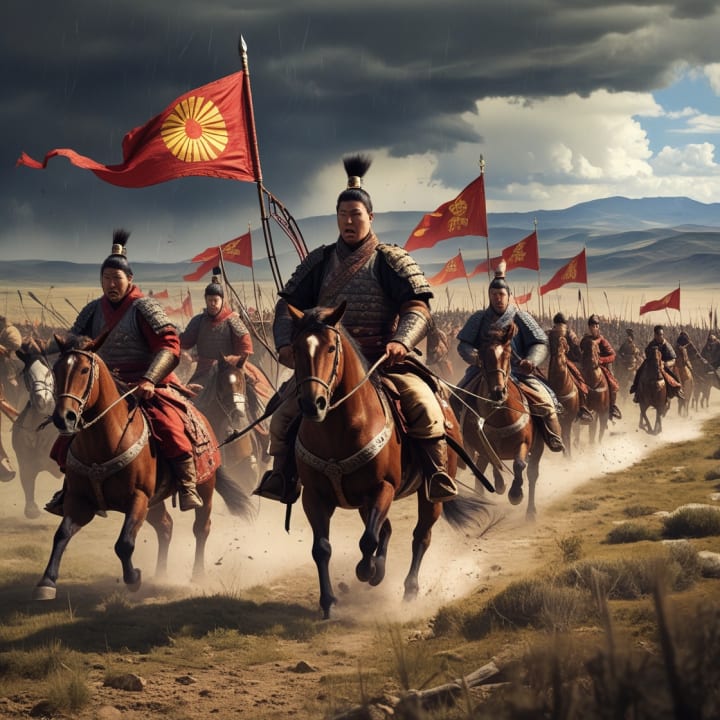
King Zheng personally visited the newly conquered territories, overseeing the placement of loyal governors and imposing Qin law. But the Chu people, proud and war-hardened, would not forget their fall easily. Small pockets of resistance remained, whispering of rebellion.
Yet Zheng, ever watchful and iron-willed, stamped out dissent with a merciless hand. His empire was not to be fractured again. And with Chu added to the map of Qin’s domain, the Warring States era neared its end.
Would you like the next part to be about the final conquest of Qi, or the aftermath and reforms after unification?
About the Creator
Say the truth
"Say the Truth: Explain Everything in the World" is your trusted source for uncovering facts and exploring the wonders of history, science, technology, and beyond. We simplify complex ideas and reveal truths to inspire curiosity .
Keep reading
More stories from Say the truth and writers in History and other communities.
Rise from Qin: The First Step to Chinese Unification
Rise from Qin: The First Step to Chinese Unification In the annals of world history, few figures loom as large as Qin Shi Huang, the first Emperor of a unified China. Before he wore the yellow robes of the Son of Heaven, he was known as Ying Zheng, a young king from the western frontier state of Qin. His rise marked the beginning of one of the most transformative periods in Chinese history. This first part of the series explores the early life of Ying Zheng and how the Kingdom of Qin, once considered a barbaric backwater by its eastern rivals, rose to dominate the Warring States.
By Say the truth 10 months ago in History
The Seven Wonders of the World: Amazing Human Creations
People have always been fascinated by things that are grand and unusual. From the very beginning of civilization, humans wanted to build structures that were not just useful, but also showed their skill, creativity, and ambition. The Seven Wonders of the World are the most famous examples of this desire. They are impressive not only because of their size or beauty, but also because of the stories they tell about our past, different cultures, and human innovation. The idea of the Seven Wonders comes from ancient travelers and historians who listed the most remarkable human creations. Even though some of these wonders no longer exist, their legacy continues to inspire people around the world. Let’s explore each one, looking at their history, significance, and why they remain unforgettable. 1. The Great Pyramid of Giza (Egypt) The Great Pyramid of Giza is the only surviving wonder of the original Seven Wonders. Built around 2560 BCE as the tomb of Pharaoh Khufu, it is an extraordinary engineering achievement. Made from more than two million limestone blocks, some weighing over 15 tons, the precision of its construction is still astonishing today. The pyramid shows the power and beliefs of ancient Egypt and continues to attract visitors from all over the world. It is a true symbol of human skill and vision. 2. The Hanging Gardens of Babylon (Iraq) The Hanging Gardens of Babylon are famous for their beauty and clever design, though historians still debate whether they really existed. Ancient stories say King Nebuchadnezzar II built these stepped gardens for his wife, Amytis, who missed the green hills of her homeland. The gardens, described as terraces full of trees, flowers, and shrubs, appeared to float above the city. Whether real or partly mythical, they show how ancient people combined nature and architecture in extraordinary ways. 3. The Statue of Zeus at Olympia (Greece) Around 435 BCE, the sculptor Phidias created the Statue of Zeus at Olympia. This huge statue of the Greek god Zeus, seated on a throne, was over 12 meters tall and made of ivory and gold-plated bronze. It represented both artistic skill and religious devotion. Even though it was destroyed long ago, records and artistic depictions keep its memory alive, showing the Greeks’ dedication to beauty, religion, and craftsmanship. 4. The Temple of Artemis at Ephesus (Turkey) The Temple of Artemis, built around 550 BCE, was dedicated to the Greek goddess of the hunt and wilderness. Known for its enormous size, detailed sculptures, and beautiful design, it was rebuilt several times after destruction, reflecting its cultural importance. People traveled from across the Mediterranean to see it, making the temple a center of religion, art, and commerce. Today, its ruins still tell the story of a civilization that valued beauty and spiritual devotion. 5. The Mausoleum at Halicarnassus (Turkey) Built between 353 and 350 BCE, the Mausoleum at Halicarnassus was the tomb of Mausolus and his wife Artemisia. Combining Greek, Egyptian, and Lycian styles, it stood around 45 meters tall and was decorated with intricate sculptures. Its design influenced monumental tombs for centuries. Even after earthquakes destroyed it, the Mausoleum remains a symbol of human creativity and architectural achievement. 6. The Colossus of Rhodes (Greece) The Colossus of Rhodes, built between 292 and 280 BCE, was a massive bronze statue of the sun god Helios, celebrating Rhodes’ victory over an invading army. Over 30 meters tall, it was one of the tallest statues of the ancient world. Although it only stood for 54 years before an earthquake toppled it, the Colossus became a symbol of triumph, resilience, and artistic achievement, inspiring large statues throughout history. 7. The Lighthouse of Alexandria (Egypt) The Lighthouse of Alexandria, or Pharos, was built around 280 BCE on the small island of Pharos. Standing over 100 meters tall, it served as both a landmark and a guide for sailors entering Alexandria’s busy harbor. Its elegant design combined functionality and beauty. Though earthquakes destroyed it long ago, it remains a symbol of human ingenuity and innovation in maritime engineering. The Legacy of the Seven Wonders The Seven Wonders are more than just buildings; they are symbols of human creativity, ambition, and achievement. Each wonder tells a story about the people who built it, the culture it came from, and the new ideas of its time. Even though some no longer exist, their stories continue to live through historical records, art, and the fascination of people worldwide. These wonders still inspire architects, artists, engineers, and travelers today. From the pyramids of Egypt to the Hanging Gardens of Babylon, they remind us that imagination and effort can create something that lasts for thousands of years. They are examples of determination, vision, and the pursuit of excellence. Conclusion The Seven Wonders of the World are timeless creations that celebrate human creativity and determination. They are more than stones, metals, or ruins—they represent entire civilizations and the marks they left on history. Even after centuries, their stories continue to inspire people to dream, create, and achieve greatness. These wonders remind us that with vision, passion, and effort, humans can build creations that
By Binan Mooona day ago in History
3 Everyday Rules That Exist Because Someone Once Did Something Very Stupid
Everywhere you go, you are surrounded by rules that feel oddly specific. Do not touch. No running. Contents hot. Do not insert body parts. These warnings aren’t theoretical. They weren’t written by pessimists or lawyers with too much free time. They exist because at some point in history, a real human being looked at a situation and thought, “This will probably be fine.”
By Enoch Sagini4 days ago in History


Comments
There are no comments for this story
Be the first to respond and start the conversation.