
Sargon the Great
The Humble Origins of History’s First Emperor

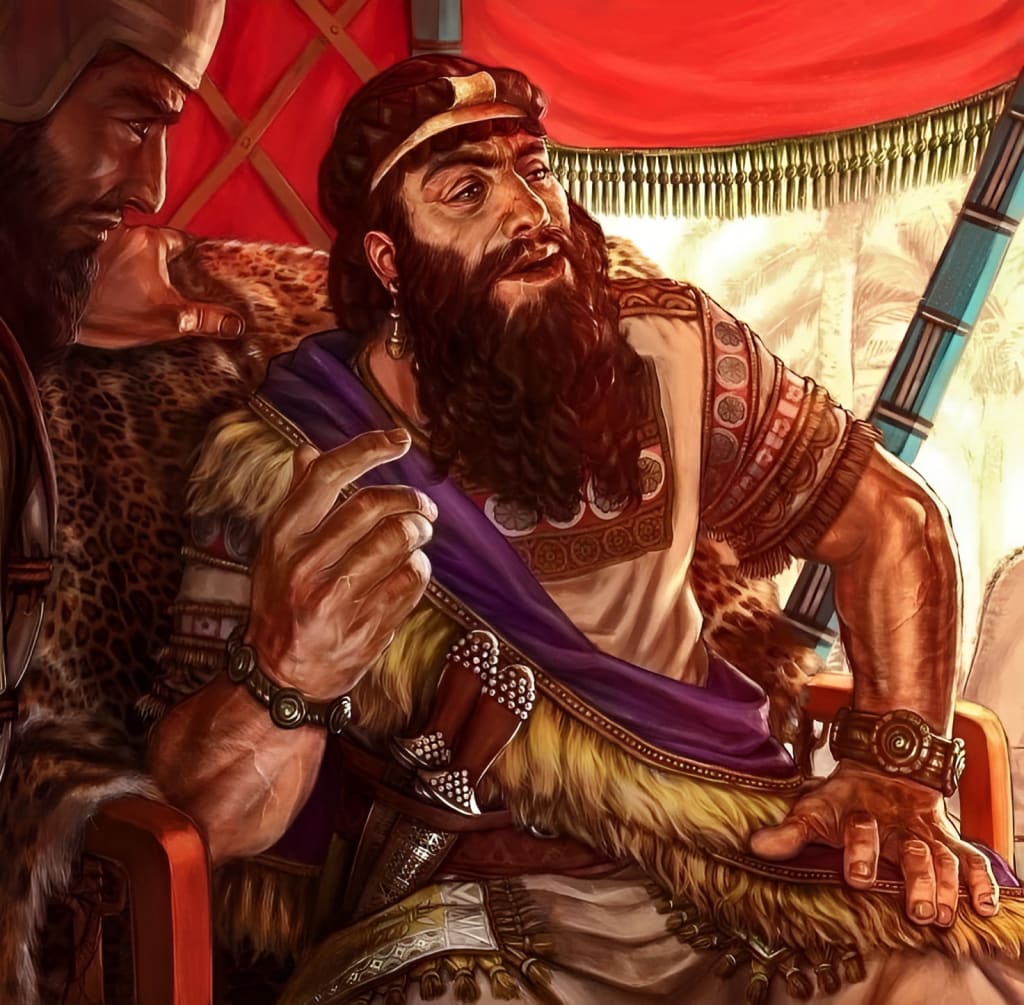
History often dazzles us with tales of grand achievements, larger-than-life figures, and pivotal moments that changed the world. Yet, with the help of archaeology, we also gain intimate glimpses into ancient societies and the extraordinary individuals who shaped them. One such figure is Sargon the Great, a man who lived over 4,300 years ago in the Mesopotamian region. Sargon’s story is nothing short of legendary—he was a simple man who rose to wield the powers of an emperor, becoming the first ruler to unify a vast, multinational empire.
In the 19th century, archaeologists uncovered a wealth of Mesopotamian artifacts, including a treasure trove of over 30,000 clay tablets from the ruins of Ashurbanipal's library. Among these artifacts, one stood out: the Legend of Sargon of Akkad. This text, dated to around the 7th century BCE, narrated the origins and life of Sargon in poetic detail.
According to this ancient autobiography, Sargon was born under humble circumstances. His mother, a temple priestess, gave birth to him in secret and set him adrift in a basket on the Euphrates River. Rescued by a water-drawer named Akki, Sargon grew up as a gardener, rising through the ranks of society to serve as the cupbearer of King Ur-Zababa of Kish.
Sargon’s ascent to power was not without drama. Facing suspicion and betrayal, he ultimately allied with a rival king, Lugalzagesi, only to later overthrow him in battle. Sargon’s victories were decisive, marking the beginning of his reign as the self-proclaimed “King of Kish” and, later, the first emperor of the Akkadian Empire.
Sargon’s empire was revolutionary in its scope and administration. He established a centralized bureaucracy, standardizing weights and measures to facilitate trade and taxation. He stationed trusted officials in conquered cities and even appointed his daughter, Enheduanna, as high priestess—a strategic move that blended religion and politics.
Enheduanna, now recognized as the world’s first known author, played a key role in legitimizing Sargon’s rule. Her hymns to the goddess Inanna celebrated her father’s divine favor, strengthening his image as a ruler chosen by the gods.
Under Sargon, the Akkadian Empire expanded far beyond Mesopotamia, encompassing territories from the Mediterranean to the Persian Gulf. His armies triumphed in 34 battles, and his control of trade routes ensured the flow of wealth and resources into his new capital, Akkad.
While Sargon’s achievements were monumental, his life was far from idyllic. Rebellions frequently erupted across his empire, forcing him to continually assert his dominance on the battlefield. Despite these challenges, his legacy endured for centuries.
For over 1,500 years after his death, Sargon was revered as a semi-sacred figure—a patron of kingship and empire-building. His story inspired generations, from the Babylonian kings who emulated his policies to the scribes who immortalized his deeds.
Interestingly, elements of Sargon’s legend, such as the tale of his basket-bound infancy, later appeared in the biblical story of Moses, underscoring his lasting influence on global storytelling traditions.
Sargon’s reign set the stage for the rise of future empires. He pioneered innovations in governance, military organization, and infrastructure, including the establishment of one of the world’s first postal systems. His administrative brilliance allowed him to maintain control over a diverse and sprawling empire, even as external pressures and internal strife threatened its stability.
In his later years, Sargon reflected on his tumultuous reign, reportedly lamenting the revolts he faced. Yet his resilience and vision ensured that his name would be remembered long after the fall of Akkad.
The Akkadian Empire eventually collapsed, likely due to a combination of invasions, climate change, and economic decline. But Sargon’s story survived, evolving into a powerful myth that resonated across the ancient world. Today, his life stands as a testament to human ambition and ingenuity—a story of how one man from humble beginnings forever changed the course of history.
Sargon the Great was not merely a ruler; he was a symbol of resilience, innovation, and the enduring power of a well-told story. From his humble origins as a gardener to his rise as the first emperor, his legacy continues to inspire awe and curiosity, reminding us that history’s greatest figures often begin their journeys in the most unexpected places.
About the Creator
A História
"Hi. My name is Wellington and I'm a passion for general history. Here, I publish articles on different periods and themes in history, from prehistory to the present day.
Keep reading
More stories from A História and writers in History and other communities.
The Terrifying Beast of Kenya
Deep in the shadowy woodlands and rolling savannas of Kenya lurks a creature that has haunted the nightmares of locals and intrigued cryptozoologists worldwide. Known as the Nandi Bear, this mysterious beast—a blend of legend and terror—has been whispered about for centuries, leaving behind chilling tales of its fearsome presence. Is it merely folklore, or does the Nandi Bear truly stalk the wilds of East Africa?
By A Históriaabout a year ago in History
The Defiant Sultan: Abdul Hamid II and His Refusal to Sell Palestine
In the late 19th century, as the Ottoman Empire struggled with political pressure and massive debt, one of its most controversial and powerful rulers, Abdul Hamid II, made a decision that would echo through history. Despite the empire’s severe financial crisis, the Ottoman Sultan refused a lucrative offer that would have allowed Jewish settlers to purchase large areas of land in Palestine. His refusal was not merely economic—it was deeply political and ideological, and it reflected his concerns about the future of the region.
By Irshad Abbasi 5 days ago in History
📢 Raise Your Voice Thread: 03/05/2026
Our “Raise Your Voice Threads” are hosted most alternating Thursdays at 12PM ET to offer creators more avenues to uncover exceptional stories on Vocal. As we are continuously searching for fresh creators and inspiring stories, this thread provides an opportunity to exchange and discuss the stories that have moved and motivated us on Vocal.
By Raise Your Voice by Vocal5 days ago in Resources




Comments
There are no comments for this story
Be the first to respond and start the conversation.