
Remembering the Nigerian Civil War: How Colonialism Sparked Separatism in the East
The Biafran Civil War

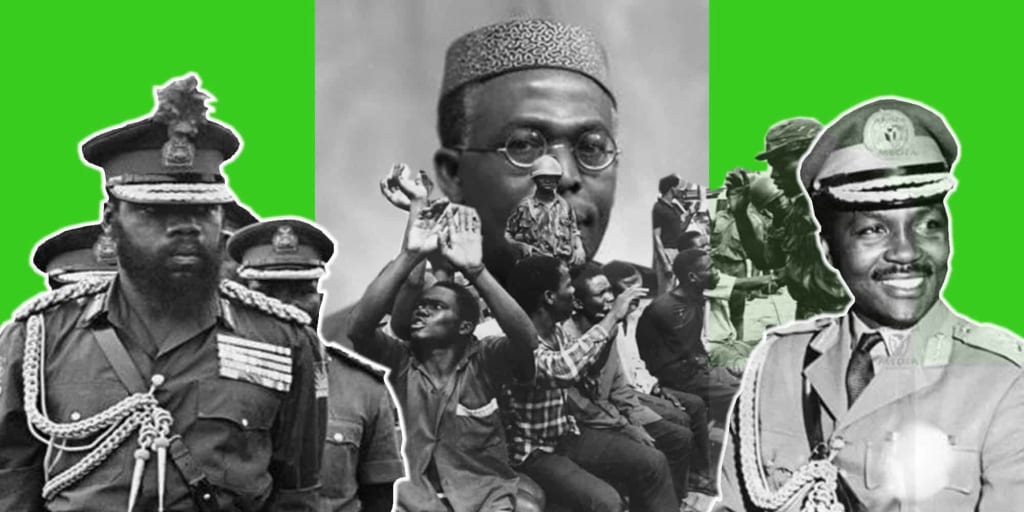
The Nigerian Civil War, which took place from 1967 to 1970, emerged as one of the most brutal conflicts of the 20th century. The struggle of the Igbo people living in the eastern part of the country for the right to live in their own state of Biafra cost them enormous losses: according to various estimates, the death toll ranged from 1 to 3 million people. The colonial history of the nation was a primary factor contributing to the conflict.
When drawing the borders, the former British capital did not take into account national, linguistic, cultural, and religious characteristics, as well as the interests of the local peoples. Nigeria gained independence from Britain in 1960.
With a population of 60 million, there were 250 different languages and dialects. The ethnic majority in the three administrative regions—North, East, and West—were, respectively, Hausa-Fulani Muslims (16 million people), Igbo Christians (10.3 million people), and Yoruba (11.7 million people), of whom 60% were Christians and 30% Muslims.
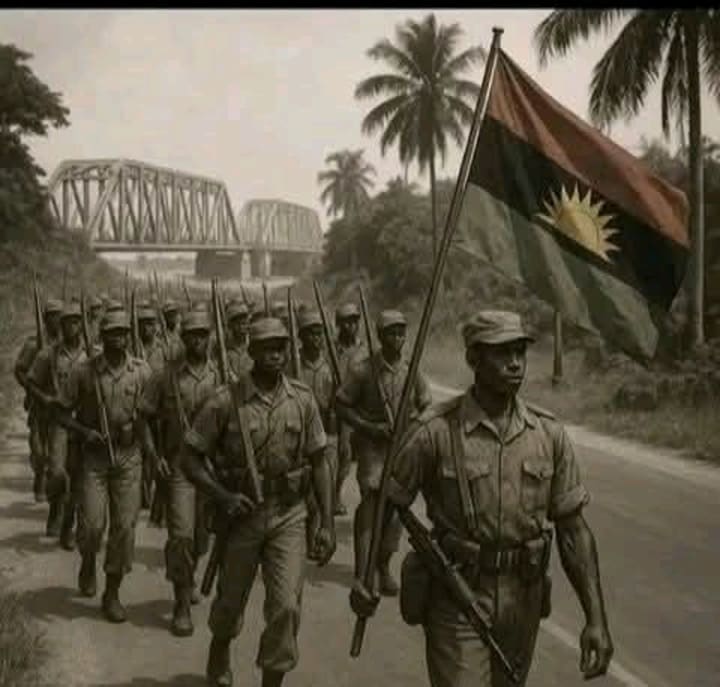
As in the case of other colonies, ethnic factors were not taken into account. The Igbo community resides in the southeastern region of Nigeria and represents the predominant ethnic group in that area of the nation. According to estimates by the U.S. Census Bureau, they currently number 15.5% of the population. They represent the predominant ethnic group in the eastern region of Nigeria.
Christians mostly speak Igbo dialects. Others retain traditional denominations. There is also a small Jewish community. Prior to British colonization, Igbo society was characterized by political fragmentation. Small groups of villages, governed by elders with the participation of the entire adult population, were independent political units.
By the middle of the 20th century, the Igbo had cultivated a robust sense of national identity, which resulted in a yearning for separatism.
Roots of Separatism
Nigeria's social, cultural, economic and political problems stem directly from its colonial past.
Different ethnic groups were united into a single state without regard for their interests. At the same time, Great Britain took no steps toward cultural convergence, which caused a number of contradictions upon gaining independence.
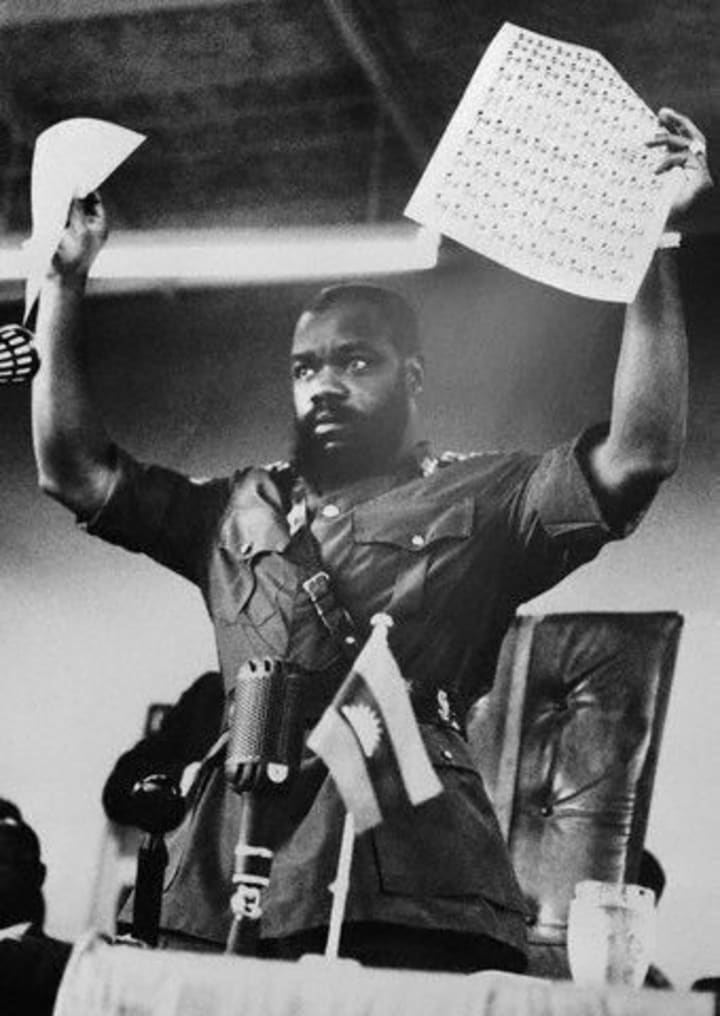
At the same time, the region in which Biafra was located was one of the wealthiest in Nigeria due to its oil resources. The economic disparity and the uneven allocation of wealth served as the foundation for the local population's aspiration for independence.
They felt they had to control their natural resources and use them to their advantage. Political imbalances also played a role in the conflict. Initially, Biafran leaders believed the South should have greater influence on federal structures and make more meaningful decisions for the country. However, they later decided to separate the region completely from the rest of Nigeria and establish their own state on their primary territory.
The Curse of Oil
Incidentally, despite the obvious importance of oil availability as a catalyst for secession, “black gold” did not play a significant role in escalating the Nigerian conflict. The civil war began in the mid-1960s, and the political institutions of the First Republic (1960–1966) proved their inability.
The initially shaky political system was undermined by territorial and ethnic claims.
The central government lost control of the internal political situation. As a result, on the night of January 15, 1966, a military coup led by Major Nzeogwu (an Igbo representative) took place.
A number of political leaders were assassinated, among them Prime Minister Abubakar Balewa and the premiers of the Western and Northern regions, Samuel Akintola and Ahmadu Bello. Within hours, the attempted seizure of power failed.
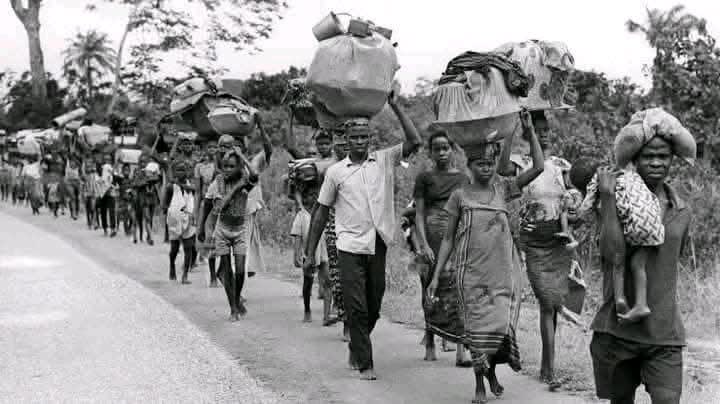
It turned out that the country's government was in the hands of another group of military men led by Major General Johnson Aguiyi-Ironsi (also Igbo).
A military regime was established in the country, which lasted until August 1, 1966.
The coup escalated political discontent in the north, where residents believed the Igbos had overthrown the government because it was headed by northern Hausas. Five months later, this perception was widely accepted and resulted in mass killings of Igbos in the northern part of the country.
A mass massacre of the Igbo people began in May 1966 in Kaduna. The massacre, which lasted for several days, spread to all towns in the region, but the government of Aguila Ironsi remained inactive.
During the subsequent military coup on July 29 and during the riots of August and September 1966, most of the junior Igbo officers and conscripts, along with thousands of civilians, were massacred. In July 1966, northerner Yakubu Gowon became Commander-in-Chief of the Nigerian Army and de facto head of state.
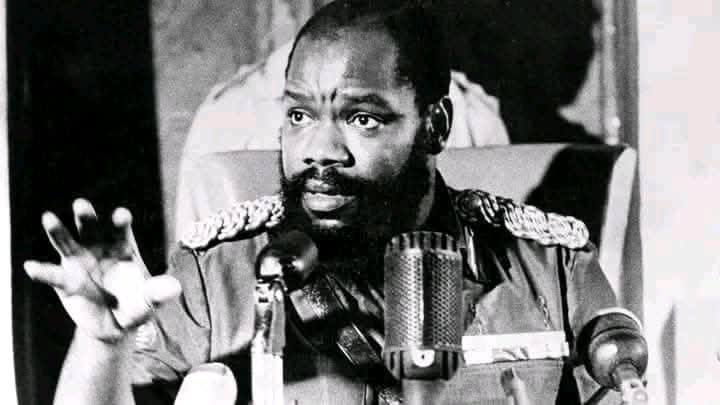
The military governor of the Eastern Region, Chukwuemeka Odumegwu-Ojukwu, for his part, expressed doubts about the viability of a united Nigerian state, raising questions about his region's existence as part of the federation. He also refused to recognize Gowon's authority as commander-in-chief of the armed forces.
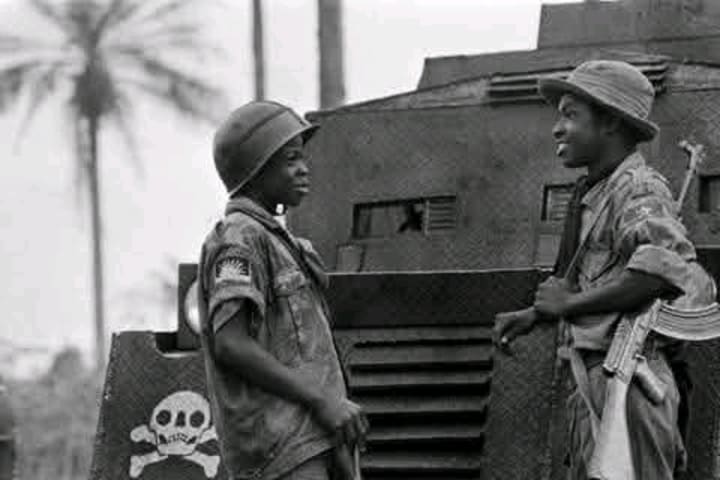
In September, at the initiative of the military government, a constitutional conference began, the purpose of which was to find an acceptable formula for preserving Nigeria's unity. However, nationalist sentiment continued to intensify, and in May 1967, Odumegwu-Ojukwu proclaimed the independent state of Biafra.
In response, the federal government issued a decree dividing the country into 12 states, most of which were represented by minority groups, who had been demanding the creation of separate states for them since 1950.
From the Eastern Region, East Central, South Eastern and Rivers States were allocated.
The small states supported the new administrative division and took up arms to preserve the union.
Internationalization of the Conflict
Both sides in the conflict made every effort to enlist the support of international players. Since mid-October 1968, military equipment and mercenaries from Western Europe had been arriving at the airport in Uli.
It is noteworthy that most of the Biafran military supplies were provided with unofficial French assistance, justified by Paris's economic interests. The Fifth Republic aimed to weaken Nigeria, which was loyal to Britain.
If the Biafrans won, French mining companies would gain preferential access to the local oil production market. This support allowed the separatists to launch a counterattack in the Onitsha region and reach Owerri.
At the end of October 1, Biafran forces rushed to the southeastern city of Abiy. However, uncoordinated attempts at offensive operations in certain areas achieved only temporary success.
At the same time, the Nigerian Civil War provided South Africa and Rhodesia (modern Zimbabwe) with the opportunity to help dismember the country by siding with a secessionist group. They backed Biafra and offered clandestine military support.
By helping to ignite a civil war in Africa's most populous and perhaps most powerful country, these white supremacist governments undermined African unity and weakened African liberation movements.
Côte D'Ivoire, Gabon, Tanzania and Zambia are four of the African countries that gave their recognition of Biafra as a sovereign state. Zambia claimed they did so for humanitarian reasons. Conversely, Gabon and Côte d'Ivoire's decisions resulted from pressure from the French government, which openly supported the Biafran regime.
The Biafra crisis resulted in the formation of new international alliances. Both Britain and the Soviet Union provided joint support to the federal government of Nigeria, which was engaged in combat against secessionists. The Soviet Union refused to recognize Biafra and provided crucial assistance to the military administration in Gowon. Already in the first weeks of the war, Nigeria received from Moscow 15 transport aircraft, 6 fighter jets, other military equipment, and approximately 170 Soviet maintenance specialists.
Egypt also provided significant support to the Nigerian government, and the majority of member states of the Organization of African Unity aligned themselves with it.
For the Arab states, this was an act of solidarity with the Islamic government in the north. China extended assistance to Biafra as a result of the Sino-Soviet tensions during that period. Chinese military supplies passed through Tanzania.
Foreign intervention in the civil war prolonged it. The Biafran side expected ever-increasing recognition and military assistance, but they never came.
Results of the War
Despite the assistance of mercenaries from France, Germany, South Africa, and Sweden, the military campaigns of 1968 demonstrated the superiority of federal forces. The strategic initiative was completely transferred to the central government.
Federal forces have consistently captured the political, economic, and transportation centers of eastern Nigeria, cutting off the insurgents' communications and depriving them of freedom of maneuver.
Military operations came to an end on January 12, 1970, leading to the complete defeat of the secessionist forces and the disbandment of Biafra. Odumegwu-Ojukwu escaped to Côte D'Ivoire, while the other officers capitulated to the federal army.
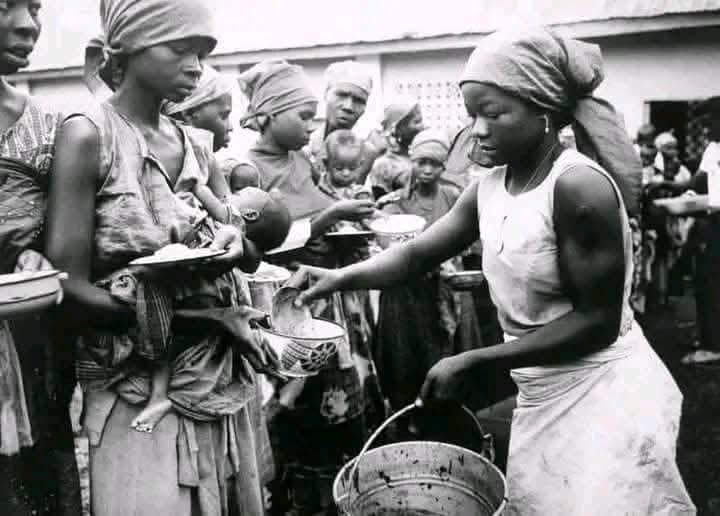
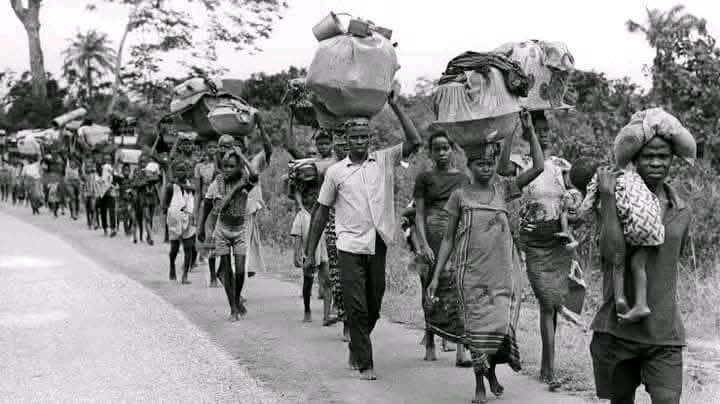
According to various estimates, the number of war victims, who died mainly from starvation and disease, ranged from 1 to 3 million people. More than 3 million refugees and indigenous peoples were resettled in the eastern region. This created an overpopulation crisis, which triggered famine, which remained a problem in the region for several years after the hostilities. Nigeria's economy suffered, particularly in the eastern region.
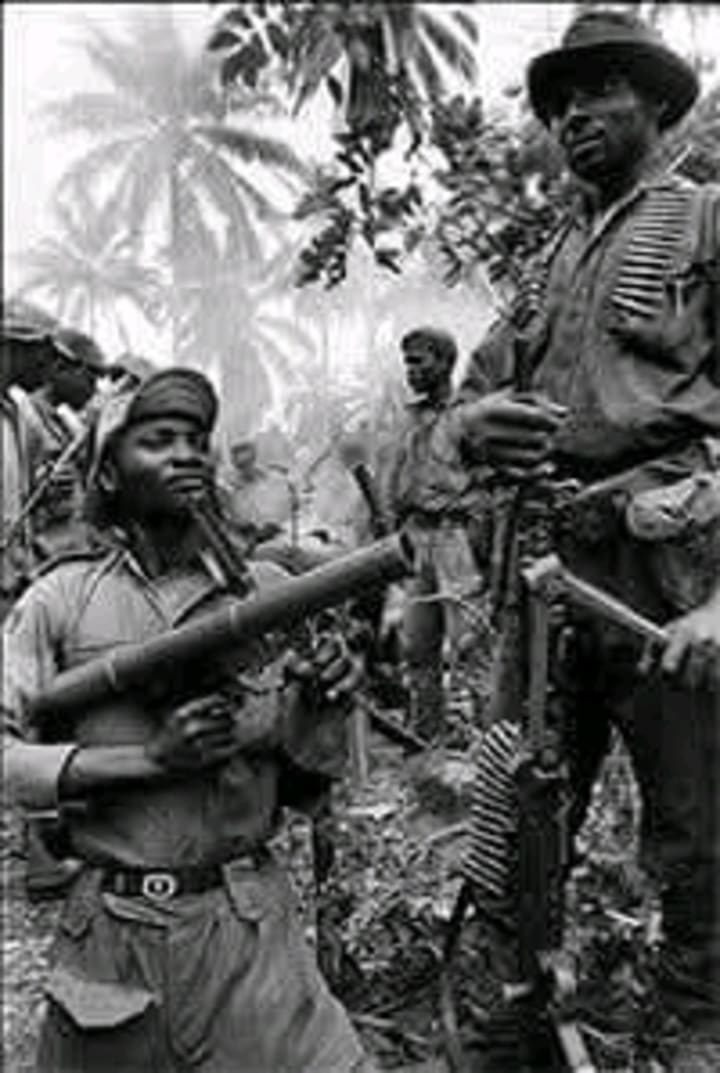
The federal government's victory ended the political turmoil of 1960, but the war left an indelible mark on Nigeria's history. It largely predetermined the relative instability of its future political development.
Today, ethnic and religious characteristics continue to play a role in the country's political life and influence the stability of the northern and southern states. The wealthier south has proven closer to Western values, while the north has traditional values. Moreover, Britain continues to exert significant influence on the country, causing additional tension in society: the local elite is strongly integrated into the Western world and does not protect the interests of the country's ethnic diversity. Nevertheless, there is still a perception in Nigerian society that "Muslims will more easily resolve any long-standing sectarian conflict in the north."
About the Creator
Keep reading
More stories from Uchenna Cosmas Nwokafor and writers in History and other communities.
Who Are The Igbo People?
Marks and figurines of the Igbo people is a lofty course of study if you want to identify the uniqueness of this distinct set of tribe whose origin is traced back to the tropical rainforest of a country in Western Africa. But the purpose of this task is to give a brief summary of who these people are over time.
By Uchenna Cosmas Nwokafor 8 months ago in History
3 Real People Who Accidentally Became Myths
History has a strange habit of refusing to leave certain people alone. Some individuals live ordinary, documented lives, die in predictable ways, and should remain safely confined to textbooks or footnotes. Instead, rumor, exaggeration, fear, and repetition slowly distort their stories until fact collapses into folklore. Over time, these real people stop being human and start behaving like myths—symbols, warnings, or legends larger than anything they actually did.
By Enoch Sagini4 days ago in History
Silver Screen Magic with Mae West
American actress and singer Mae West became a popular film actress during the Great Depression. She started entertaining in vaudeville, then performed on Broadway, and finally went to Hollywood. She signed up with Paramount Pictures and made her debut in the 1932 film “Night After Night.” She also starred in musicals, comedies, and crime dramas. The American Film Institute named her one of the best classic Hollywood actresses.
By Rasma Raisters4 days ago in Geeks


Comments (2)
The Nigeria/Biafra civil war always brings memories that hurt. It hit both sides so hard, especially the later. Sadly, non much change ensued afterwards, the lines of divide are still existent and thick. We are still hopeful.
The Nigerian Civil War was a tragic event. It's crazy how the colonial borders ignored so much. Like you said, with all those different ethnic groups and languages, it was bound to cause issues. It makes me wonder how things could've been different if they'd considered these factors when drawing the lines. Do you think there are any modern-day lessons we can learn from this? It's also sad to think about the huge loss of life. A million to three million people is just mind-blowing. I can't imagine what that must've been like for the families involved. How do you think we can honor the memory of those who died in this conflict?