
Who Are The Igbo People?
Igbo Speaking People of Nigeria

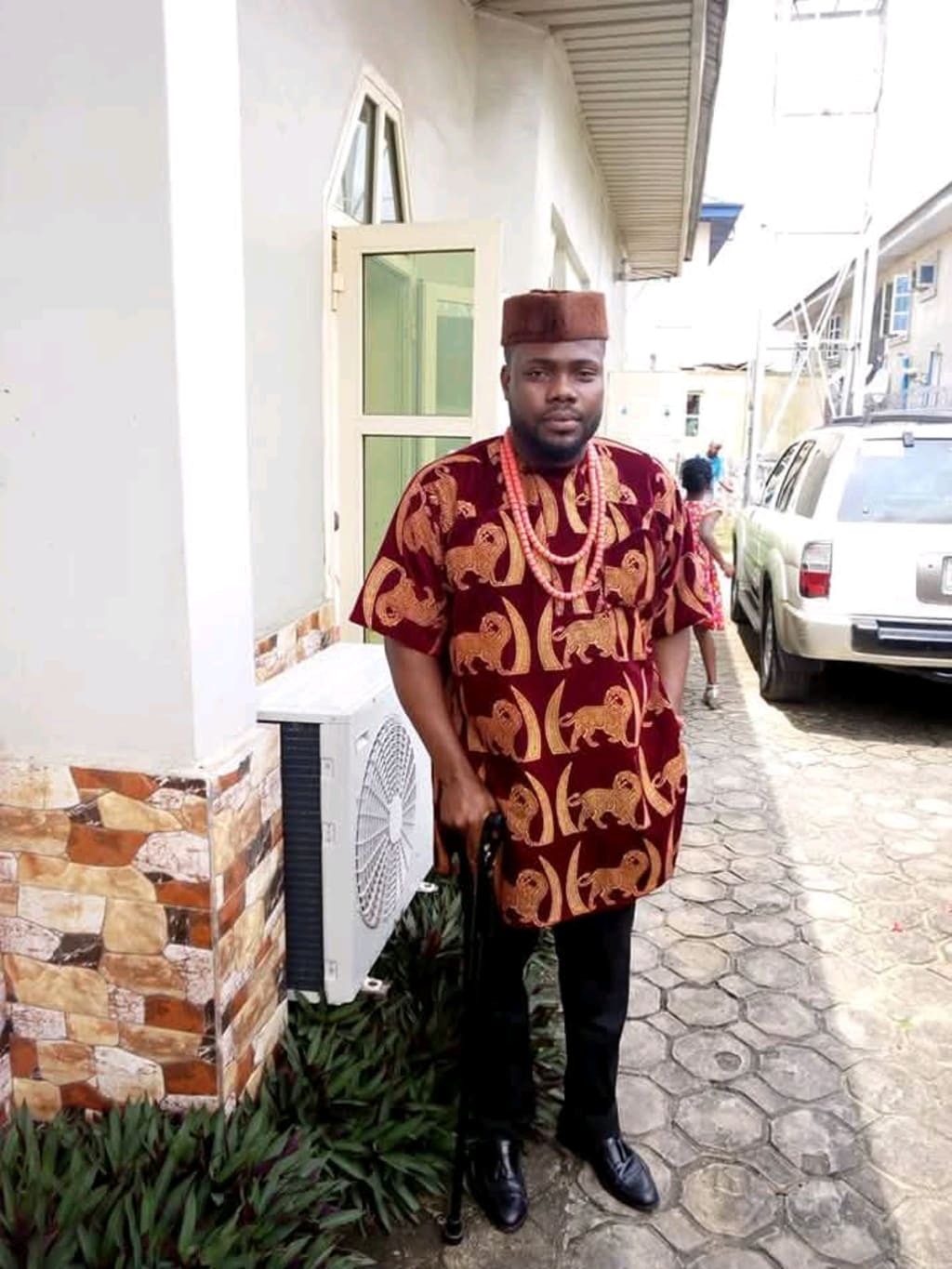
Marks and figurines of the Igbo people is a lofty course of study if you want to identify the uniqueness of this distinct set of tribe whose origin is traced back to the tropical rainforest of a country in Western Africa. But the purpose of this task is to give a brief summary of who these people are over time.
Who are They and Where Can They be Found?
Igbo (or Ibo - forest dwellers) as an ethnic identity is a relatively recent development as most distant or arm-chair researchers concludes. This assertion holds sway within that circuit based on the premise that from historical deduction, Igbo-speaking societies in their various forms, shows how decentralized and fragmented they hitherto are. Some experts believe that Igbo identity lies between "tribe" and "country". Since the defeat of the Republic of Biafra in the 1970 struggle for independence, the Igbo have sometimes been referred to as a "nation without a state".
Population statistics avails that about thirty (30) million Igbo natives live in the southeastern divide of Nigeria which is the territory known today as Igboland.
Struggles and Survival
In 1967, after a coup d'etat in Nigeria and the military coming to power, an independent Republic of Biafra was proclaimed in the eastern part of Nigeria. The leader of the separatists was Nigerian Army General, Chukwuemeka Odumegwu Ojukwu.
The Republic of Biafra was defeated in 1970 after three years of war by the Federal Government of Nigeria with military support from Great Britain (strategy and ammunition), the Soviet Union (ammunition), the United Arab Emirates, and other countries. The consequences of the Nigerian Civil War were starvation among the Biafran civilian population and a humanitarian catastrophe in the region. Though this conflict was finally pinned as a war of genocide by most scholars, the Igbo people managed to survive after surrendering in February, 1970.
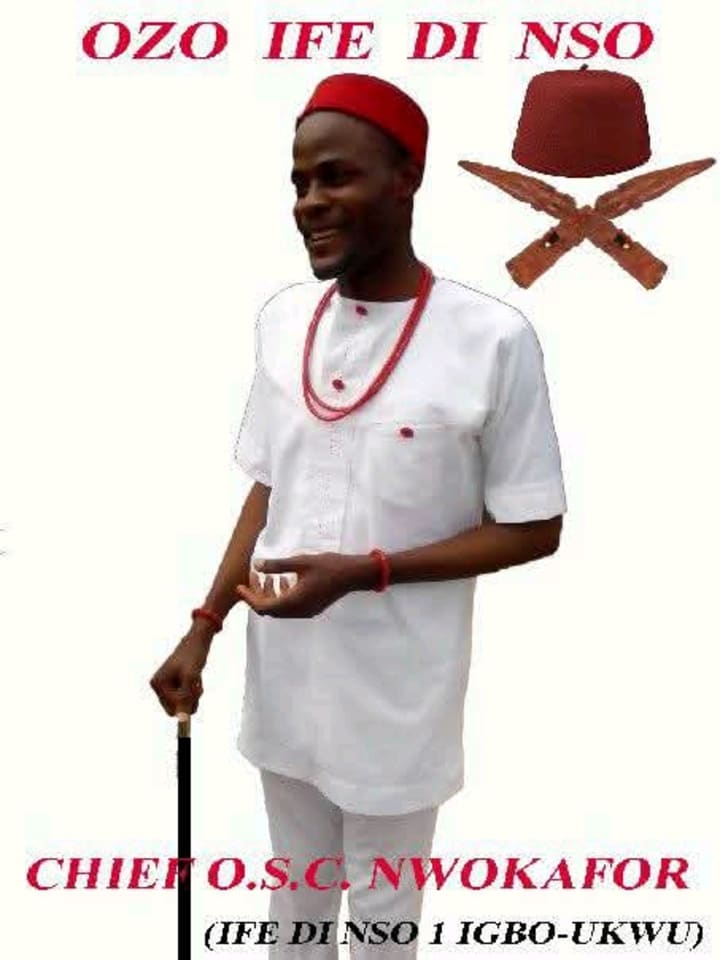
Beliefs and Religion
As a result of the active efforts of European missionaries, the Igbo formally became Christians, but pagan practices are still used in their societies.
Chukwu is the supreme god of the Igbo religion. In the Igbo pantheon, Chukwu is the source of all other Igbo gods and is responsible for assigning them their various tasks. The Igbo hold the belief that all things originate from Chukwu, who is responsible for generating the rains essential for plant growth and governs all aspects of the earthly and spiritual realms. They regard Chukwu as possessing infinite power, being beyond definition, and as the ultimate deity, embodying all that exists in both space and the cosmos.
Linguistic studies suggest that the term "Chukwu" or "Chi-ukwu" is derived from the Igbo words "Chi" (which means "spiritual being") and "Ukwu" (translating to "large in size").
It is believed that the universe is segmented into four intricate components: creation, referred to as Okike; supernatural entities or deities, known as Alusi; Mmuo, representing spirits; and Uwa - the world.
Every person is born with a spiritual guide (guardian angel) or guardian, a "Chi", unique to each person, and a person's destiny is determined by their "Chi". Thus, the Igbo say that brothers and sisters may come from the same mother, but no two people have the same "Chi".
The Igbo Traditionally Believe in Reincarnation
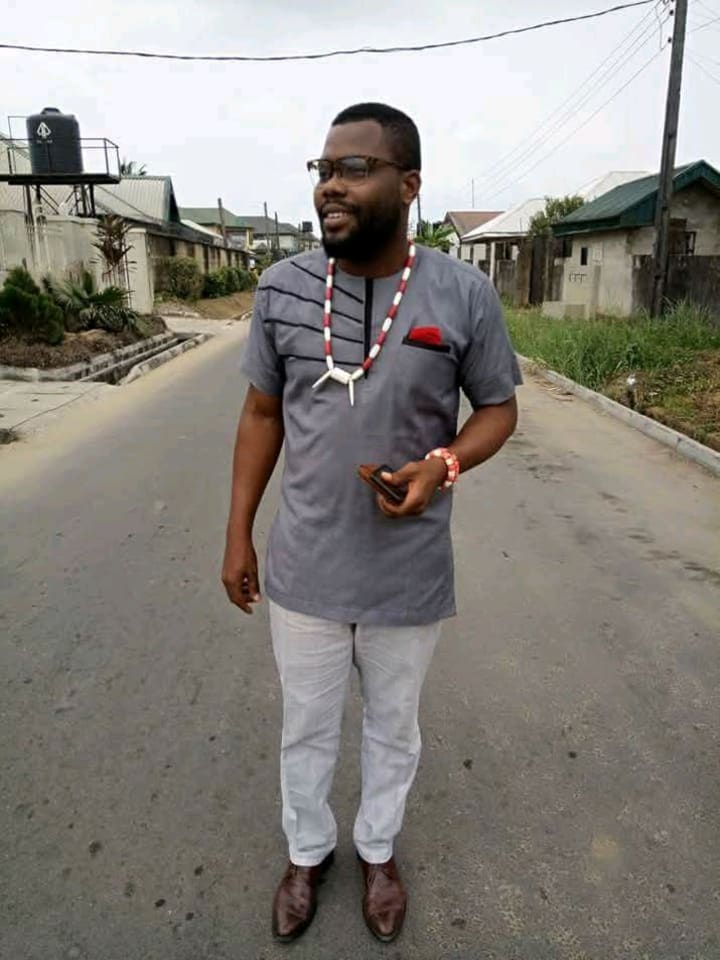
After death, the body of a prominent member of society is placed on a stool in a sitting position and dressed in the finest clothes. There are different types of burial ceremonies which is as a result of the differences in types of deaths. This is determined by the person's age, sex, and status in society. For example, children are hidden in a shelter and out of sight; their burials usually take place in the early mornings and late at night. A singe, uninhabited person is buried in front of his house, and a single mother is buried in her place of origin: in the garden or on the farm belonging to her father.
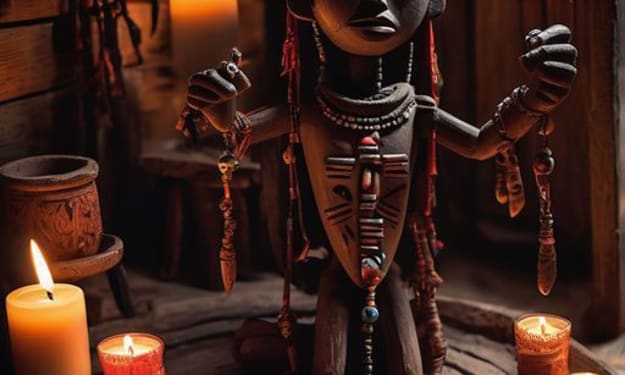
The masks and sculptures of the Igbo people have a distinct style and are easily recognizable.
Sources:
https://en.wikipedia.org/wiki/Chukwu
https://en.wikipedia.org/wiki/Igbo_people
About the Creator
Keep reading
More stories from Uchenna Cosmas Nwokafor and writers in History and other communities.
Visit a Voodoo Village in Ghana
Speaking of voodoo, the images that come to mind are probably voodoo frogs and scary witchcraft. But is voodoo really as scary as we imagine? I was lucky enough to visit the voodoo wizard in the photo when I was traveling in Ghana, introduced by a friend.
By Uchenna Cosmas Nwokafor 7 months ago in History
Alexander the Great’s Looted Wealth from India: A Historical and Economic Estimation
While his campaigns reshaped the ancient world politically and culturally, one of their most lasting impacts was the massive wealth he acquired from conquered territories, especially during his Indian campaign. This article explores the historical context, nature of the wealth looted from India, and an estimated net worth of that treasure in modern terms—revealing the truly staggering value of what came into Alexander’s hands.
By Say the truth 7 days ago in History
The Rise and Fall of Nicolae Ceaușescu
Nicolae Ceaușescu’s rise to power was initially marked by promise, even optimism. Born in 1918 into a poor peasant family, he entered politics early, shaped by the ideological rigidity of interwar and wartime communism. When he became General Secretary of the Romanian Communist Party in 1965, following the death of Gheorghe Gheorghiu-Dej, many Romanians saw in him a younger leader, one who might soften the harsh Stalinist legacy that had defined the previous decades. For a society weary of repression and deprivation, Ceaușescu appeared to embody the possibility of cautious change.
By Pure child2 days ago in History

Comments (2)
The Igbo heritage and culture have given them a unique and peculiar space.
Fascinating stuff about the Igbo people. It's crazy to think about that Biafra struggle. I wonder how different things would be if they'd won. Also, it's interesting how their identity is kind of in between tribe and country. And those population stats show they've got a big presence in southeastern Nigeria. What do you think their future holds based on all this history?