
Questions in the Bible
The Bible has about 3,300 questions.


There are roughly 3,300 questions in the Bible, from God’s first question, “Where are you?” in Genesis, to the final questions in Revelation.
Here is an approximate breakdown based on English translations:
- Old Testament: about 2,200 questions
- New Testament: about 1,100 questions
These include rhetorical questions, direct inquiries, and poetic laments. The Book of Job alone contains nearly 300 questions, many of them from Job to God—and finally, from God to Job.
Counting the Questions
Scholars estimate that the Bible contains between 3,000 and 3,300 questions. Exact numbers vary because punctuation was added long after the original texts were written. Hebrew and Greek manuscripts did not use modern question marks. Therefore, modern translators had to decide where questions begin and end, so numbers differ across versions.
The Power of Questions in Scripture
When God asks Job, “Where were you when I laid the foundation of the earth?” (Job 38:4), it reminds readers that divine questions are not designed to humiliate but to humble. They remind us of our place in creation and God’s vast wisdom.
The Bible is not a book of easy answers. It is a book full of questions that probe the heart and shape faith. Some are asked by God, others by prophets, disciples, and even skeptics. Those questions create conversations that we might also have.
The first recorded words of God to humanity come in the form of a question: “Where are you?” (Genesis 3:9). It is not that God did not know Adam’s location, but that God was inviting honesty, reflection, and return. That pattern continues throughout the Bible. God’s questions are less about information and more about transformation.
Questions Jesus Asked
Of the roughly 1,100 questions in the New Testament, around 300 are attributed to Jesus, who was a master of asking questions. He used them not to trap or confuse, but to awaken faith. Each question drew listeners deeper into self-examination and relationship.
Jesus asked far more questions than He directly answered, suggesting that faith grows through dialogue, not mere definition.
Some of Jesus’ most memorable questions include:
- “Who do you say that I am?” (Matthew 16:15)
- “Why are you afraid, you of little faith?” (Matthew 8:26)
- “Do you want to be made well?” (John 5:6)
- “What are you looking for?” (John 1:38)
- “Do you love me?” (John 21:17)
Those questions reveal that Jesus did not simply tell people what to think. He invited them to engage, respond, and grow. His teaching method was relational. By asking questions, He drew hearts near.
The Purpose of Biblical Questions
There are many questions in the Bible because questions are how God forms conversation. Questions often appear at turning points—moments of failure, revelation, or decision.
- God’s questions expose truth (“Where are you?”)
- Jesus’ questions invite discipleship (“Do you love me?”)
- Humanity’s questions express longing (“How long, O Lord?”)
When we wrestle with biblical questions, we are seeking to understand, trust, and be transformed.
Holy Curiosity
In our own lives, faith grows through holy curiosity. Asking questions does not weaken belief. It strengthens it. The Bible never scolds us for asking. Instead, it welcomes honest inquiry that leads to encounter and transformation.
Author's Note
The first question in the Bible is God's question to Adam in Genesis 3:9: “Where are you?” My holy curiosity caused me to search the scriptures and write a book about places in the Bible based on those three words.
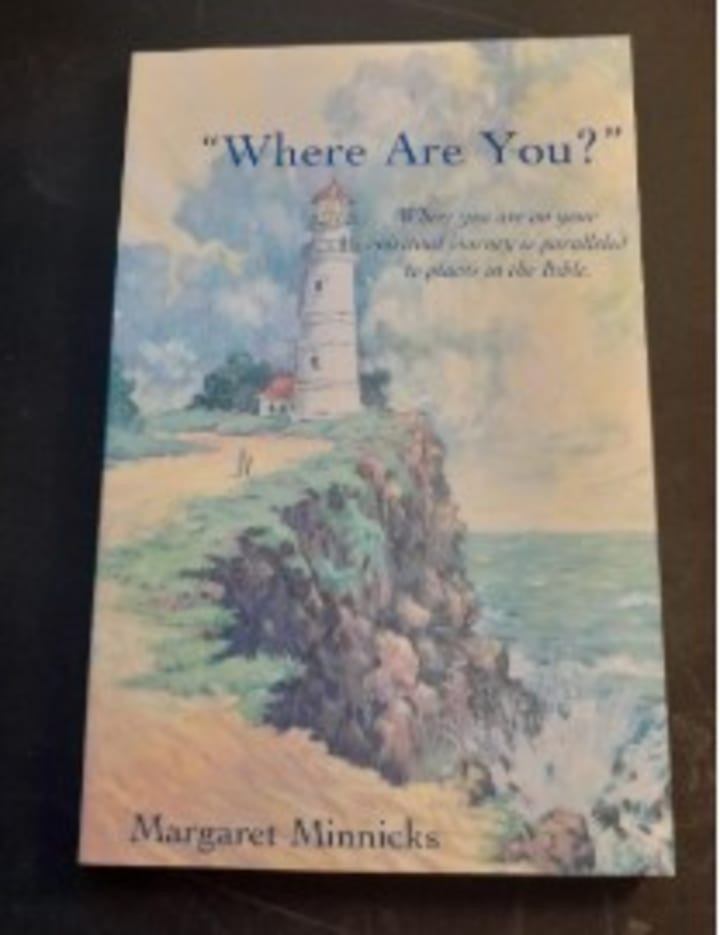
Throughout my 116-page book, I recorded every place in the Bible: cities, towns, mountains, valleys, roads, fields, gardens, rivers, houses, temples, and gave a life application for being in those places.
Excerpt from the book that is based on one question
It is no accident that the very first question God asks in the Bible is not “Who are you?” or “How are you?” but “Where are you?” (Genesis 3:9).
God knew that Adam was in the physical space He had put him in. God was concerned about Adam’s condition. In other words, when God asked Adam, “Where are you?” God was giving Adam an opportunity to confess what he had done. It was a question that would provoke conviction for Adam to confess his sin. God was not asking Adam where he was positionally. He was asking Adam where he was conditionally.
About the Creator
Margaret Minnicks
Margaret Minnicks has a bachelor's degree in English. She is an ordained minister with two master's degrees in theology and Christian education. She has been an online writer for over 15 years. Thanks for reading and sending TIPS her way.
Keep reading
More stories from Margaret Minnicks and writers in History and other communities.
'Black Don't Crack' Meaning
“Black don’t crack” is an African American cultural expression that celebrates how many Black people tend to age very well, often maintaining youthful-looking skin as they get older. This idiom implies that older dark people's skin is still smooth and free of wrinkles.
By Margaret Minnicks13 days ago in History
Frozen Ground
Silence meant the guns were cooling. It meant men were waiting. It meant something was about to break. We were dug in along a frozen stretch of road near the Imjin River, the kind of place that didn’t look important until history decided otherwise. The cold wasn’t just uncomfortable—it was personal. It crept into your boots, your bones, your thoughts. At night, I dreamed of heat: radiators, kitchens, the smell of coffee. I woke up with frost on my helmet.
By Gaofeng Wangabout 4 hours ago in History
Statue of Liberty: America’s Timeless Symbol of Freedom
The Statue of Liberty is one of the most iconic landmarks in the United States and a powerful symbol of freedom, democracy, and hope. Located on Liberty Island in New York Harbor, the statue has welcomed millions of immigrants and visitors since the late nineteenth century. Officially titled Liberty Enlightening the World, it represents the ideals upon which the United States was founded and continues to inspire people across the globe.
By Mukhtiar Ahmada day ago in History


Comments
There are no comments for this story
Be the first to respond and start the conversation.