
Statue of Liberty: America’s Timeless Symbol of Freedom
A powerful monument representing freedom, democracy, hope, and opportunity worldwide
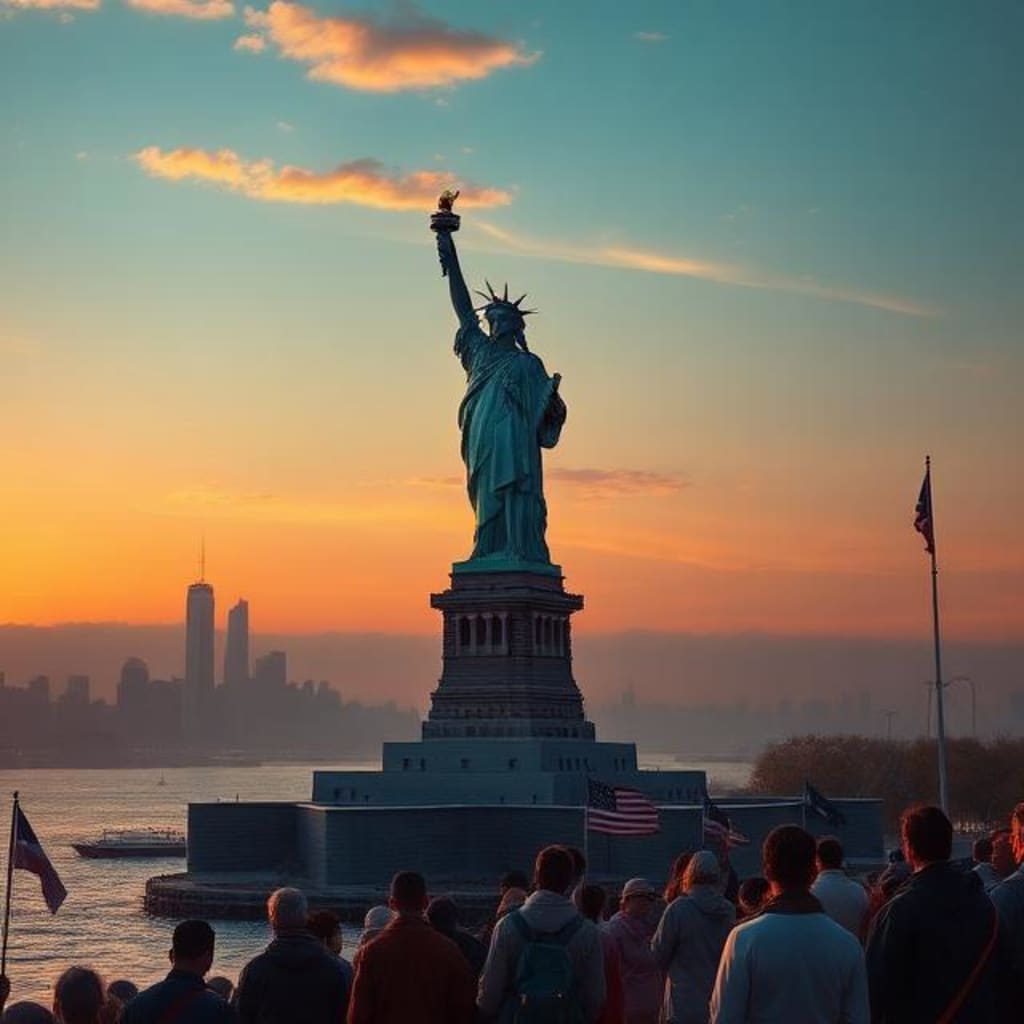
The Statue of Liberty is one of the most iconic landmarks in the United States and a powerful symbol of freedom, democracy, and hope. Located on Liberty Island in New York Harbor, the statue has welcomed millions of immigrants and visitors since the late nineteenth century. Officially titled Liberty Enlightening the World, it represents the ideals upon which the United States was founded and continues to inspire people across the globe.
The Statue of Liberty was a gift from the people of France to the United States as a gesture of friendship and to commemorate the centennial of American independence. The idea was proposed by French historian and political thinker Édouard René de Laboulaye in 1865, who admired the American system of liberty and democracy. French sculptor Frédéric Auguste Bartholdi was commissioned to design the statue, while the internal iron framework was engineered by Gustave Eiffel, who later became famous for designing the Eiffel Tower in Paris.
Construction of the statue began in France in the early 1870s. The statue was built in sections using thin sheets of copper shaped by a technique known as repoussé, in which metal is hammered from the reverse side to create detailed forms. Once completed, the statue stood over 151 feet tall from base to torch, and when placed on its pedestal, it reached a total height of approximately 305 feet. In 1885, the statue was dismantled into more than 300 pieces and shipped across the Atlantic Ocean to New York Harbor.
The pedestal for the Statue of Liberty was constructed on Bedloe’s Island (now known as Liberty Island) and funded largely through donations from the American public. Newspaper publisher Joseph Pulitzer played a key role in raising funds by appealing to ordinary citizens. The statue was officially unveiled on October 28, 1886, during a grand ceremony attended by President Grover Cleveland. From that moment, it became a defining symbol of the nation.
The statue depicts a robed female figure representing Libertas, the Roman goddess of liberty. In her right hand, she holds a torch symbolizing enlightenment and the light of freedom. In her left hand, she carries a tablet inscribed with the date July 4, 1776, written in Roman numerals, marking the adoption of the Declaration of Independence. At her feet lie broken chains, representing the end of oppression and tyranny.
One of the most powerful aspects of the Statue of Liberty is its connection to immigration. From 1892 to 1954, millions of immigrants arriving in the United States by sea passed through Ellis Island, located nearby. For many of them, the statue was the first sight of their new homeland. It came to symbolize hope, opportunity, and a fresh start. This meaning was further reinforced by Emma Lazarus’s famous poem The New Colossus, which includes the well-known lines: “Give me your tired, your poor, your huddled masses yearning to breathe free.”
Over the years, the Statue of Liberty has undergone several restorations to preserve its structure and appearance. One major restoration took place in the 1980s in preparation for its centennial celebration in 1986. During this project, the original torch was replaced, internal supports were strengthened, and modern lighting systems were installed. The statue’s green color, known as patina, developed naturally over time as the copper reacted with air and moisture, protecting it from further corrosion.
Today, the Statue of Liberty is managed by the National Park Service and is one of the most visited monuments in the United States. Visitors can explore the museum on Liberty Island, learn about the statue’s history, and even climb to the crown for a panoramic view of New York Harbor. The statue continues to serve as a reminder of the values of liberty, justice, and human rights.
In conclusion, the Statue of Liberty is far more than a monumental sculpture; it is a universal symbol of freedom and hope. From its origins as a gift of friendship between nations to its role as a beacon for immigrants, the statue has played a profound role in American history. Its enduring message remains relevant today, reminding people around the world of the importance of freedom, equality, and democracy.
About the Creator
Keep reading
More stories from Mukhtiar Ahmad and writers in History and other communities.
The Drums of Freedom’s Endless Echo
“The Drums of Freedom” The waves of the Atlantic shimmered gold under the morning sun, but for those chained beneath the deck of the Mercy’s Cross, it was a sea of sorrow. The year was 1787, and the slave trade between West Africa and the Americas was at its height. The ship creaked under the weight of despair, its wooden hull soaked with tears and salt.
By Mukhtiar Ahmad5 months ago in History
The Years 1870 to 1879 Unveiled: Intriguing Facts and Landmark Events
This quick read is a collection of fun facts, trivia, and historical events from the years 1870 to 1879. Discover the decade’s top news stories, most influential people, notable inventions, historic firsts, retail prices, and much more.
By Gregory DeVictor3 days ago in History


Comments
There are no comments for this story
Be the first to respond and start the conversation.