
Pelagius of Asturias
The Warrior King Who Sparked the Reconquista

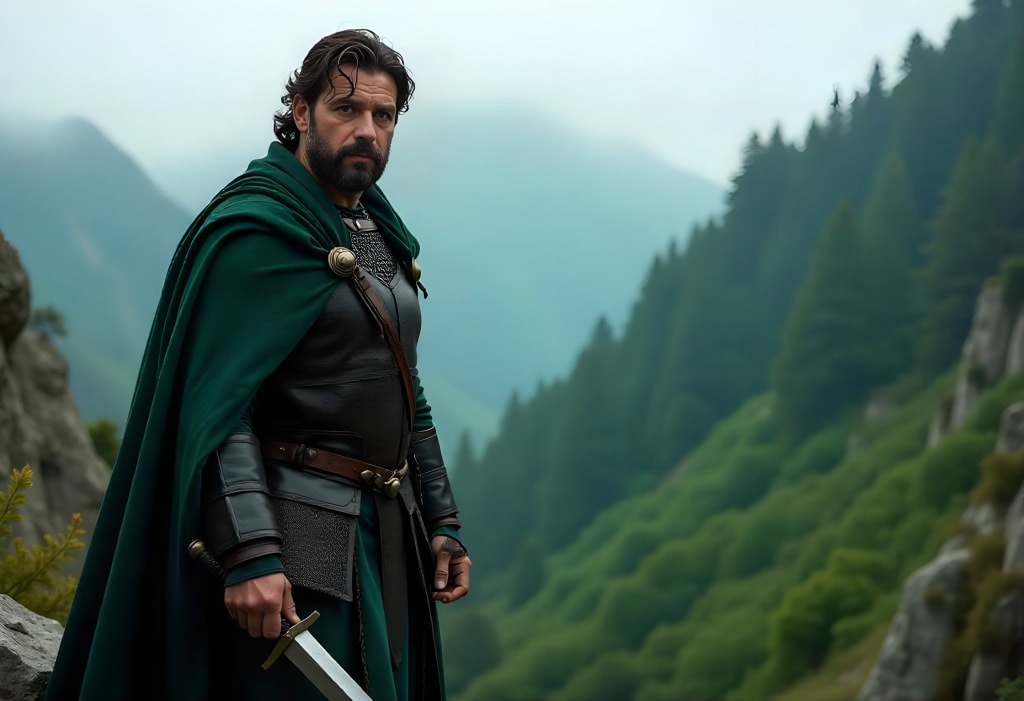
The narrative of Spain is characterized by extraordinary accounts of perseverance, leadership, and endurance. Among its initial heroes was Pelagius of Asturias, referred to as Pelayo in Spanish. Despite his humble origins, he rose to prominence as a revered king and emblem of defiance against the Moorish invasion of the Iberian Peninsula. The significance of Pelagius' tale lies in its initiation of the lengthy Reconquista, a Christian effort to reclaim territories governed by Muslim authority.
Pelagius is believed to have been born circa 685 AD, although much of his early life remains largely undocumented. He hailed from a Visigothic lineage, a group that had previously governed Spain prior to the swift Muslim invasion of the area in 711 AD. Historical records suggest that he may have held a position as a nobleman or a minor official within the Visigothic court. His heritage linked him to the ancient Christian tradition, which likely inspired his determination to oppose the growing power of the Umayyad Caliphate in the Iberian Peninsula.
As Muslim forces advanced across the region, the Visigothic kingdom, already weakened by internal conflicts, found itself unable to mount a defense. Many nobles chose to flee or align themselves with the new Muslim rulers. In contrast, Pelagius opted for a different course of action. He rejected the notion of submission and returned to his native Asturias, a rugged and mountainous area in the north. This terrain would later play a significant role in his subsequent military successes.
The pivotal moment in Pelagius' life—and in the broader context of Spanish history—occurred during the Battle of Covadonga in 722 AD. As the narrative goes, Pelagius united a small group of Christian Asturians along with some discontented local tribes to confront the advancing Muslim forces. Despite being significantly outnumbered, Pelagius demonstrated remarkable leadership and determination, effectively utilizing the mountainous landscape to their benefit.
This battle transcended mere military engagement; it emerged as a powerful symbol. Following a vigorous clash, the Muslim forces, caught off guard by the guerrilla strategies employed by Pelagius' troops, were compelled to withdraw. This triumph proved crucial for the emerging Christian resistance and, over time, became enshrined in legend as a miraculous turning point in the effort to reclaim Christian Iberia. Covadonga is frequently regarded as the inception of the Reconquista, despite the fact that it would take nearly eight centuries for Christians to completely regain control of the peninsula.
Following his triumph at Covadonga, Pelagius founded the Kingdom of Asturias, taking on the role of its inaugural king. Although initially small and vulnerable, his realm served as a refuge for Christian exiles and a focal point for those opposing Muslim domination. The foundation of Pelagius' kingdom was not built upon vast resources or military strength, but rather on the aspiration that Muslim forces could be challenged and that a Christian state could endure in the northern regions.
Over time, the Kingdom of Asturias began to cultivate a unique identity and an early sense of national awareness. Pelagius and his heirs utilized Asturias as a strategic location to conduct minor skirmishes and raids against territories under Muslim control. Despite its modest beginnings, his dynasty persisted for several generations, leaving behind a legacy of resistance that intensified with each passing era.
Today, Pelagius is celebrated as a hero and a symbol of Spanish resilience. His name and image can be found throughout Asturias, and Covadonga remains a place of pilgrimage for those who honor Spain’s Christian heritage. His leadership marked the beginning of the Reconquista, which ultimately culminated in the 15th century with the unification of Spain under the Catholic Monarchs Ferdinand and Isabella and the final defeat of the Muslim kingdom of Granada in 1492.
However, some historians view Pelagius' legacy through a more nuanced lens. The exact details of his life and the Battle of Covadonga remain shrouded in myth and legend, making it difficult to separate historical fact from nationalistic embellishment. Some question the scale of the battle or the accuracy of his portrayal as a king, considering him more a chieftain than a monarch. Yet, irrespective of the embellishments, Pelagius' impact on Spanish history remains undeniable.
About the Creator
A História
"Hi. My name is Wellington and I'm a passion for general history. Here, I publish articles on different periods and themes in history, from prehistory to the present day.
Keep reading
More stories from A História and writers in History and other communities.
The Fall of the Visigothic Kingdom in the Iberian Peninsula
The Visigothic Kingdom, which reigned as a formidable power over the Iberian Peninsula for almost three hundred years, experienced a sudden and dramatic decline in the early 8th century. The dissolution of this kingdom represented a crucial turning point in European history, paving the way for the Islamic expansion into Europe and initiating a lengthy and intricate narrative for the Iberian Peninsula, ultimately leading to the Reconquista many centuries later. This article explores the circumstances that contributed to the downfall of the Visigothic Kingdom, the significant figures involved, and the enduring impact of this historical event.
By A Históriaabout a year ago in History
Alexander the Great’s Era Workshop Discovered in Peshawar
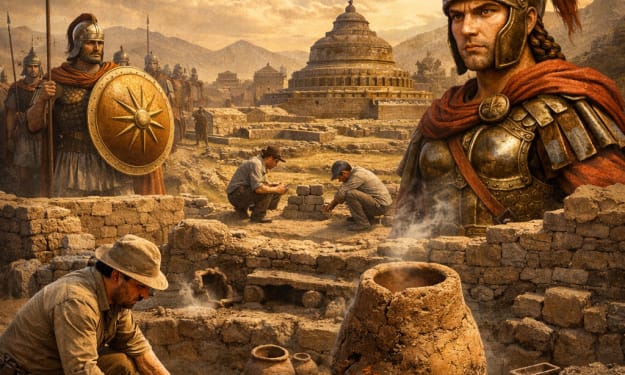
A remarkable archaeological discovery in the historic city of Peshawar has sparked excitement among historians and researchers. Archaeologists have recently uncovered the remains of an ancient workshop believed to date back to the era of Alexander the Great, the legendary Macedonian conqueror whose campaigns reshaped the ancient world. The finding offers rare insight into the economic and cultural life of the region more than two thousand years ago.
By Irshad Abbasi 7 days ago in History


Comments
There are no comments for this story
Be the first to respond and start the conversation.