
Nudism and Nazism: What Do They Have in Common?
The Roots of Nudism in Pre-War Germany

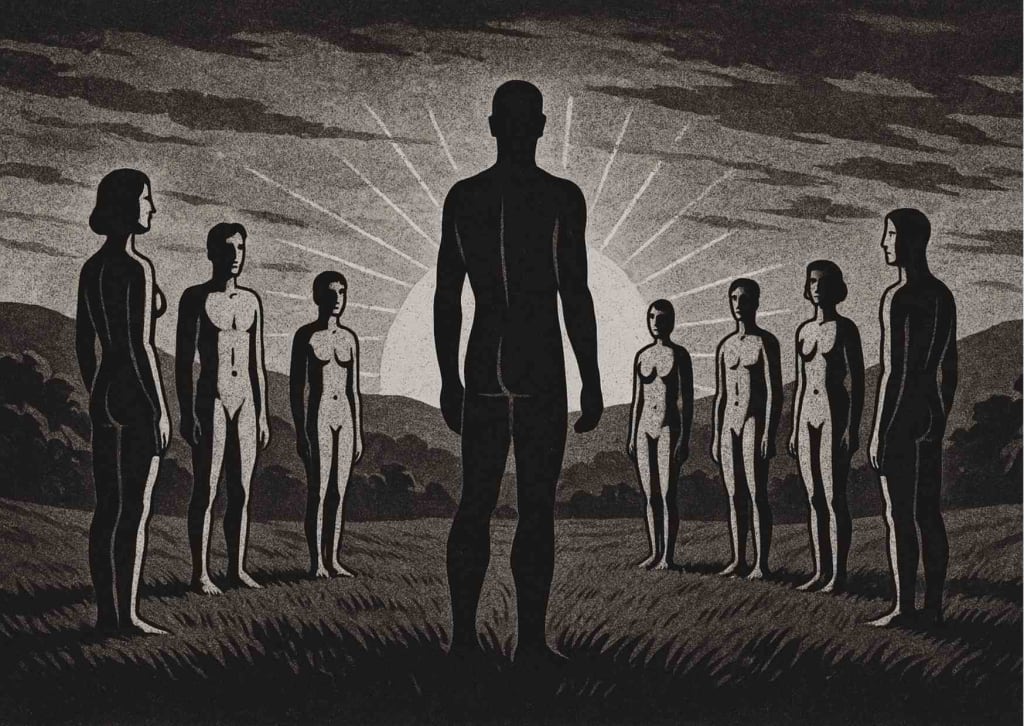
The forest stood still that summer morning. Only the rustling of pine needles and the distant murmur of a stream broke the silence. A small group of men and women walked slowly along a narrow path, almost invisible amid the vegetation. No one spoke. Their eyes searched the ground, their faces tense with the fear of being discovered.
When they reached a hidden clearing, they stopped. Before them, the dark water of a lake reflected the sky like a mirror. Richard Ungewitter, tall and stern-faced, turned to the group. “You know why you’re here,” he said firmly. “Not for yourselves, but for what you can become. A free body is the first step toward the new man.”
Their eyes met, hesitant. Then, one by one, they began to undress. There was no laughter, no suggestive gesture—just a slow, deliberate disrobing, like a ritual. Clothes were folded neatly and placed on fallen logs. The men arranged themselves in a circle, their feet sinking into the damp grass, while some of the women waded into the water up to their waists, shivering.
Ungewitter watched them, jotting notes into a leather-bound notebook. “Breathe. Feel the wind on your skin. Feel the sun. You are no longer slaves to clothes or to hypocritical morality. You are alive.”
Then the exercises began: squats, stretches, running in a circle. Everything moved to the rhythm of an almost religious silence. No one spoke; no one dared disrupt the cadence of that ritual. It wasn’t play. It was an initiation.
Who Was Richard Ungewitter?
Before founding Tefal, Ungewitter (1869–1958) lived a fragmented life. Born in Artern to a modest family, he worked as a gardener, a commercial clerk, even a Lutheran minister. He suffered from chronic health issues—a delicate, often troubled skin—that pushed him toward alternative diets and air baths.
During his time in Norway, he embraced a more “natural” lifestyle. But the true turning point was reading the works of Heinrich Pudor, the man who in 1893 had published Nackende Menschen under the pseudonym “Heinrich Scham” (“Shame”), preaching nudity as a return to original purity.
Ungewitter transformed these ideas into a structured and rigid program. In 1906, he founded the Vereinigung für hygienische, ethische und ästhetische Kultur (Association for Hygienic, Ethical, and Aesthetic Culture), and a year later Tefal, his private lodge, was born.
The Rules of the Tefal Lodge
Joining the lodge was not easy. The rules were strict and uncompromising:
• Mandatory nudity during meetings and exercises.
• Vegetarian or raw diet: no meat, no cooked foods, no alcohol.
• Physical discipline: daily exercise, running, breathing gymnastics.
• Moral and racial selection: only those “physically healthy and morally pure” could remain.
Ungewitter saw nudity as a cultural weapon, not as freedom. “Only a body freed from clothing can become strong, clean, and regenerated,” he wrote in Die Nacktheit (1906). But behind the word “clean” lurked a disturbing vision: those who were not healthy, young, or Aryan had no place in his community.
The Connection with Nationalist Ideology
Ungewitter’s ideology intertwined with the völkisch movement, a cultural current that exalted blood, soil, and race. The naked, strong, and resilient body symbolized a new people, ready for rebirth.
When Nazism came to power, these ideas found fertile ground. Some nudist associations were initially banned, particularly the more liberal ones, labeled “degenerate” or “immoral.” But those aligned with the Aryan aesthetic ideal—strong, young, disciplined bodies—were tolerated and even exploited in propaganda.
Hans Surén, an officer and advocate of nude gymnastics, published Der Mensch und die Sonne, a book filled with photographs of nude men in heroic poses, celebrating the German body as the embodiment of national strength. Hitler was aware of these works, and while he never spoke directly about nudism, he approved of the idea of the body as a tool of the nation, provided it was disciplined and free from any “moral weakness”.
The Body at the Service of the Fatherland
The cult of the body became a pillar of National Socialism. It was no longer a private asset, but a cog in the machine of the nation.
Programs like Lebensborn, initiated by Himmler, urged young German women to conceive children with SS officers to “strengthen Aryan blood.” Female bodies were selected, monitored, and trained. There was no freedom—only a biological duty to the Fatherland.
Looking at the images of Hitler Youth gatherings—athletic boys, bare-chested, gazing toward the sun—it is impossible not to see an echo of Ungewitter’s lodges. The same myth of purity and physical strength.
A Seed of Ideology Behind the Mask of Freedom
Ungewitter’s nudism was never an act of rebellion. It was a replacement of old rules with new, harsher ones. A moral and political code disguised as a “return to nature”.
Today, nudism is portrayed as a gesture of freedom, but few know of its darker roots. That nudity was not born out of freedom, but out of the desire to forge a body functional to a collective ideal.
The Central Question
If nudism truly emerged for the freedom of body and spirit, why did its founding fathers surround it with rules, selections, and ideals of purity?
Perhaps because, beneath the surface, it was more an exercise of power than an invitation to liberation.
Conclusion
The nudism we associate with freedom today has very different roots: rules, ideals of purity, and near-military discipline. Ungewitter’s lodges and their rituals resembled a sect more than a free, inclusive movement.
So, the question remains: was it truly a quest for connection with nature, or merely a form of power and control over the body?
If you want to explore this topic further and understand how much of today’s nudism is truly “natural” or how much it has been shaped by cultural construction, we invite you to read the related article: “Is Nudism Truly Natural?”
#nudism, #nazism, #history, #naturism, #culture, #ideology, #bodypolitics, #europeanhistory, #psychology, #hiddenhistory, #freikörperkultur, #germany, #RichardUngewitter, #historicalanalysis, #controversialhistory
About the Creator
Halina Piekarska (UltraBeauty Blog)
Blogger, writer, and illustrator, I share stories, reflections, and practical tips on psychology, well-being, and natural beauty. I believe that learning never stops, and I strive to enrich readers’ lives with knowledge and inspiration.
Keep reading
More stories from Halina Piekarska (UltraBeauty Blog) and writers in History and other communities.
Three myths in one perfume
“What do you wear to bed? Why, Chanel N° 5, of course.” This iconic phrase, spoken by Marilyn Monroe during a 1952 interview, has forever linked the famous actress to the world’s most famous perfume: Chanel N° 5. Instantly, every time we think of this fragrance, Marilyn’s image comes to mind. Monroe is not only one of the most celebrated women in film history but also the person who, indirectly, helped make this perfume an eternal icon. Her simple response, which seemed almost like a lighthearted joke, had an impact that transcended time, connecting her figure to that of Coco Chanel and her famous perfume, creating a bond that would last for decades.
By Halina Piekarska (UltraBeauty Blog)11 months ago in History


Comments
There are no comments for this story
Be the first to respond and start the conversation.