
“No Mercy in Magdeburg”: The Forgotten Massacre That Drenched a City in Fire and Blood
A City Erased in a Single Day

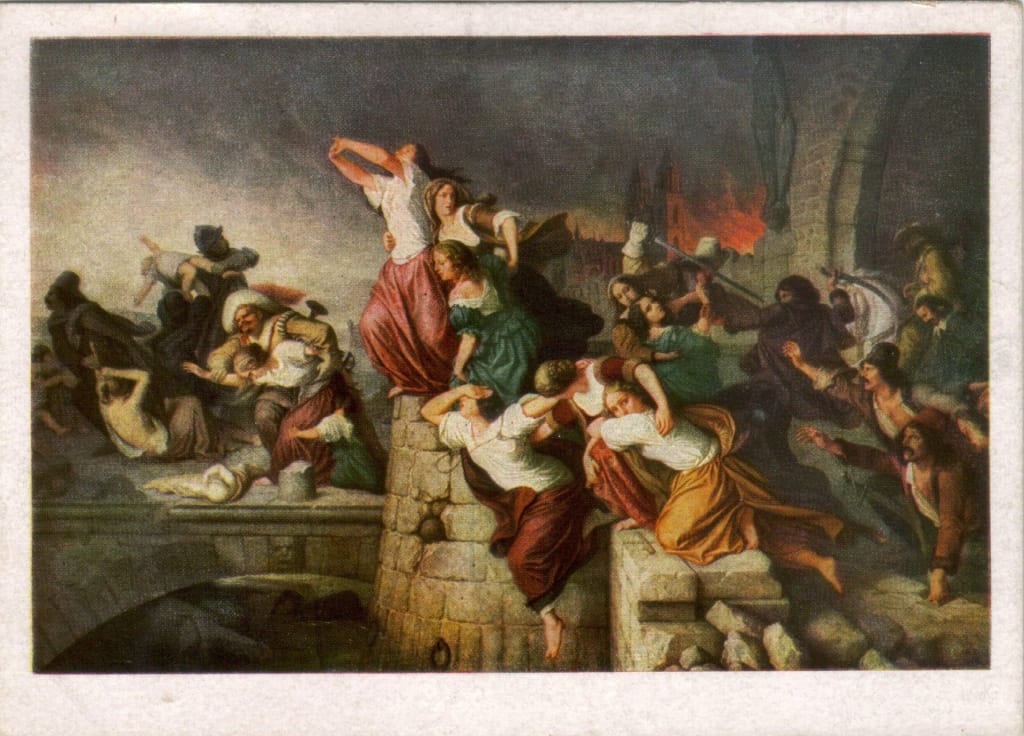
May 20th, 1631.
The sun rose over the fortified German city of Magdeburg, unaware it would set over a charred ruin soaked in blood. Within hours, this prosperous Protestant stronghold would become a hellscape of mass slaughter, rape, and fire so devastating that only 5,000 of its 30,000 inhabitants would live to tell the tale.
The Catholic forces of the Holy Roman Empire didn’t just defeat Magdeburg.
They erased it.
Prelude to Carnage: The Thirty Years' War
To understand the barbarity of Magdeburg, one must first grasp the war that birthed it.
The Thirty Years’ War (1618–1648) began as a religious conflict between Protestants and Catholics, but soon devolved into a continental bloodbath involving dynasties, mercenaries, and political greed. It’s estimated that over 8 million people perished—from battle, disease, and famine.
Magdeburg was a beacon of Protestant resistance. Located in Saxony, it had refused to yield to Emperor Ferdinand II’s Catholic pressures. In response, Ferdinand dispatched General Johann Tilly, a zealous Catholic commander with a notorious reputation for ruthlessness.
The Storm Breaks
On May 20th, Tilly’s Imperial army—composed of 24,000 soldiers, many of them unpaid mercenaries hungry for plunder—surrounded the city.
Inside, Magdeburg’s defenders numbered fewer than 2,500. Starvation and desperation had already weakened morale. That morning, cannon fire opened gaping holes in the city walls.
The breach was exploited with savage efficiency.
What followed wasn’t a battle.
It was a butchering.
“Kill Them All”: The Sack Begins
Once the soldiers flooded through the walls, Magdeburg descended into unthinkable horror.
Armed with swords, axes, and torches, Imperial troops tore through the streets. They were not discerning between soldier and civilian. In fact, they seemed to prefer the unarmed—the easier to kill, the slower to die.
Eyewitnesses recount women being raped in the streets while their homes burned. Children were spitted on pikes or thrown from windows. Priests were slaughtered at their altars. The city’s churches, once places of worship and sanctuary, were looted and desecrated. One was reportedly piled with the corpses of hundreds who had sought refuge inside—then set ablaze.
Homes were torched even while families cowered inside them. The fire quickly spiraled out of control, turning Magdeburg into an oven of screaming agony. Survivors spoke of the smell of burning flesh, of mothers cradling dead infants as flames consumed them.
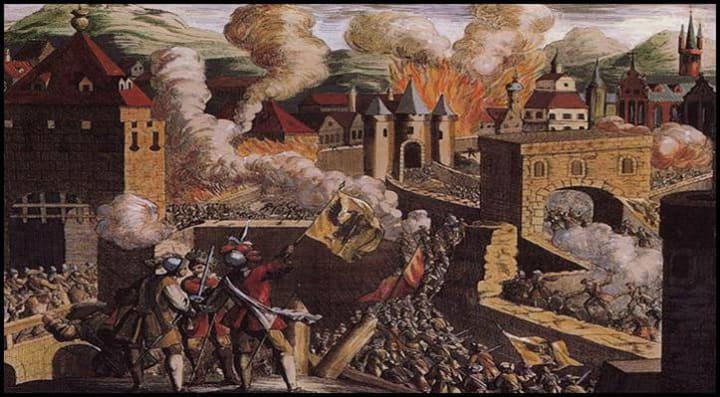
“Magdeburg Quarter”: A Phrase of Fear
It was said that the Elbe River ran red with blood. So many bodies were dumped or fell into its waters that it became choked with corpses. In a single day, over 20,000 civilians were killed.
The scale of violence shocked even seasoned war veterans.
The massacre was so infamous that it gave rise to a chilling phrase: “Magdeburg Quarter.” It meant no quarter given—kill everyone. The phrase would haunt battlefields for decades after.
Aftermath: Silence and Ash
When the smoke cleared, 90% of the city had been destroyed.
Magdeburg Cathedral, one of the oldest Gothic buildings in Germany, was one of the few structures left standing. Inside it, 400 survivors huddled—starved, trembling, hollow-eyed. One soldier described them as “living ghosts among the tombstones of their own kin.”
Of the city’s 30,000 citizens, fewer than 5,000 survived.
Many were sold into slavery. Some simply vanished, assumed to have died in the inferno or wandered mad from grief.
---
Why Did It Happen?
Historians still debate the motives behind the sack. Was it intentional? A breakdown of discipline? Or a calculated show of terror?
The reality is that Tilly likely lost control of his army. His troops had not been paid in months. Rape and pillage were their compensation. But Tilly didn’t stop them. In fact, some accounts suggest he watched from a nearby hill as the city was consumed.
Later, Emperor Ferdinand II would attempt to downplay the massacre, calling it "God’s punishment for rebellion." Protestant nations saw it as proof of Catholic cruelty, and it became a rallying cry for future uprisings.
But for the people of Magdeburg, it was simply annihilation.
Legacy of Horror
Magdeburg never fully recovered. It took centuries for the city to rebuild. Even today, in the heart of modern Germany, the memory of that massacre lingers.
In literature and sermons, Magdeburg became a symbol of unchecked human cruelty. A warning. A curse. A lesson carved in blood and fire.
Conclusion: A City Screams Through History
The Siege of Magdeburg was not just a military event. It was a moment when the mask of civilization fell off completely, revealing what human beings are capable of when unleashed from morality, discipline, or reason.
It wasn’t just war.
It was Hell on Earth.
And for one day in 1631, the city of Magdeburg became its throne room.
🔎 Sources & Further Reading
- Peter H. Wilson, Europe’s Tragedy: A New History of the Thirty Years War
- Geoffrey Parker, Global Crisis
- Accounts from Otto von Guericke, survivor and chronicler
- Holy Roman Empire military records, 17th century
If this article stunned you, share it.
Follow for more untold history drenched in truth, fire, and blood.
Leave a heart. Tell your story. Remember Magdeburg.
About the Creator
E. hasan
An aspiring engineer who once wanted to be a writer .
Imran Khan: The Journey of a Believer
Imran Ahmed Khan Niazi was born on October 5, 1952, in Lahore, into a well-educated Pashtun family. From an early age, he showed independence of thought and a quiet confidence that often set him apart. Educated first in Lahore and later at Aitchison College, he was sent to England for further studies, eventually attending the Royal Grammar School Worcester and later Keble College, Oxford, where he studied Philosophy, Politics, and Economics. At Oxford, Imran was exposed to global ideas, cultures, and debates. He was not only a student but also a sportsman, playing cricket with intensity and pride. Those years shaped his worldview—combining Eastern roots with Western education—and gave him a belief that discipline, preparation, and courage could change destiny. Rise of a Cricketing Icon Imran Khan’s greatest early fame came from cricket. Tall, athletic, and fiercely competitive, he entered Pakistan’s national team in the early 1970s. The beginning was not easy. He faced criticism for inconsistency and injuries, and some questioned whether he had the temperament for leadership. But Imran was relentless. He trained hard, studied the game deeply, and refined his skills as a fast bowler and all-rounder. Over time, he became the backbone of Pakistan’s cricket team. What truly set him apart was not just his performance, but his ability to inspire teammates. He believed in building confidence, unity, and self-respect within the team—qualities Pakistan cricket had often lacked on the world stage. His defining moment came in 1992, when he led Pakistan to victory in the Cricket World Cup. Against all odds, with an injured body and an underdog team, Imran captained Pakistan to its first—and so far only—World Cup win. That triumph transformed him into a national hero. For millions of Pakistanis, he became a symbol of hope: proof that belief and determination could overcome adversity. A New Mission: Giving Back After retiring from cricket, Imran Khan surprised many by not choosing a comfortable life of fame. Instead, he turned toward philanthropy. Inspired by the death of his mother from cancer, he envisioned building a world-class cancer hospital in Pakistan—something many considered impossible. In a country where public trust in institutions was low, raising funds for such a project seemed unrealistic. Yet Imran traveled across Pakistan and abroad, appealing directly to people. He spoke not as a celebrity, but as a son fulfilling a promise. Against expectations, Shaukat Khanum Memorial Cancer Hospital became a reality in 1994, offering free or subsidized treatment to thousands of patients. Later, he founded Namal University to provide quality education to underprivileged students. These projects strengthened his image as a man who could turn dreams into institutions—someone willing to sacrifice comfort for a cause. Entering Politics: A Difficult Road Imran Khan entered politics in 1996 by founding Pakistan Tehreek-e-Insaf (PTI). His message was simple but bold: justice, accountability, and independence from corruption and foreign influence. At a time when Pakistani politics was dominated by powerful families and entrenched interests, Imran was seen as an outsider—idealistic, but unrealistic. For years, PTI struggled. In elections, Imran sometimes won only a single seat, or none at all. Critics mocked him, calling him irrelevant and disconnected from political realities. Many former supporters lost patience. But Imran refused to quit. He believed that real change takes time and that nations are not transformed overnight. Slowly, his message began to resonate, especially with the youth. His speeches emphasized dignity, rule of law, and a Pakistan that could stand on its own feet. Massive rallies followed, particularly after 2011, when PTI emerged as a major political force. For the first time, Pakistan’s young generation felt represented by a leader who spoke their language. Prime Ministership: Power and Pressure In 2018, after more than two decades in politics, Imran Khan became the Prime Minister of Pakistan. Supporters celebrated it as the victory of perseverance. For Imran, it was the hardest phase of his life. Governing a country of over 200 million people came with immense challenges: economic crises, debt, political opposition, and complex foreign relations. Imran promised reforms, accountability, and welfare programs. His government introduced initiatives like the Ehsaas Program to support the poor and attempted to reform health and governance systems. However, criticism followed closely. Opponents accused him of inexperience and poor economic management. Political tensions remained high, and compromises—inevitable in politics—disappointed some of his most loyal supporters. Imran often spoke of the gap between ideals and reality, learning firsthand how difficult it is to bring change within an old system. Removal from Power and Continued Struggle In 2022, Imran Khan was removed from office through a vote of no confidence. He claimed it was the result of internal conspiracies and foreign pressure, while opponents argued it was due to governance failures. Whatever the interpretation, his removal marked another dramatic turn in his story. Instead of retreating, Imran returned to public rallies with renewed intensity. He framed his struggle as one not just for power, but for sovereignty and justice. Legal battles, arrests, and political restrictions followed, making his path even more difficult. To his supporters, Imran Khan became a symbol of resistance—someone standing against a powerful status quo. To critics, he remained a divisive figure. Yet no one could deny his impact on Pakistan’s political consciousness. Legacy Still Being Written Imran Khan’s story is not finished. Unlike his cricket career, which ended with a clear victory, his political journey remains open-ended. He has inspired millions to believe in change, to question authority, and to demand accountability. At the same time, he has faced criticism for mistakes, rigidity, and unmet promises. What makes Imran Khan unique is not perfection, but persistence. From cricket fields to cancer wards, from opposition benches to the prime minister’s office, his life reflects a constant refusal to accept limits imposed by others. In the end, Imran Khan stands as one of Pakistan’s most influential figures—a man who dared to dream big, stumbled often, but never stopped walking forward. Whether history judges him as a great leader, a flawed reformer, or both, his story will remain deeply woven into the narrative of modern Pakistan.
By The best writer 24 minutes ago in History
Military Strength of Alexander the Great and the Chola Empire: A Historical Comparison
Though separated by more than a thousand years and operating in vastly different geographical and cultural contexts, both forces achieved extraordinary success through discipline, innovation, and strategic brilliance. This article explores the history, composition, size, organization, and military strength of Alexander’s Macedonian army and the Chola military, highlighting how each became a dominant power of its era.
By Say the truth 5 days ago in History


Comments (1)
Emotionally gripping, historically grounded, and hauntingly written. This piece does more than recount an atrocity