Latest Stories
Most recently published stories in History.
Rasta Ways of Living
The Rasta Diet The Rastafari diet is something that is often overlooked by many people who do not know a great deal about Rastafari. The Rasta has a very interesting belief in their thoughts about dead beings. The Rasta’s do not like being around any animal that is dead. This idea stems into their diet. The Rasta believes that it is wrong to eat animals that have died because then you are turning your body into a cemetery. This does not mean that a Rasta will not eat dairy products. Most Rasta’s have no problem with the consumption of milk because it does not come from a dead animal. Although most Rasta’s will not eat animal meat, many Rasta’s will eat fish. However the Rasta will not eat shellfish. This stems from more readings in the Bible. Some but not all Rasta will go as far as to not t eat fruit that has been altered from its original form. This means they would not eat fruit that has been pealed, cut, or smashed. There is also a large number of Rasta that will not eat any processed food.
By Sanzilaus Onserioabout a year ago in History
The Evolution and Sustainability of Milk Carton Packaging
Milk carton packaging has been a cornerstone in the dairy industry for over a century, evolving in both design and sustainability. As the demand for eco-friendly solutions continues to grow, milk cartons remain a vital component in packaging. In this blog, we'll delve into the history, advantages, and innovations in milk carton packaging, exploring how they contribute to the preservation of milk and the environment.
By Crystal Print Mediaabout a year ago in History
6 Ancient Uprisings That Shaped the Course of History
Throughout history, uprisings and revolts have played pivotal roles in transforming societies, toppling empires, and reshaping political systems. From the rise of democracy in Athens to the legendary rebellion of Spartacus, these ancient revolts continue to echo through time, influencing modern movements for freedom and justice. Here are six significant ancient uprisings that not only changed the course of history but still hold relevance in today’s world.
By Marveline Merababout a year ago in History
RASTAFARIAN
For many Rasta’s moving back to Ethiopia is their dream. Fortunately for some this dream has come true. In 1963 Emperor Haile Selassie I gave 500 hectares of land to any African that wished to return to Ethiopia. The land that was given is located in the small southern Ethiopian town of Shasemene. The small town of Shasemene has a population of 13,000. The people living in this town are 90% Christian and 10% Muslim. The town has many visitors because it is a cross roads of the three largest Ethiopian cities. Prostitution is very common in this town and many women make good money through this business. Other than prostitution there is little contact between the sexes. The town’s economic base is in trade and farming. The staple crops are maize, beans, potatoes, wheat, barley and injera (a local grain used in traditional Ethiopian breads).
By Sanzilaus Onserioabout a year ago in History
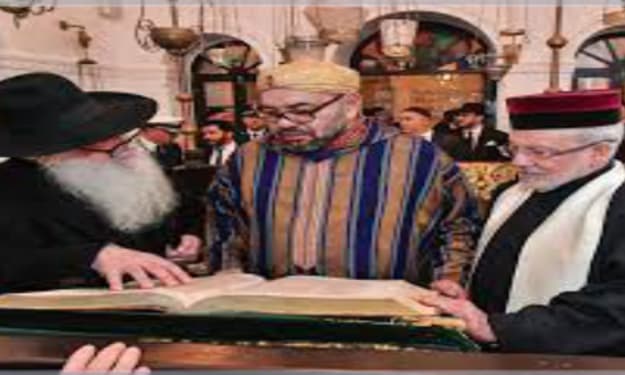
Morocco's Jewish Heritage: A Cultural Tapestry
Morocco's Jewish Heritage: A Cultural Tapestry Historical Roots of Jewish Presence in Morocco The historical roots of Jewish presence in Morocco trace back over two millennia to ancient settlements. Evidence suggests that Jewish communities existed in the region as early as the Roman period. The Jewish population in Morocco expanded significantly due to migration patterns, notably during the periods of the Babylonian Exile and later expulsion from Spain in 1492. These migratory waves introduced diverse Jewish traditions and customs to Morocco, enriching the social and cultural landscape of the region.
By Usa Nationabout a year ago in History
The Complete Story of God's Prophet Adam
The Complete Story of God's Prophet Adam Introduction to Prophet Adam Prophet Adam holds a central place in the narrative of creation in Islamic, Christian, and Jewish traditions. According to these faiths, Adam is the first human being created by God and is regarded as the progenitor of the entire human race. His story, recounted in the Quran, Bible, and Torah, encapsulates themes of creation, temptation, fall, and redemption which have profound theological and moral implications.
By Amr Atef elsid salamaabout a year ago in History