
Money: how exchange and numbers became the master of man
HISTORY


The Evolution of Money: From Barter to Blockchain
Money, in its modern form, is a central part of daily life, but its role in society evolved over millennia. The journey of money from simple barter systems to digital currencies reflects not only the progress of human civilizations but also how deeply intertwined it is with trust, exchange, and economic complexity.
The Birth of Trade: Barter Systems
Long before coins and bills existed, early human societies relied on barter—the direct exchange of goods and services. If a farmer had surplus grain and needed wool, he would trade with someone who had sheep. This system functioned on a small scale and in communities where individuals knew and trusted each other. However, as societies grew larger and more complex, the limitations of barter became apparent.
One significant challenge of barter was the "double coincidence of wants." Both parties had to have something the other desired at the same time. This made trading inefficient and unreliable. Furthermore, there was no easy way to measure the exact value of goods, leading to disagreements or imbalanced trades. These limitations paved the way for the introduction of a more universal medium of exchange: money.
Early Forms of Currency: Commodities and Precious Metals
As societies expanded and the limitations of barter became more glaring, certain items began to take on a consistent value within cultures. These were often commodities that were durable, portable, and widely desired—such as cattle, grains, and even shells. In ancient Mesopotamia, grain was often used as a form of currency, as it held intrinsic value and could be stored. In some regions, cowrie shells served a similar purpose.
However, as trade networks grew and economies became more complex, the need for a more durable and universally accepted medium arose. This led to the use of precious metals like gold, silver, and copper. These materials were valuable, rare, and easily divisible. The first recorded use of metal coins can be traced back to the ancient kingdom of Lydia (in modern-day Turkey) around 600 BCE. Lydia’s coins were made from electrum, a naturally occurring alloy of gold and silver, and bore standardized weights and inscriptions, creating a trusted and reliable medium of exchange.
The widespread adoption of coins revolutionized trade. Merchants could now travel vast distances and engage in commerce using universally recognized currencies, facilitating the rise of long-distance trade routes like the Silk Road.
Paper Money and the Rise of Banks
The invention of paper money marked another leap in the evolution of currency. It is believed that the first recorded use of paper money occurred in China during the Tang Dynasty (618–907 CE). The Chinese initially used promissory notes, essentially paper promises to pay a certain amount in metal coins later. This system was far more practical for large transactions, as it allowed people to avoid transporting heavy metals over long distances. By the time of the Song Dynasty (960–1279 CE), paper currency had become an essential part of the Chinese economy.
The idea of paper money gradually spread to Europe through travelers like Marco Polo, but it wasn’t until the 17th century that European states, notably Sweden and later England, began to issue paper notes. These notes were backed by reserves of gold or silver held by banks, which marked the beginning of modern banking.
As banks grew in influence, so did the concept of credit. Money itself became less about intrinsic value and more about trust in institutions that issued and backed it. People began to accept paper money because they believed the issuing bank or government could redeem it for something of real value, like gold. This system worked until governments realized they could control their economies by decoupling money from precious metals, leading to the modern era of fiat currency.
Fiat Money and the Power of Trust
Fiat money, which is what most countries use today, has no intrinsic value. It is not backed by a physical commodity like gold or silver. Instead, its value comes entirely from the trust people have in the issuing government. The transition to fiat money began in the 20th century, most notably after the United States abandoned the gold standard in 1971. Under this system, governments can print as much money as they deem necessary, which allows them to manage their economies more actively but also introduces the risk of inflation.
Fiat money relies entirely on social trust. People accept it in exchange for goods and services because they believe it will continue to hold value. Without this collective trust, fiat money would be worthless pieces of paper or digital numbers on a screen.
The Digital Age: Cryptocurrency and the Future of Money
Today, money continues to evolve. The rise of the internet has given birth to new forms of digital currency, most notably cryptocurrency. Bitcoin, the first decentralized cryptocurrency, was introduced in 2009. Unlike fiat money, Bitcoin and other cryptocurrencies are not controlled by any central authority. Instead, they rely on blockchain technology, which ensures transparency, security, and trust without the need for banks or governments.
Cryptocurrency represents a significant shift in the concept of money. While it is still in its early stages, many believe it could transform global economies, making money more decentralized and secure. As technology advances, the way we understand and use money will likely continue to change.
Conclusion
The importance of money has grown with human civilization, reflecting the complexity of societies and economies. From barter to blockchain, money has evolved as a tool to facilitate trade, build trust, and manage economic growth. Its history is a testament to humanity's capacity for innovation and adaptation in the pursuit of more efficient and equitable systems of exchange.
About the Creator
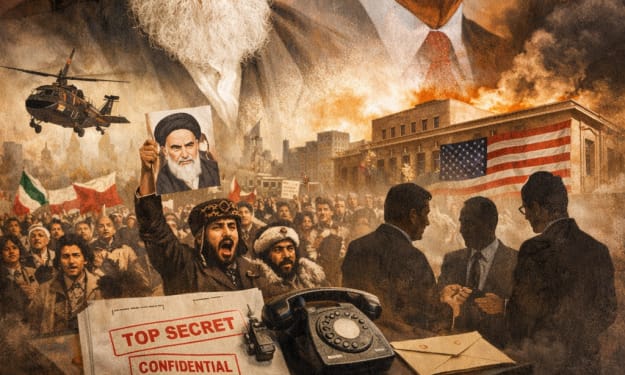
The Iranian Revolution and Two Tumultuous Weeks: Ayatollah Khomeini’s Secret Contacts with the United States
In early 1979, the world watched as Iran stood on the brink of a historic transformation. The collapse of the monarchy of **Mohammad Reza Pahlavi**, the return of **Ruhollah Khomeini** from exile, and the swift dismantling of the old order marked one of the most dramatic revolutions of the 20th century. Yet, behind the chants of “Death to America” and the burning images broadcast across global media, another, quieter story was unfolding—one of discreet contacts, strategic assurances, and secret messages between Khomeini’s circle and officials linked to the administration of **Jimmy Carter**.
By Irshad Abbasi 2 days ago in History



Comments
There are no comments for this story
Be the first to respond and start the conversation.