Latest Stories
Most recently published stories in History.
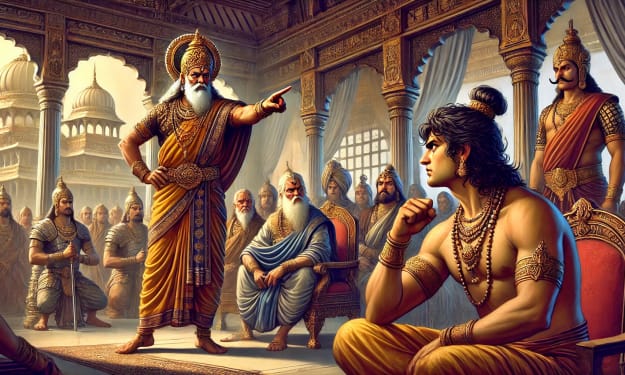
Maitreya Muni curse to duryodhana. AI-Generated.
In the Mahabharata, Maitreya Muni’s curse on Duryodhana marks a significant episode, reflecting the consequences of unchecked arrogance and disrespect toward wisdom and dharma. This incident unfolds when Maitreya Muni, a revered sage, visits Hastinapura after witnessing the suffering of the Pandavas in exile. Outraged by Duryodhana’s disregard for dharma and his cruel treatment of his own cousins, Maitreya warns him and offers a chance for redemption. However, Duryodhana’s insolent response provokes the sage to curse him, sealing his fate and foreshadowing the tragedy that awaits the Kauravas.
By sai Charanabout a year ago in History
Yudhistira's Prayer to surya: The gift of akshayapatra. AI-Generated.
During the Pandavas’ exile in the forest, they faced numerous challenges, one of the most pressing being the need to sustain themselves with limited resources. Surrounded by harsh wilderness, Yudhishthira and his brothers, along with Draupadi, had to rely on foraging and hunting to meet their daily needs. However, as the Pandavas were revered by many sages, rishis, and disciples who often visited them, Yudhishthira was troubled by his inability to offer hospitality and food to their guests. Bound by his commitment to dharma, Yudhishthira prayed for divine intervention to help him fulfill this responsibility.
By sai Charanabout a year ago in History
Pandavas journey to exile. AI-Generated.
After the humiliating loss in the game of dice and the attempted disrobing of Draupadi, the Pandavas, deeply wronged yet bound by their commitment to dharma, accepted their fate of exile. The terms of the game, manipulated by Shakuni and Duryodhana, stipulated that the Pandavas would be exiled to the forest for twelve years, followed by a thirteenth year of incognito life. If they were discovered during the thirteenth year, they would have to repeat the entire period of exile. This period in exile became a time of introspection, growth, and preparation for the challenges that lay ahead.
By sai Charanabout a year ago in History
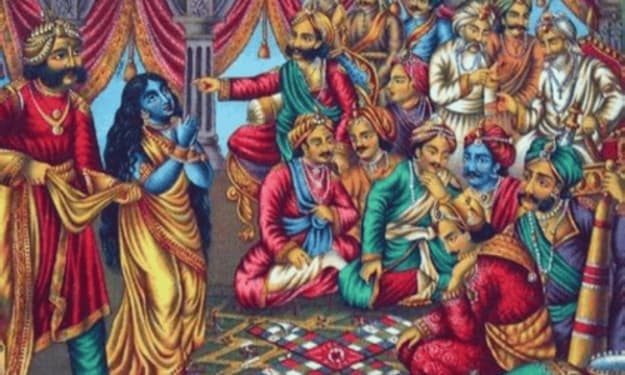
The Dishonoring of Draupadi in the Kaurava Court. AI-Generated.
The Pandavas’ Loss in the Game of Dice Following the invitations and manipulations of Shakuni, Yudhishthira gambled away all of his possessions and wealth, including the kingdom of Indraprastha, in the game of dice. Shakuni, an expert in deceit, ensured that each roll of the dice worked in his favor, stripping Yudhishthira of everything he owned. As the game continued, Yudhishthira, desperate to win back his losses, wagered his brothers one by one. However, each time, he faced defeat. In his final gamble, driven to despair, Yudhishthira wagered Draupadi, his beloved wife, in a last attempt to recover everything he had lost. When he lost once more, Draupadi was claimed as a slave by the Kauravas.
By sai Charanabout a year ago in History
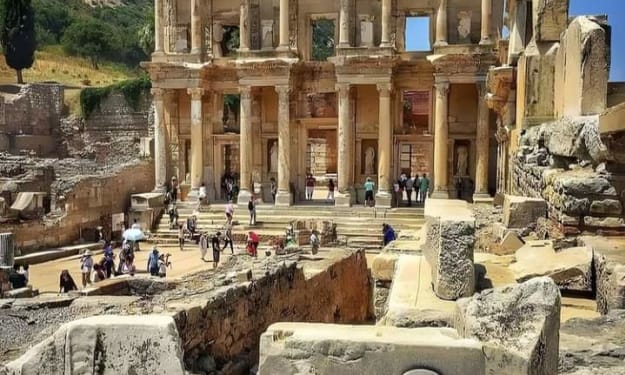
The Library of Celsus: An Architectural Marvel of Ancient Ephesus
Nestled within the ancient city of Ephesus, now located in modern-day Turkey, stands the remarkable Library of Celsus, a structure celebrated for its architectural grandeur and historical significance. This library, constructed during the height of the Roman Empire, is a rare surviving example of the great libraries that once dotted the ancient world. Built in the 2nd century AD, the Library of Celsus is more than just a collection of texts and scrolls; it is a testament to the Roman appreciation for learning, beauty, and public life, with intricate architectural details that captivate historians and tourists alike to this day.
By Deji Akomolafeabout a year ago in History
The Invitation to the Game of Dice: Yudhishthira’s Fateful Gamble. AI-Generated.
Duryodhana’s Desperation and Shakuni’s Plan Duryodhana, upon returning to Hastinapura from Indraprastha, was consumed by bitterness and jealousy. The beauty of the Maya Sabha and the respect that the Pandavas commanded had left him feeling inadequate and humiliated. The laughter of Draupadi and the splendor of the Pandavas’ kingdom lingered in his mind, fanning the flames of his resentment.
By sai Charanabout a year ago in History
Unearthing History: The Story of the Roman Ship "De Meern 1"
In 1997, a remarkable discovery was made in Veldhuizen, a small town in The Netherlands, that shed new light on the history of Roman expansion and trade in northern Europe. During a routine excavation, archaeologists stumbled upon the remains of a Roman ship, later named "De Meern 1." Lying near the ancient boundary of the Roman Empire and Germania, this ancient vessel offers a fascinating glimpse into the lives of the people who lived and traded along the empire's frontiers nearly two thousand years ago.
By Deji Akomolafeabout a year ago in History
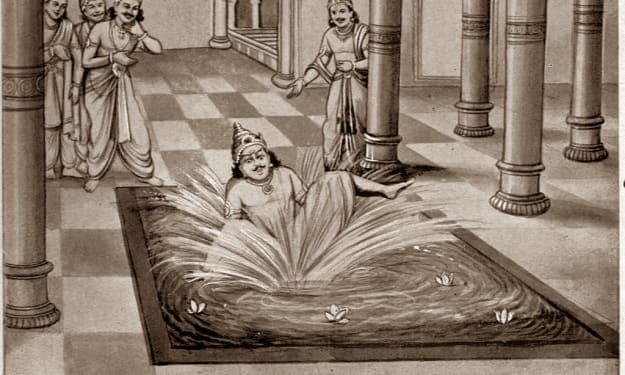
Duryodhana’s Humiliation in the Maya Sabha. AI-Generated.
The Maya Sabha, or Hall of Illusions, was a grand palace in Indraprastha, built by the asura architect Maya as a gift to the Pandavas. This architectural wonder was constructed after Arjuna and Krishna saved Maya during the burning of the Khandava Forest. Maya, grateful for his life, offered his skills to create a magnificent palace, filled with intricate illusions and marvels. The Maya Sabha became one of the most celebrated achievements in the Pandavas’ kingdom, a place that represented their power, prestige, and prosperity.
By sai Charanabout a year ago in History
The Story of Shishupala’s Enmity and His Death at the Hands of Krishna. AI-Generated.
Shishupala, the king of Chedi, was known for his intense hatred and rivalry with Krishna. This enmity stemmed from various grievances, both personal and political, that Shishupala harbored throughout his life. However, his arrogance and insolence reached a peak during Yudhishthira’s Rajasuya Yajna, leading to his downfall and death. This tale of Shishupala’s life and death highlights themes of fate, justice, and the power of divine intervention.
By sai Charanabout a year ago in History
The Rajasuya Yajna and the Pandavas’ Conquests. AI-Generated.
After the defeat of the powerful King Jarasandha, Yudhishthira, the eldest Pandava, was ready to perform the Rajasuya Yajna—a grand royal sacrifice that would proclaim him as Emperor of Bharatavarsha, ruler over all other kings. This prestigious ritual required all neighboring kingdoms to acknowledge Yudhishthira’s supremacy, either through alliance or submission. To secure their allegiance, Yudhishthira sent his four brothers—Bhima, Arjuna, Nakula, and Sahadeva—on campaigns to the four directions, each tasked with bringing neighboring kings under his banner.
By sai Charanabout a year ago in History
Bhima’s Epic Duel with Jarasandha and the Tyrant’s Downfall. AI-Generated.
Following Krishna’s advice to defeat Jarasandha before the Rajasuya Yajna, Bhima, along with Krishna and Arjuna, journeyed to the kingdom of Magadha. Their mission was to end Jarasandha’s reign, liberate the imprisoned kings, and secure peace for Yudhishthira’s rule. Jarasandha, the formidable king of Magadha, was known for his immense strength and had captured nearly a hundred kings, intending to sacrifice them in a ritual for Lord Shiva. Krishna, aware of Jarasandha’s unusual birth and his unique vulnerability, devised a plan for Bhima to challenge and ultimately defeat him.
By sai Charanabout a year ago in History
The Story of Jarasandha’s Birth: Krishna’s Narrative to Yudhishthira. AI-Generated.
Setting the Scene: The Need to Defeat Jarasandha As Yudhishthira prepared for the Rajasuya Yajna, which would proclaim him as a sovereign ruler, Krishna advised him that he must first subdue all powerful kings in Bharatavarsha. Among these, Jarasandha, the mighty king of Magadha, was the most formidable. Jarasandha had established himself as a dominant ruler, and his strength and alliances made him a serious threat. Furthermore, he had captured and imprisoned many kings with the intention of sacrificing them in a ritual to please Shiva.
By sai Charanabout a year ago in History