
"Kalki’s Triumph: Restoration of Righteousness"
"The Legendary Avatar Who Will End the Cycle of Corruption"


Kalki, the tenth and final avatar of the Hindu god Vishnu, is a central figure in Hindu eschatology. His story, deeply embedded in the rich tapestry of Hindu mythology, is a blend of prophecy, symbolism, and cosmic drama, reflecting the cyclical nature of time in Hindu cosmology.
The concept of Kalki arises from the Puranic texts, particularly the "Bhagavata Purana" and the "Vishnu Purana." According to these ancient scriptures, Kalki is destined to appear in the future, at the end of the current age, known as Kali Yuga. Kali Yuga is the last of the four Yugas or ages in the cycle of time, characterized by moral decline, spiritual degradation, and the dominance of unrighteousness.
Kalki is depicted as a warrior on a white horse, wielding a sword. His arrival is foretold to restore cosmic order and righteousness. The mythology holds that during the Kali Yuga, the world will be plagued by corruption, deceit, and the erosion of Dharma (righteousness). It is in this grim scenario that Kalki will manifest to annihilate the wicked and to re-establish Dharma.
The story of Kalki is marked by vivid imagery and symbolism. He is often portrayed as a fierce and divine warrior who will come at a time when the world has reached its nadir of chaos. His appearance is not just a physical event but a cosmic intervention that signifies the renewal of the universe and the beginning of a new cycle, known as the Satya Yuga or the age of truth.
The prophecy of Kalki serves multiple purposes. It represents the inevitable return of cosmic balance and justice, emphasizing that no matter how dark times may become, divine intervention will restore equilibrium. This belief provides a sense of hope and continuity within Hindu thought, illustrating the cyclical nature of existence where destruction paves the way for regeneration.
The narrative of Kalki also reflects the values and moral teachings of Hinduism. It underscores the idea that righteousness will ultimately prevail and that the divine will always act to counteract moral decay. Kalki's story embodies the ideal of divine justice, where the gods take action to ensure that dharma is upheld.
In addition to the Puranic texts, the concept of Kalki has influenced various aspects of Hindu culture and religious practice. Temples and artworks often depict Kalki as a symbol of divine intervention and the promise of a new beginning. His story has inspired numerous interpretations and adaptations in literature, art, and folklore, highlighting his significance in Hindu tradition.
While the exact time of Kalki’s appearance remains unknown, his legend continues to inspire and reassure followers of Hinduism. The narrative is less about predicting a specific future event and more about conveying a deep-seated belief in the cyclical nature of time and the eventual triumph of good over evil.
In summary, the story of Kalki is a powerful element of Hindu eschatology, encapsulating the themes of divine justice, cosmic renewal, and moral victory. As the prophesied future avatar, Kalki represents the ultimate hope for the restoration of order and the continuation of the eternal cycle of time, offering a timeless reminder of the enduring power of righteousness and divine intervention.
About the Creator
Mystery of the Egyptian Pyramids: Has the Most Complex Puzzle Finally Been Solved?
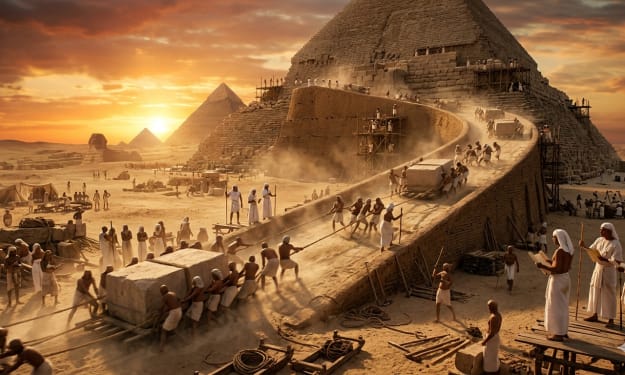
For centuries, the construction of the great pyramids of Egypt has been one of the world’s most fascinating historical mysteries. Towering above the desert sands near the ancient city of Giza, these monumental structures have puzzled historians, engineers, and archaeologists alike. How could a civilization that existed more than 4,500 years ago build such massive and precisely aligned structures without modern machinery?
By Irshad Abbasi 3 days ago in History



Comments
There are no comments for this story
Be the first to respond and start the conversation.