
Hidden Histories: Unearthing the British Museum's Looted Artifacts
Uncovering the Truth: The Astonishing Stories Behind the British Museum's Stolen Treasures

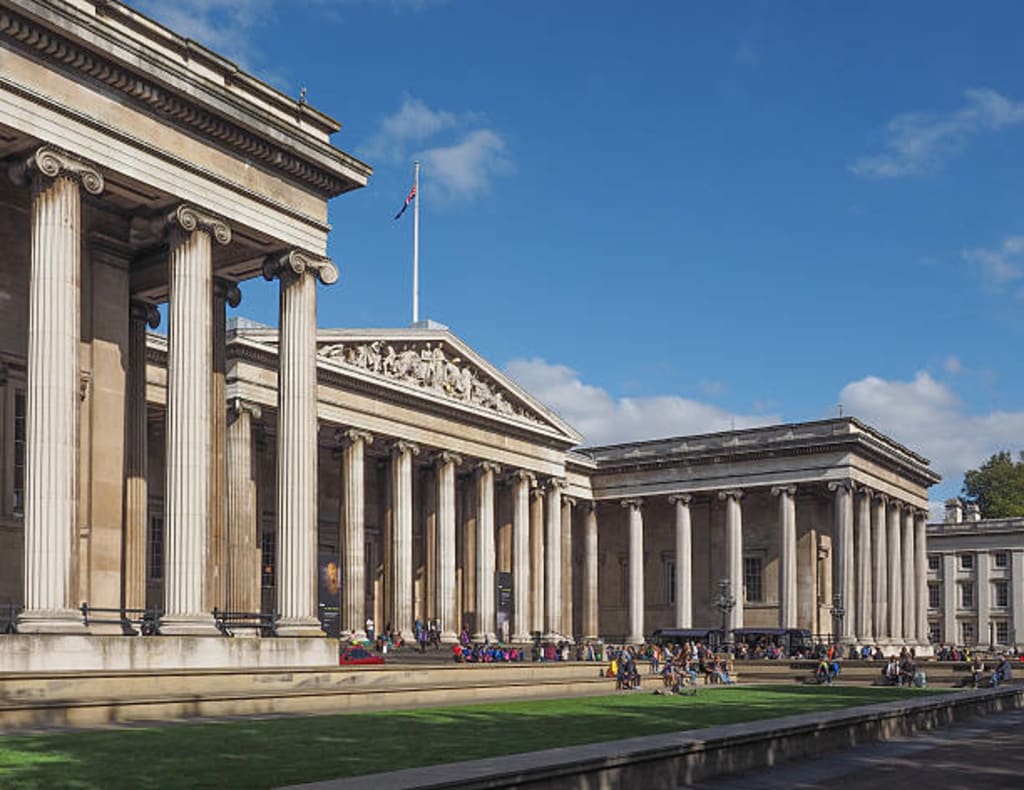
Welcome to the captivating world of the British Museum, a place that stands as a testament to the ebb and flow of human history. As you step through its grand entrance, you are greeted by a treasure trove of knowledge spanning an impressive two million years. This colossal repository of culture and heritage draws in countless visitors, earning its title as the world's largest museum dedicated to world history.
Behold, within these hallowed halls, an awe-inspiring collection of over eight million artifacts from lands near and far, each whispering tales of civilizations long past. Among the stars of this illustrious museum are the time-honored relics that beckon from the museum's must-see list. Imagine gazing upon the enigmatic Easter Island sculpture, a venerable thousand-year-old artifact, or marveling at the intricate bronze sculpture depicting the Hindu deity Shiva. These treasures are only the beginning of an enchanting journey that lies ahead.
However, as you traverse the museum's labyrinthine corridors, a shadow of contention emerges. A conundrum comes to light, epitomized by the pathway you tread. A stark revelation emerges—almost half of the dozen exhibited pieces along this route are mired in disputed ownership. The British Museum, in its earnest pursuit to showcase the diversity of humanity's heritage, finds itself entangled in a web of controversy.
Indeed, a poignant debate has risen, casting a spotlight on the question of whether cultural artifacts should remain ensconced within the halls of Western museums or return to the embrace of their home countries. The discourse surrounding the rightful ownership of these treasures has ignited a fervent discussion, where perspectives clash and passions run deep.
To better understand this narrative, let us delve into the historical tapestry of the British Empire, which, in the late 1600s, embarked on an unprecedented expansion across continents. It soared to majestic heights, becoming the unparalleled dominion that spanned a quarter of the globe's landmass and population. As the empire extended its reach, it harvested not only resources and wealth but also cultural heirlooms from lands far and wide.
In 1753, the British Museum was founded, a sanctuary to house these marvels, a true embodiment of human endeavor. The collection flourished with each passing decade, embracing new acquisitions, legal and undisputed, like the venerable two-thousand-year-old Roman base, a relic of ancient grandeur bequeathed to the museum by a noble duke in the year 1945.
Yet, the heart of the matter resides in the pieces shrouded in ambiguity and dispute. As you step through the museum's entrance, your gaze falls upon the Rosetta Stone, a relic entwined with intrigue. Acquired by British troops from the French in Egypt, this ancient slab serves as a bridge to deciphering the enigmatic script of the past. A few paces onward, the Parthenon sculptures beckon, extracted from the Acropolis in Athens by a British lord and carried across continents to their present abode.
Venture further, and you encounter the enigmatic Benin bronzes, captivating in their diversity. These treasures, hailing from the Kingdom of Benin in present-day Nigeria, encompass a spectrum of artistic expression, from engraved ivory tusks to resplendent brass sculptures and intricate plaques. This once-thriving kingdom thrived in the 1500s, its artistry a mirror reflecting its political and social narrative. Professor Chika Okekeyagulu, an art historian hailing from Nigeria and a professor at Princeton University, unravels the story of these bronzes, attesting to their role as visual chronicles of a society that lacked a conventional written script.
However, a somber chapter unfurled in 1897. European colonial powers, fueled by a feverish quest for dominion, cast their gaze upon Africa. The "Scramble for Africa" saw these powers partition the continent into spheres of influence, with Benin falling under the British domain. A tragic turn of events led to the "Benin Disaster," a collision of cultures and interests that claimed lives and loyalties. In response, a punitive expedition ensued, leading to the pillaging of Benin's treasures, a calculated endeavor that saw the British soldiers claim thousands of artifacts as their spoils.
Photographs from that epoch capture the systematic dismantling of palace plaques, a chilling testament to a civilization erased. The aftermath bore witness to a once-thriving kingdom reduced to ruins, as the echoes of a colonial conquest reverberated through time. The indomitable spirit of the Benin people endured, culminating in Nigeria's eventual independence in 1960. Yet, the echoes of the past endured, as the artifacts that bore testament to Benin's legacy remained dispersed across the globe, locked within the vaults of Western institutions.
Flash forward to the year 1995, a poignant moment where firsthand encounters with these artifacts evoke a sense of pride and longing. Dr. Chika Okeke-Agulu reminisces about his inaugural visit to the British Museum, a journey that spanned continents and emotions. The magnificence of these artifacts is juxtaposed against the bittersweet reality—while a privileged few traverse oceans to bear witness, countless others are denied this privilege, forever distanced from their heritage.
March of 2000 marked a pivotal juncture as Benin's royal family voiced their plea for the return of unlawfully taken cultural property. A symbolic gesture, an olive branch extended across time, and yet the response remained incomplete. The British Museum, restrained by a governmental act, stood steadfast in its stance, refusing to relinquish its hold. The essence of their commitment reverberated in their words—"We don't restitute, but we are absolutely committed to lending as widely as possible."
A glimmer of change emerged in the form of a grandson's noble gesture, as artifacts from the 1897 expedition were returned to the Benin royal family. The year 2007 bore witness to the birth of the Benin Dialogue Group, a consortium embarking on a complex journey toward reconciliation. Western museums that housed the bronzes and representatives from the Nigerian government engaged in earnest conversations, seeking a resolution that remains elusive to this day.
But this narrative extends beyond the walls of the British Museum. It is a tale interwoven with threads of colonial power that stretch across epochs and continents. These contested artifacts symbolize more than just physical objects; they represent the intangible essence of cultural and historical identity. The quest for restitution is a testament to the enduring spirit of nations, demanding recognition, and a reclaiming of what was lost.
In the words of Dr. Chika Okeke-Agulu, this endeavor is a long-term project, a pursuit that stretches beyond individual lifetimes. The time has come to embark on the arduous journey of cultural reconstitution, a journey that commences in the present, with an unwavering commitment to forging a path toward reconciliation. As we contemplate the stories encapsulated within these artifacts, let us collectively embrace the responsibility to honor their origins and the vibrant legacies they encapsulate.
In conclusion, the British Museum stands as a microcosm of a global narrative, a place where history converges, and voices echo through time. Its vast halls hold not only artifacts but also echoes of debates, passion, and the longing for justice.
Like what you read? Consider liking and subscribing for more! :)
About the Creator
Keep reading
More stories from Shubham Bajaj and writers in History and other communities.
Why America's police looks like soldiers?
On a balmy June 1st, a protest surged near the iconic White House, brimming with voices raised in peaceful unity. Yet, the scene shifted swiftly as a formidable contingent, adorned in helmets, riot shields, rifles, and even tear gas canisters, moved to confront the demonstrators. The figures in this mix of authoritative presence included a fusion of police and military personnel - Secret Service agents, vigilant Park Police, the steadfast National Guard, the specialized forces of the Prison system, and the vigilant local law enforcement from a neighboring county. The intriguing aspect here is discerning who among these figures represents the police force. This task, however, is made perplexing due to an evolving and unsettling resemblance between America's police officers and its armed forces.
By Shubham Bajaj3 years ago in History
The Year 1909 in Review: Fun Facts, Trivia, and Historic Highlights
This quick read is a collection of fun facts, trivia, and historic events from the year 1909. Discover the year’s top news stories, most influential people, sports facts, entertainment trivia, erratic weather patterns, and much more.
By Gregory DeVictor2 days ago in History
Hottest in the Office
Dear Rafi, You’re very distracting to work around. For the first second I saw you the other day, I thought you were some type of executive. It took a moment to realize no, you were just the new guy, dressed up for the job he wants. Be still, my heart.
By Gabriel Shames2 days ago in Pride



Comments
There are no comments for this story
Be the first to respond and start the conversation.